
World
German Chancellor Declares End of Rules-Based World Order

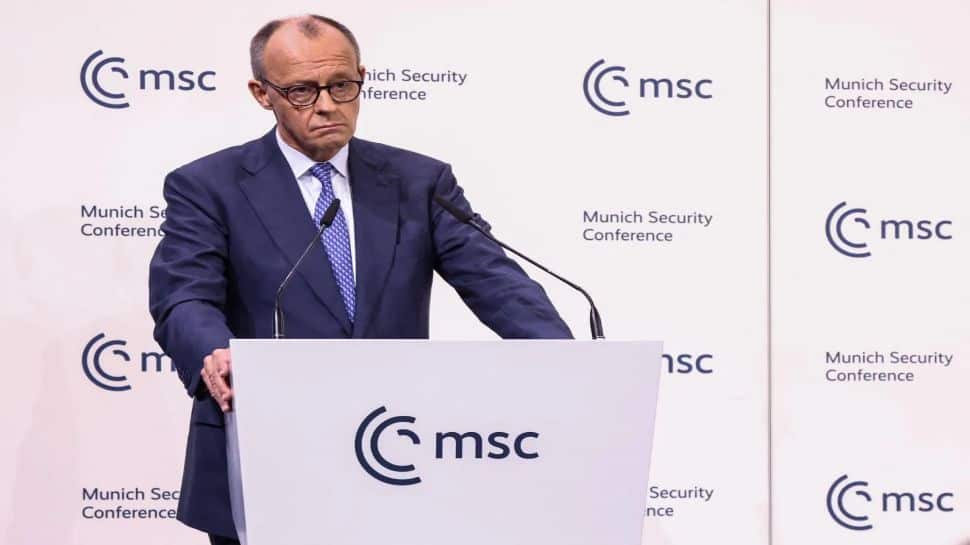
German Chancellor Friedrich Merz has ignited significant debate by asserting that the rules-based world order has concluded, asserting this position during the 2026 Munich Security Conference. He indicated that the international framework established post-World War II, which aimed to uphold peace through diplomacy and international law, is no longer functioning effectively.
Merz emphasized that this system was intended to prevent conflicts by adhering to agreed-upon rules rather than relying solely on military power. Over the decades, it has evolved to incorporate various agreements related to trade, finance, and security, alongside institutions such as the United Nations (UN), the World Trade Organization (WTO), and the International Monetary Fund (IMF).
The essence of a rules-based world order lies in its principles, which include respect for democratic values, human rights, open markets, economic cooperation, multilateralism, and collective action to address global challenges. However, Merz warned that these principles are increasingly under pressure as the dynamics of global power shift.
Supporters of the existing system argue that, despite its Western-centric leadership, it has played a crucial role in preventing large-scale conflicts, fostering decades of economic expansion, and enhancing international collaboration. They point to the absence of major wars among powerful nations as a testament to its success.
In contrast, critics from countries like Russia and China, as well as some developing nations, contend that the system reflects a Western bias. They argue that it fails to offer adequate representation to emerging powers and struggles to maintain relevance in a multipolar world. For example, they highlight the composition of the UN Security Council (UNSC), where permanent membership is limited to five nations, as indicative of an outdated framework.
Emerging initiatives, particularly from China, such as the Belt and Road Initiative, present alternative models of international governance that challenge the existing rules-based structure. Analysts suggest that the future of this system hinges on its ability to adapt to contemporary challenges, become more inclusive, and better reflect the interests of a broader range of nations.
The shifting balance of global power, marked by the rising influence of regional players, is putting the resilience of the rules-based order to the test. Political observers have noted that the world is at a critical juncture. The pressing question remains whether the current system can evolve to ensure peace, prosperity, and fairness or if it will be supplanted by a new global order.
As the coming years unfold, it will become clearer whether the rules-based world order can uphold its foundational principles while responding effectively to the changing realities of international relations in the 21st century.

Albert Camus’ Insightful Quote on Human Identity Resurfaces

Drone Strikes and Missile Attacks Disrupt UAE Amid Rising Tensions

Japanese Yen Rises Sharply Against US Dollar Ahead of Key Decisions

Priyanka Chopra and Nick Jonas Avoid Near Miss en Route to Oscars

Gujarat Vaccinates Over 11 Lakh Infants in Major Health Drive

Alexandre Singh Wins Oscar, Celebrates Immigrant Heritage

Lok Sabha Speaker Issues Warning Over Placards in Parliament

Global Electrosurgical Devices Market Expands to $10.2 Billion by 2034

North Zone Dominates Cricket; SJAM-1 Shines in Table Tennis

SBI Announces QIP Floor Price at ₹811.05 Per Share

Cept Unveils ₹3.1 Crore Urban Mobility Plan for Sustainable Growth

New Blood Group Discovered in South Indian Woman at Rotary Centre

Konkani Cultural Organisation to Host Pearl Jubilee in Abu Dhabi

Torrential Rains Cause Flash Flooding in New York and New Jersey

Nothing Headphone 1 Review: A Bold Contender in Audio Design

Indian Stock Market Rebounds: Sensex and Nifty Rise After Four-Day Decline

Air India Crash Investigation Highlights Boeing Fuel Switch Concerns

Broad Advocates for Bowling Change Ahead of Final Test Against India
-
 World12 months ago
SBI Announces QIP Floor Price at ₹811.05 Per Share
-
 Lifestyle12 months ago
Cept Unveils ₹3.1 Crore Urban Mobility Plan for Sustainable Growth
-
 Science12 months ago
New Blood Group Discovered in South Indian Woman at Rotary Centre
-
 Top Stories12 months ago
Konkani Cultural Organisation to Host Pearl Jubilee in Abu Dhabi
-
 World12 months ago
Torrential Rains Cause Flash Flooding in New York and New Jersey
-
 Science12 months ago
Nothing Headphone 1 Review: A Bold Contender in Audio Design
-
 Business12 months ago
Indian Stock Market Rebounds: Sensex and Nifty Rise After Four-Day Decline
-
 Top Stories12 months ago
Air India Crash Investigation Highlights Boeing Fuel Switch Concerns
-
 Sports12 months ago
Broad Advocates for Bowling Change Ahead of Final Test Against India
-

 Sports12 months ago
Cristian Totti Retires at 19: Pressure of Fame Takes Toll
-

 Politics12 months ago
Abandoned Doberman Finds New Home After Journey to Prague
-

 Lifestyle12 months ago
Villagers Unite to Raise ₹45 Lakh for Water Solutions in Vadgam