
World
US Warns China’s Control of Peru Port Threatens Sovereignty

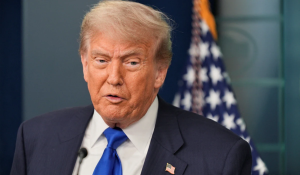
The Trump administration raised alarms on March 15, 2024, regarding China’s influence in Peru, particularly its control over the Chancay Port, a significant infrastructure project. The administration’s concerns were highlighted following a Peruvian court ruling that limited the oversight capabilities of the local regulatory body, Ositran, over the port, which is crucial for the nation’s sovereignty and economic independence.
Located north of Lima, the USD 1.3 billion Chancay Port is a key component of China’s global Belt and Road Initiative. This port, designed to accommodate large cargo ships, has become a focal point for escalating tensions between Washington and Beijing. The United States State Department’s Bureau of Western Hemisphere Affairs emphasized its support for Peru’s right to manage critical infrastructure within its territory, suggesting that reliance on “cheap Chinese money” compromises national sovereignty.
In response, the Chinese government firmly rejected the U.S. comments. Lin Jian, spokesperson for the Chinese Foreign Ministry, condemned what he termed “blatant rumor-mongering” about Chancay Port. He asserted that the port operates under the jurisdiction of Peruvian authorities and dismissed U.S. claims regarding sovereignty issues as unfounded.
The ruling on January 29, 2024, from a lower court judge mandated that Peruvian authorities refrain from exercising regulatory powers over the Chancay Port. This decision sparked controversy, as it positioned Cosco Shipping, the majority stakeholder in the port, outside the purview of local regulatory oversight. Veronica Zambrano, president of Ositran, expressed her agency’s intent to appeal the ruling, arguing that allowing Cosco to operate without supervision could undermine public trust and safety.
Despite the port being privately owned, its location on 180 hectares of Peruvian soil subjects it to national regulations. Zambrano highlighted that numerous Peruvian agencies, including police and environmental regulators, currently monitor port operations, countering Cosco’s assertion that the court ruling had no impact on sovereignty.
As China has emerged as Peru’s largest trading partner over the past decade, the implications of this ruling extend beyond bilateral trade. The situation reflects broader geopolitical dynamics, as the Trump administration seeks to reassert its influence in the Western Hemisphere, where China’s presence has been steadily growing through significant investments and loans.
The Chancay Port stands as a testament to China’s expanding reach in Latin America, illustrating the delicate balance between investment and national control. The unfolding situation serves as a crucial case for other nations in the region that are navigating similar challenges regarding foreign investment and sovereignty.

Albert Camus’ Insightful Quote on Human Identity Resurfaces

Drone Strikes and Missile Attacks Disrupt UAE Amid Rising Tensions

Japanese Yen Rises Sharply Against US Dollar Ahead of Key Decisions

Priyanka Chopra and Nick Jonas Avoid Near Miss en Route to Oscars

Gujarat Vaccinates Over 11 Lakh Infants in Major Health Drive

Alexandre Singh Wins Oscar, Celebrates Immigrant Heritage

Lok Sabha Speaker Issues Warning Over Placards in Parliament

Global Electrosurgical Devices Market Expands to $10.2 Billion by 2034

North Zone Dominates Cricket; SJAM-1 Shines in Table Tennis

SBI Announces QIP Floor Price at ₹811.05 Per Share

Cept Unveils ₹3.1 Crore Urban Mobility Plan for Sustainable Growth

New Blood Group Discovered in South Indian Woman at Rotary Centre

Konkani Cultural Organisation to Host Pearl Jubilee in Abu Dhabi

Torrential Rains Cause Flash Flooding in New York and New Jersey

Nothing Headphone 1 Review: A Bold Contender in Audio Design

Indian Stock Market Rebounds: Sensex and Nifty Rise After Four-Day Decline

Air India Crash Investigation Highlights Boeing Fuel Switch Concerns

Broad Advocates for Bowling Change Ahead of Final Test Against India
-
 World12 months ago
SBI Announces QIP Floor Price at ₹811.05 Per Share
-
 Lifestyle12 months ago
Cept Unveils ₹3.1 Crore Urban Mobility Plan for Sustainable Growth
-
 Science12 months ago
New Blood Group Discovered in South Indian Woman at Rotary Centre
-
 Top Stories12 months ago
Konkani Cultural Organisation to Host Pearl Jubilee in Abu Dhabi
-
 World12 months ago
Torrential Rains Cause Flash Flooding in New York and New Jersey
-
 Science12 months ago
Nothing Headphone 1 Review: A Bold Contender in Audio Design
-
 Business12 months ago
Indian Stock Market Rebounds: Sensex and Nifty Rise After Four-Day Decline
-
 Top Stories12 months ago
Air India Crash Investigation Highlights Boeing Fuel Switch Concerns
-
 Sports12 months ago
Broad Advocates for Bowling Change Ahead of Final Test Against India
-

 Sports12 months ago
Cristian Totti Retires at 19: Pressure of Fame Takes Toll
-

 Politics12 months ago
Abandoned Doberman Finds New Home After Journey to Prague
-

 Lifestyle12 months ago
Villagers Unite to Raise ₹45 Lakh for Water Solutions in Vadgam