
World
US Detains Nicolás Maduro, Echoes 1989 Capture of Noriega

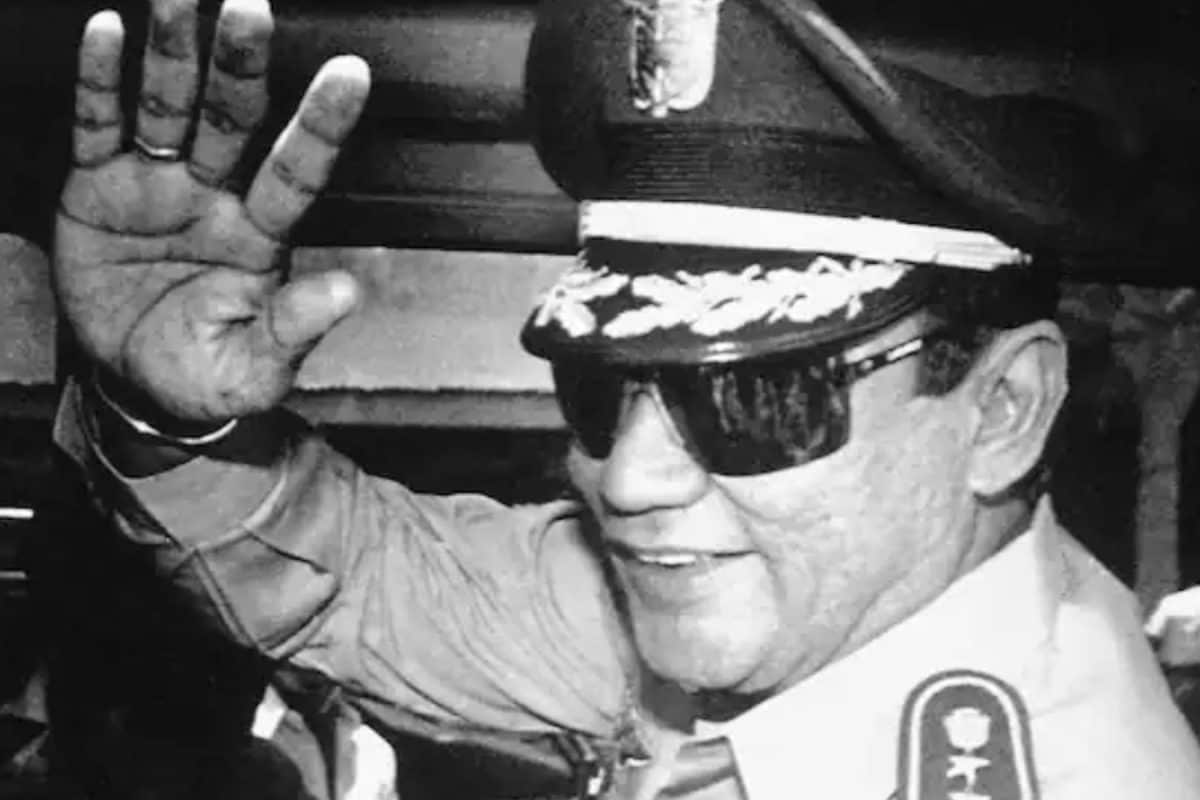
The United States has detained Venezuelan President Nicolás Maduro, an event reminiscent of the 1989 capture of Panamanian leader Manuel Noriega during Operation Just Cause. This operation marked a significant moment in U.S. military interventions abroad and has drawn renewed attention following Maduro’s arrest on January 3, 2020.
The U.S. government has long accused Maduro of serious crimes, including drug trafficking and corruption. A U.S. court charged him with narcotics offenses and offered a reward of $50 million for information leading to his arrest. The parallels between Maduro’s case and Noriega’s have reignited discussions about American foreign policy in Latin America and the recurring patterns of U.S. military interventions.
Historical Context of U.S. Military Interventions
The capture of Noriega in 1989 was a pivotal moment in U.S. history. Faced with accusations of drug trafficking and authoritarian governance, the U.S. launched a military operation in December of that year to remove him from power. Troops quickly overwhelmed the Panamanian Defense Forces, and within days, Noriega was cornered. Eventually, he sought refuge in the Vatican Embassy, where U.S. forces employed psychological tactics to compel his surrender. After several days of loud music played outside, he surrendered on January 3, 1990, and was extradited to the U.S., where he faced trial and was convicted on drug charges.
The operation led to significant civilian casualties and sparked widespread international criticism. Despite these consequences, the U.S. justified the intervention as necessary to restore democracy and combat drug trafficking. This military action remains a defining case of U.S. interventionism, illustrating the complex interplay of geopolitics and regional stability.
Maduro’s Arrest and Its Implications
The recent detainment of Maduro raises questions about the future of Venezuela and U.S. relations in Latin America. The U.S. has accused Maduro of maintaining links with international criminal and terrorist organizations, mirroring the accusations that led to Noriega’s downfall. The Venezuelan government has faced significant challenges, including economic collapse, political unrest, and humanitarian crises, exacerbated by Maduro’s controversial rule.
Historically, the U.S. has intervened in Latin America to remove leaders accused of corrupt practices or authoritarianism. Following Noriega, Saddam Hussein’s capture in Iraq further fueled perceptions that the U.S. often resorts to military action to address international conflicts. The recurring theme of detaining foreign leaders can be seen as part of a broader strategy to exert influence and promote stability in a region marked by political volatility.
In summary, the detention of Nicolás Maduro not only echoes the past but also highlights the ongoing complexities of U.S. foreign policy in Latin America. As the situation unfolds, the implications for Venezuela and the broader geopolitical landscape remain to be seen.

Albert Camus’ Insightful Quote on Human Identity Resurfaces

Drone Strikes and Missile Attacks Disrupt UAE Amid Rising Tensions

Japanese Yen Rises Sharply Against US Dollar Ahead of Key Decisions

Priyanka Chopra and Nick Jonas Avoid Near Miss en Route to Oscars

Gujarat Vaccinates Over 11 Lakh Infants in Major Health Drive

Alexandre Singh Wins Oscar, Celebrates Immigrant Heritage

Lok Sabha Speaker Issues Warning Over Placards in Parliament

Global Electrosurgical Devices Market Expands to $10.2 Billion by 2034

North Zone Dominates Cricket; SJAM-1 Shines in Table Tennis

SBI Announces QIP Floor Price at ₹811.05 Per Share

Cept Unveils ₹3.1 Crore Urban Mobility Plan for Sustainable Growth

New Blood Group Discovered in South Indian Woman at Rotary Centre

Konkani Cultural Organisation to Host Pearl Jubilee in Abu Dhabi

Torrential Rains Cause Flash Flooding in New York and New Jersey

Nothing Headphone 1 Review: A Bold Contender in Audio Design

Indian Stock Market Rebounds: Sensex and Nifty Rise After Four-Day Decline

Air India Crash Investigation Highlights Boeing Fuel Switch Concerns

Broad Advocates for Bowling Change Ahead of Final Test Against India
-
 World12 months ago
SBI Announces QIP Floor Price at ₹811.05 Per Share
-
 Lifestyle12 months ago
Cept Unveils ₹3.1 Crore Urban Mobility Plan for Sustainable Growth
-
 Science12 months ago
New Blood Group Discovered in South Indian Woman at Rotary Centre
-
 Top Stories12 months ago
Konkani Cultural Organisation to Host Pearl Jubilee in Abu Dhabi
-
 World12 months ago
Torrential Rains Cause Flash Flooding in New York and New Jersey
-
 Science12 months ago
Nothing Headphone 1 Review: A Bold Contender in Audio Design
-
 Business12 months ago
Indian Stock Market Rebounds: Sensex and Nifty Rise After Four-Day Decline
-
 Top Stories12 months ago
Air India Crash Investigation Highlights Boeing Fuel Switch Concerns
-
 Sports12 months ago
Broad Advocates for Bowling Change Ahead of Final Test Against India
-

 Sports12 months ago
Cristian Totti Retires at 19: Pressure of Fame Takes Toll
-

 Politics12 months ago
Abandoned Doberman Finds New Home After Journey to Prague
-

 Lifestyle12 months ago
Villagers Unite to Raise ₹45 Lakh for Water Solutions in Vadgam