
World
Anwar Ibrahim Proposes Two-Term Limit to Revive Urban Support

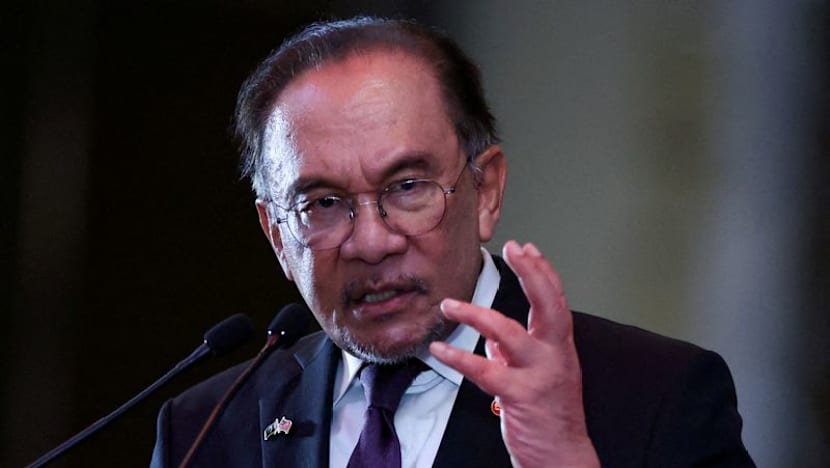
Anwar Ibrahim, the Prime Minister of Malaysia, announced on January 5, 2024, his commitment to implementing significant political reforms, including a two-term or ten-year limit for the prime minister’s office. This initiative is part of a broader strategy to regain urban support for his administration, which has faced criticism for its slow pace in delivering on promised reforms.
During a speech in Putrajaya, Anwar revealed plans to introduce multiple bills in parliament this year. These proposed reforms include separating the roles of the attorney-general and the public prosecutor, establishing an ombudsman office, and enacting a freedom of information law. Anwar emphasized the need for limits on power, stating, “Everybody has their limits. The government chief secretary cannot stay forever. This applies to everyone, including the prime minister.”
The Prime Minister’s address comes at a time when his unity government is under pressure following disappointing results in the recent Sabah state elections. The Democratic Action Party (DAP), a key member of Anwar’s coalition, has expressed frustration over the slow pace of reforms and threatened to reevaluate its position within the government if tangible changes are not made within the next six months.
In the Sabah state elections held on November 29, 2023, the DAP failed to secure any of the eight seats it contested, while the broader coalition, Pakatan Harapan (PH), won only one seat. Analysts have linked this poor performance to urban dissatisfaction with ongoing issues of corruption and the sluggish pace of governmental reforms. The ruling coalition, which also includes the United Malays National Organisation (UMNO), experienced a decline, winning only six seats compared to fourteen in 2020.
Amidst this political backdrop, Anwar urged unity within his government, asserting that collaboration is essential to overcoming challenges. He criticized the opposition, particularly for their focus on advocating for Malay rights only when in power. “That is why we must not belittle or underestimate the need to be united, in consensus, strong, and stable,” he remarked. “We are capable of achieving remarkable things only by working as a solid and cohesive team.”
The political landscape in Malaysia remains complex, with internal pressures affecting the stability of Anwar’s administration. Calls for UMNO to consider aligning with the opposition coalition, Parti Islam Se-Malaysia (PAS), are growing, further complicating the government’s efforts to maintain a unified front.
As Anwar embarks on this ambitious reform agenda, the coming months will be critical in determining whether his administration can regain the trust and support of urban voters and navigate the shifting political dynamics within the country.

Albert Camus’ Insightful Quote on Human Identity Resurfaces

Drone Strikes and Missile Attacks Disrupt UAE Amid Rising Tensions

Japanese Yen Rises Sharply Against US Dollar Ahead of Key Decisions

Priyanka Chopra and Nick Jonas Avoid Near Miss en Route to Oscars

Gujarat Vaccinates Over 11 Lakh Infants in Major Health Drive

Alexandre Singh Wins Oscar, Celebrates Immigrant Heritage

Lok Sabha Speaker Issues Warning Over Placards in Parliament

Global Electrosurgical Devices Market Expands to $10.2 Billion by 2034

North Zone Dominates Cricket; SJAM-1 Shines in Table Tennis

SBI Announces QIP Floor Price at ₹811.05 Per Share

Cept Unveils ₹3.1 Crore Urban Mobility Plan for Sustainable Growth

New Blood Group Discovered in South Indian Woman at Rotary Centre

Konkani Cultural Organisation to Host Pearl Jubilee in Abu Dhabi

Torrential Rains Cause Flash Flooding in New York and New Jersey

Nothing Headphone 1 Review: A Bold Contender in Audio Design

Indian Stock Market Rebounds: Sensex and Nifty Rise After Four-Day Decline

Air India Crash Investigation Highlights Boeing Fuel Switch Concerns

Broad Advocates for Bowling Change Ahead of Final Test Against India
-
 World12 months ago
SBI Announces QIP Floor Price at ₹811.05 Per Share
-
 Lifestyle12 months ago
Cept Unveils ₹3.1 Crore Urban Mobility Plan for Sustainable Growth
-
 Science12 months ago
New Blood Group Discovered in South Indian Woman at Rotary Centre
-
 Top Stories12 months ago
Konkani Cultural Organisation to Host Pearl Jubilee in Abu Dhabi
-
 World12 months ago
Torrential Rains Cause Flash Flooding in New York and New Jersey
-
 Science12 months ago
Nothing Headphone 1 Review: A Bold Contender in Audio Design
-
 Business12 months ago
Indian Stock Market Rebounds: Sensex and Nifty Rise After Four-Day Decline
-
 Top Stories12 months ago
Air India Crash Investigation Highlights Boeing Fuel Switch Concerns
-
 Sports12 months ago
Broad Advocates for Bowling Change Ahead of Final Test Against India
-

 Sports12 months ago
Cristian Totti Retires at 19: Pressure of Fame Takes Toll
-

 Politics12 months ago
Abandoned Doberman Finds New Home After Journey to Prague
-

 Lifestyle12 months ago
Villagers Unite to Raise ₹45 Lakh for Water Solutions in Vadgam