
World
Seven Die as Private Jet Crashes During Snowstorm in Maine

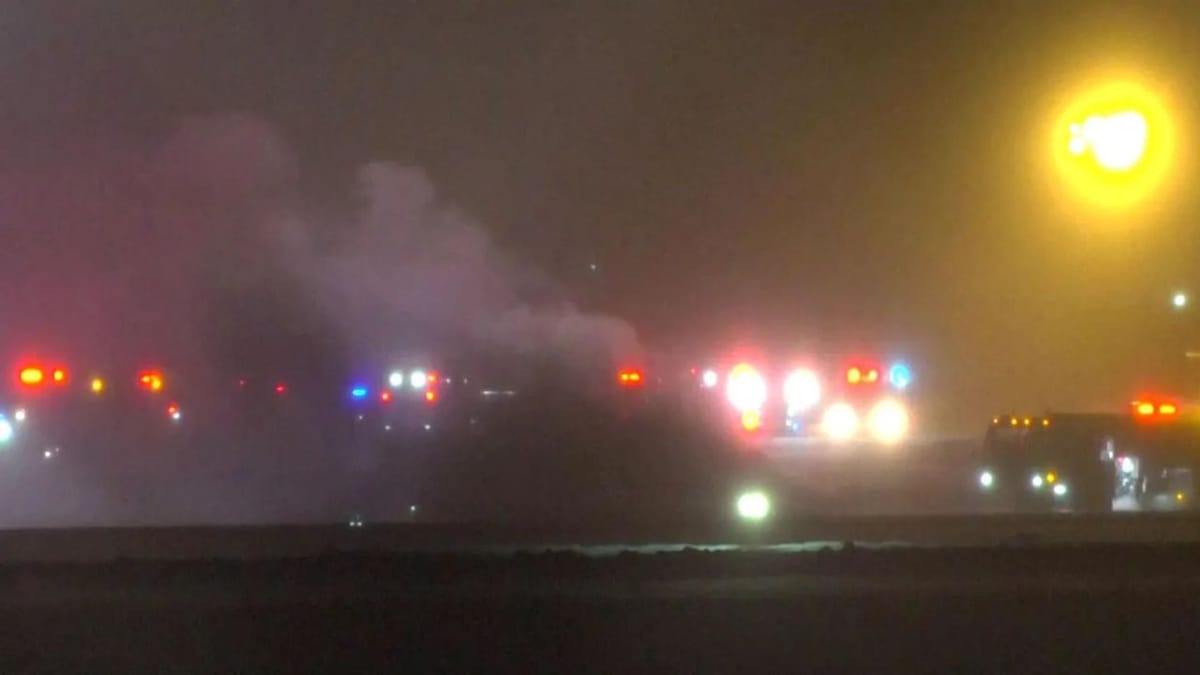
Seven individuals tragically lost their lives and one crew member sustained critical injuries when a Bombardier Challenger 600 private jet crashed during takeoff from Bangor International Airport in Maine on March 3, 2024. The incident occurred amid a heavy snowstorm that affected large parts of New England, prompting a multi-agency investigation and the temporary closure of the airport.
The aircraft was carrying eight people when it attempted to take off at approximately 19:45 local time. According to the Federal Aviation Administration (FAA), the plane overturned and caught fire shortly after leaving the runway. Air traffic control recordings captured the chaos unfolding, with an operator reporting, “Aircraft upside down. We have a passenger aircraft upside down,” roughly 45 seconds after the jet received clearance for takeoff.
Emergency crews responded swiftly, reaching the crash site in under a minute. Following the incident, Bangor International Airport, located about 200 miles north of Boston, was closed and will remain shut until at least noon on March 6, 2024.
Investigation Underway
Both the FAA and the National Transportation Safety Board (NTSB) have initiated investigations to determine the cause of the crash. Preliminary reports indicate the aircraft experienced difficulties during departure, leading to the fire. The NTSB has stated that further information will be withheld until investigators can examine the site in the coming days. Additionally, the agency noted it does not release victim information, leaving that responsibility to local authorities.
Airport director Jose Saavedra opted not to comment on the identities of the victims during a press conference on March 4, indicating that he was awaiting direction from federal partners.
Severe Weather Conditions
At the time of the accident, Bangor was experiencing continuous snowfall, although airport operations were ongoing. Saavedra emphasized that the airport frequently manages operations during adverse weather conditions, stating, “We have crews on site that respond to weather storms on a regular basis. This is normal for us to respond to weather events.”
The crash coincided with a significant winter storm affecting the eastern United States, which brought snow, sleet, and freezing rain. This storm resulted in widespread disruptions to both air and road travel, leaving hundreds of thousands without power, especially in the Southeast.
Nationwide, the storm had a considerable impact on commercial aviation, as approximately 12,000 flights were canceled on the same day, with nearly 20,000 experiencing delays, according to data from flight tracking service FlightAware. Major disruptions were reported at airports in cities including Philadelphia, Washington, D.C., and New York.
The Bombardier Challenger 600 is a wide-body business jet capable of accommodating between nine and eleven passengers. Since its introduction in 1980, it has been a popular choice for charter operations, noted for its spacious “walk-about cabin” design.
As investigations continue, the aviation community and the families affected by this tragedy await further updates on the circumstances surrounding the crash and the ongoing recovery efforts at Bangor International Airport.

Albert Camus’ Insightful Quote on Human Identity Resurfaces

Drone Strikes and Missile Attacks Disrupt UAE Amid Rising Tensions

Japanese Yen Rises Sharply Against US Dollar Ahead of Key Decisions

Priyanka Chopra and Nick Jonas Avoid Near Miss en Route to Oscars

Gujarat Vaccinates Over 11 Lakh Infants in Major Health Drive

Alexandre Singh Wins Oscar, Celebrates Immigrant Heritage

Lok Sabha Speaker Issues Warning Over Placards in Parliament

Global Electrosurgical Devices Market Expands to $10.2 Billion by 2034

North Zone Dominates Cricket; SJAM-1 Shines in Table Tennis

SBI Announces QIP Floor Price at ₹811.05 Per Share

Cept Unveils ₹3.1 Crore Urban Mobility Plan for Sustainable Growth

New Blood Group Discovered in South Indian Woman at Rotary Centre

Konkani Cultural Organisation to Host Pearl Jubilee in Abu Dhabi

Torrential Rains Cause Flash Flooding in New York and New Jersey

Nothing Headphone 1 Review: A Bold Contender in Audio Design

Indian Stock Market Rebounds: Sensex and Nifty Rise After Four-Day Decline

Air India Crash Investigation Highlights Boeing Fuel Switch Concerns

Broad Advocates for Bowling Change Ahead of Final Test Against India
-
 World12 months ago
SBI Announces QIP Floor Price at ₹811.05 Per Share
-
 Lifestyle12 months ago
Cept Unveils ₹3.1 Crore Urban Mobility Plan for Sustainable Growth
-
 Science12 months ago
New Blood Group Discovered in South Indian Woman at Rotary Centre
-
 Top Stories12 months ago
Konkani Cultural Organisation to Host Pearl Jubilee in Abu Dhabi
-
 World12 months ago
Torrential Rains Cause Flash Flooding in New York and New Jersey
-
 Science12 months ago
Nothing Headphone 1 Review: A Bold Contender in Audio Design
-
 Business12 months ago
Indian Stock Market Rebounds: Sensex and Nifty Rise After Four-Day Decline
-
 Top Stories12 months ago
Air India Crash Investigation Highlights Boeing Fuel Switch Concerns
-
 Sports12 months ago
Broad Advocates for Bowling Change Ahead of Final Test Against India
-

 Sports12 months ago
Cristian Totti Retires at 19: Pressure of Fame Takes Toll
-

 Politics12 months ago
Abandoned Doberman Finds New Home After Journey to Prague
-

 Lifestyle12 months ago
Villagers Unite to Raise ₹45 Lakh for Water Solutions in Vadgam