
World
India’s Cautious Response to US Actions in Venezuela Sparks Debate

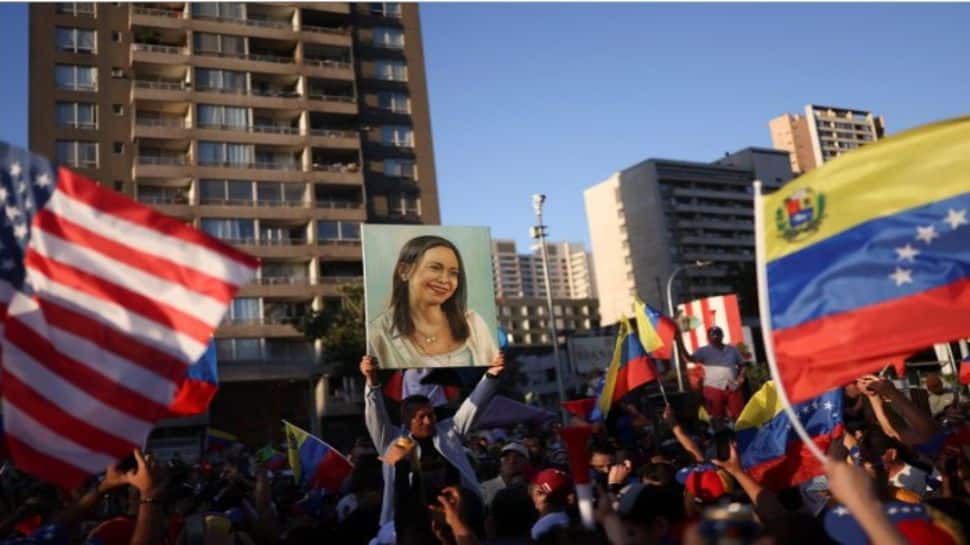
New Delhi has garnered significant attention for its measured response following the recent US military operation in Venezuela, which resulted in the capture of President Nicolás Maduro. The United States’ actions have been widely criticized as a breach of international law and a unilateral violation of the United Nations Charter.
On January 4, approximately 24 hours after the US operation, the Ministry of External Affairs (MEA) issued a statement emphasizing India’s support for the Venezuelan people. The statement called for dialogue and peaceful resolution to maintain regional stability. It read, “India reiterates its support for the safety and well-being of the people of Venezuela. We appeal to all parties concerned to resolve matters through dialogue and peaceful means to maintain peace and stability in the region.”
While India’s statement was intended to promote diplomacy, it has sparked criticism domestically. Opposition parties, including the Congress, have expressed dissatisfaction with the government’s reluctance to explicitly condemn the US actions. Congress leader Jairam Ramesh articulated the party’s concerns via social media, asserting, “The Congress party is deeply concerned about America’s actions in Venezuela over the past 24 hours. The unilateral violation of established principles of international law cannot be accepted.”
India’s response has drawn comparisons to its stance during the early stages of the Ukraine crisis in February 2022, where it also refrained from taking a definitive position. Critics argue that this cautious approach reflects a reluctance to confront the United States, a critical ally.
Domestic Reactions and Criticisms
The subdued response has been criticized by various political figures, including Manoj Jha, a member of the Rajya Sabha from the Rashtriya Janata Dal (RJD). He stated, “No excuse can justify action against Venezuela’s oil. History will not forgive this cautious language.”
Left-wing parties in India have united in condemning both the US actions and the government’s response. A joint statement from several parties, including the Communist Party of India (Marxist) and the Revolutionary Socialist Party, described the US operation as “an attack on a sovereign nation and a clear violation of the UN Charter.” They urged the Indian government to support nations opposing US military actions, emphasizing the need for a strong stance against aggression.
Journalist Shashank Mattu observed that while India expressed concern, it stopped short of outright condemnation. This sentiment was echoed by Professor Derek J. Grossman from USC Dornsife College, who noted, “India will not condemn Trump’s military incursion in Venezuela.”
Geopolitical analyst John Sitilides highlighted the complex relationship between India and the United States, stating that India has historically been an important partner of the US. He added that the operation was likely framed within the “National Primacy Theory,” a guiding principle of US national security strategy.
Calls for Policy Reevaluation
The nuanced response from India has prompted discussions about a potential recalibration of its foreign policy. Expert Zorawar Dault Singh expressed concern over India’s stance, suggesting it may reflect a broader trend in foreign policy that requires urgent attention. “The real worry is that this could become a standard response for changes in power around India’s neighborhood. India’s foreign policy needs a serious rethink, because statements like this neither bring tangible benefits nor deter future US aggressive moves,” he stated.
Strategic affairs analyst Brahma Chellaney echoed this sentiment, asserting that by labeling the incident a “matter of deep concern,” India indicated a reluctance to endorse unilateral military actions while simultaneously seeking to maintain relations with the Trump administration. Critics argue that the lack of a clear condemnation undermines India’s position as a leader within the Global South.
In defense of the government’s response, Congress MP Shashi Tharoor described it as appropriate given the delicate situation. He remarked, “Considering the situation’s sensitivity, it is right to leave the government to decide how to respond.” Tharoor emphasized the precarious state of international law and the need for diplomacy in navigating such crises.
Additionally, Suhasini Haider, diplomatic editor of The Hindu, linked India’s cautious approach to ongoing trade negotiations with the United States. She noted that the Modi administration’s measured response aligns with its recent positions on other global issues, suggesting that economic considerations may influence foreign policy decisions.
India’s response to the US military operation in Venezuela continues to be a topic of heated debate, reflecting the complexities of international relations in a rapidly changing global landscape. As the situation evolves, it remains to be seen how India’s foreign policy will adapt to these challenges.

Albert Camus’ Insightful Quote on Human Identity Resurfaces

Drone Strikes and Missile Attacks Disrupt UAE Amid Rising Tensions

Japanese Yen Rises Sharply Against US Dollar Ahead of Key Decisions

Priyanka Chopra and Nick Jonas Avoid Near Miss en Route to Oscars

Gujarat Vaccinates Over 11 Lakh Infants in Major Health Drive

Alexandre Singh Wins Oscar, Celebrates Immigrant Heritage

Lok Sabha Speaker Issues Warning Over Placards in Parliament

Global Electrosurgical Devices Market Expands to $10.2 Billion by 2034

North Zone Dominates Cricket; SJAM-1 Shines in Table Tennis

SBI Announces QIP Floor Price at ₹811.05 Per Share

Cept Unveils ₹3.1 Crore Urban Mobility Plan for Sustainable Growth

New Blood Group Discovered in South Indian Woman at Rotary Centre

Konkani Cultural Organisation to Host Pearl Jubilee in Abu Dhabi

Torrential Rains Cause Flash Flooding in New York and New Jersey

Nothing Headphone 1 Review: A Bold Contender in Audio Design

Indian Stock Market Rebounds: Sensex and Nifty Rise After Four-Day Decline

Air India Crash Investigation Highlights Boeing Fuel Switch Concerns

Broad Advocates for Bowling Change Ahead of Final Test Against India
-
 World12 months ago
SBI Announces QIP Floor Price at ₹811.05 Per Share
-
 Lifestyle12 months ago
Cept Unveils ₹3.1 Crore Urban Mobility Plan for Sustainable Growth
-
 Science12 months ago
New Blood Group Discovered in South Indian Woman at Rotary Centre
-
 Top Stories12 months ago
Konkani Cultural Organisation to Host Pearl Jubilee in Abu Dhabi
-
 World12 months ago
Torrential Rains Cause Flash Flooding in New York and New Jersey
-
 Science12 months ago
Nothing Headphone 1 Review: A Bold Contender in Audio Design
-
 Business12 months ago
Indian Stock Market Rebounds: Sensex and Nifty Rise After Four-Day Decline
-
 Top Stories12 months ago
Air India Crash Investigation Highlights Boeing Fuel Switch Concerns
-
 Sports12 months ago
Broad Advocates for Bowling Change Ahead of Final Test Against India
-

 Sports12 months ago
Cristian Totti Retires at 19: Pressure of Fame Takes Toll
-

 Politics12 months ago
Abandoned Doberman Finds New Home After Journey to Prague
-
 Lifestyle12 months ago
Villagers Unite to Raise ₹45 Lakh for Water Solutions in Vadgam