
World
Global Instability Deepens: Coups and Conflicts Shape 2025

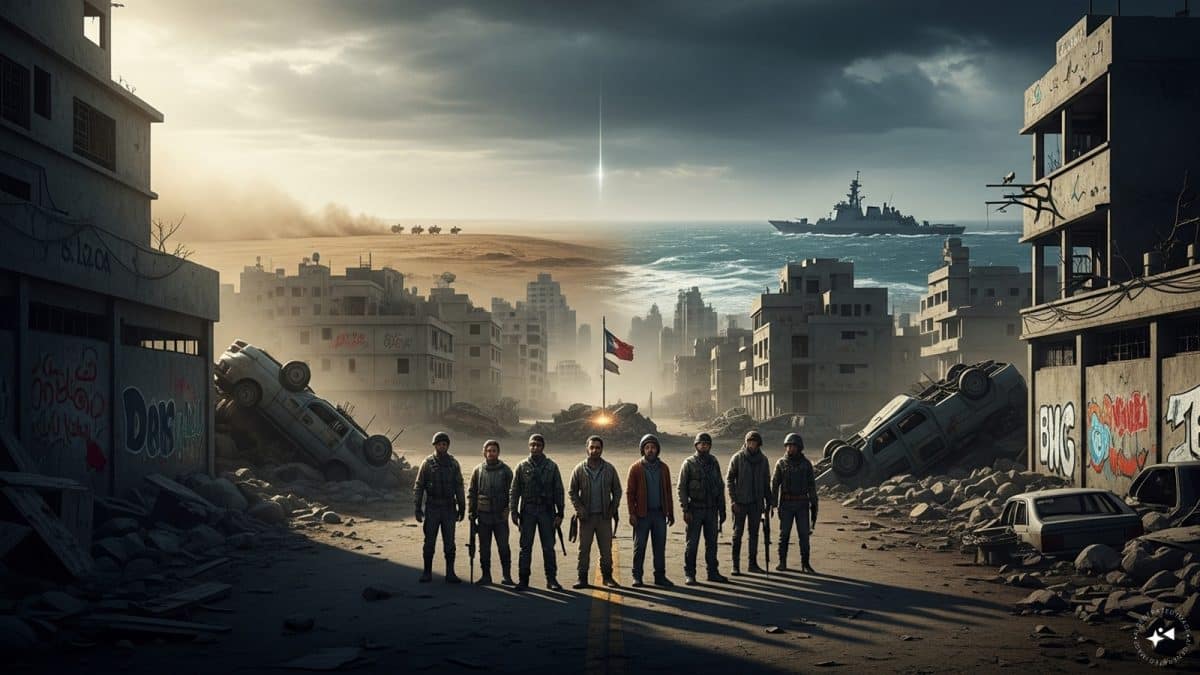
As 2025 drew to a close, the global landscape became increasingly fractured due to a series of coups, civil unrest, and fragile truces. Instability permeated regions such as the Sahel, Haiti, and the Taiwan Strait, where armed groups tested the limits of governments. In this environment, world powers shifted from multilateral cooperation to hard-edged security pacts, amplifying the sense of insecurity and the erosion of established international norms.
Military Takeovers and Regional Conflicts
In Africa, military coups transitioned from temporary disruptions to enduring governance structures. The “Alliance of Sahel States,” comprising Mali, Burkina Faso, and Niger, formally distanced itself from the Economic Community of West African States (ECOWAS) and began to forge security partnerships with Russia.
In Madagascar, a pivotal event occurred on October 12, 2025, when elite units of the CAPSAT overthrew President Andry Rajoelina amid widespread youth-led protests over a worsening energy crisis. Colonel Michael Randrianirina assumed the presidency, promptly dissolving the Senate and High Constitutional Court.
Meanwhile, a coup attempt in Benin in December 2025 threatened to destabilize the region further. Lieutenant Colonel Pascal Tigri led the attempt, which culminated in a 45-minute battle at the presidential residence in Cotonou. Although President Patrice Talon retained power, the incident underscored the fragile political landscape following contentious constitutional amendments.
Sudan continued to grapple with its devastating conflict, with approximately 12 million people displaced. The fighting between the army and the Rapid Support Forces (RSF) reached a critical juncture, leaving no clear resolution in sight.
The Humanitarian Crisis in Haiti and Global Responses
Haiti faced a dire situation, teetering on the brink of collapse. Over 90% of Port-au-Prince came under the control of armed gangs, displacing nearly 1.4 million people. Amid this turmoil, the UN Security Council passed Resolution 2793 in September 2025, replacing the struggling Kenya-led mission with a more robust “Gang Suppression Force.” This new contingent, five times the size of its predecessor, was granted a 12-month offensive mandate to restore order.
The humanitarian crisis deepened as violence claimed over 4,300 lives in the first nine months of the year. More than half of the population faced acute food insecurity, further exacerbating the dire conditions.
In a surprising turn of events, a leaderless uprising in Nepal emerged as a significant political shock. Following a sweeping social media ban on September 4, 2025, which many viewed as an attempt to silence dissent, youth-led protests erupted. These culminated in the storming and burning of the Federal Parliament Building on September 9, leading to the resignation of Prime Minister K.P. Sharma Oli. The interim administration will be led by Sushila Karki, marking a historic first as Nepal’s first female head of government. The uprising, however, claimed at least 76 lives, highlighting a generational demand for accountability.
Tensions in the Taiwan Strait and Middle East
In East Asia, the Taiwan Strait remained a focal point of tension amid the intensifying rivalry between the United States and China. Throughout 2025, China ramped up military activities around Taiwan, conducting large-scale air and naval drills and deploying new “mothership” drone carriers to simulate blockades. These actions raised concerns in Taipei and Tokyo about the normalization of a permanent state of “gray-zone” pressure.
In December 2025, the United States approved a substantial arms package for Taiwan, valued at approximately $11.1 billion. This deal, the largest single weapons transaction with the island, included rocket launchers, self-propelled artillery, and anti-tank systems. Taiwanese officials emphasized that this strategy was crucial for their shift towards an “asymmetric defense” posture, designed to deter invasion attempts.
Public opinion in China suggested a complex sentiment; while nationalist rhetoric remained strong, many citizens and policymakers expressed concerns about the economic and human costs of an open conflict. This hesitance reinforced Beijing’s inclination toward coercive tactics while avoiding outright war, even as the risk of miscalculation looms large.
The ongoing conflict in Gaza also marked 2025 with a “pulse” of violence punctuated by historic pauses. A US-brokered ceasefire took effect on October 10, 2025, facilitating the release of remaining hostages held by Hamas in exchange for nearly 2,000 Palestinian prisoners. Despite a reduction in hostilities, Gaza ended the year in a state of “controlled devastation.” Additionally, June 2025 witnessed a brief direct conflict between Israel and Iran, sparked by strikes on Iran’s nuclear facilities, necessitating direct US military intervention to prevent regional escalation.
As 2025 concluded, the world faced a precarious reality, with local conflicts and political upheaval reshaping the global order. The interplay of these crises underscores a shifting landscape where security, governance, and humanitarian issues are increasingly interconnected.

Albert Camus’ Insightful Quote on Human Identity Resurfaces

Drone Strikes and Missile Attacks Disrupt UAE Amid Rising Tensions

Japanese Yen Rises Sharply Against US Dollar Ahead of Key Decisions

Priyanka Chopra and Nick Jonas Avoid Near Miss en Route to Oscars

Gujarat Vaccinates Over 11 Lakh Infants in Major Health Drive

Alexandre Singh Wins Oscar, Celebrates Immigrant Heritage

Lok Sabha Speaker Issues Warning Over Placards in Parliament

Global Electrosurgical Devices Market Expands to $10.2 Billion by 2034

North Zone Dominates Cricket; SJAM-1 Shines in Table Tennis

SBI Announces QIP Floor Price at ₹811.05 Per Share

Cept Unveils ₹3.1 Crore Urban Mobility Plan for Sustainable Growth

New Blood Group Discovered in South Indian Woman at Rotary Centre

Konkani Cultural Organisation to Host Pearl Jubilee in Abu Dhabi

Torrential Rains Cause Flash Flooding in New York and New Jersey

Nothing Headphone 1 Review: A Bold Contender in Audio Design

Indian Stock Market Rebounds: Sensex and Nifty Rise After Four-Day Decline

Air India Crash Investigation Highlights Boeing Fuel Switch Concerns

Broad Advocates for Bowling Change Ahead of Final Test Against India
-
 World12 months ago
SBI Announces QIP Floor Price at ₹811.05 Per Share
-
 Lifestyle12 months ago
Cept Unveils ₹3.1 Crore Urban Mobility Plan for Sustainable Growth
-
 Science12 months ago
New Blood Group Discovered in South Indian Woman at Rotary Centre
-
 Top Stories12 months ago
Konkani Cultural Organisation to Host Pearl Jubilee in Abu Dhabi
-
 World12 months ago
Torrential Rains Cause Flash Flooding in New York and New Jersey
-
 Science12 months ago
Nothing Headphone 1 Review: A Bold Contender in Audio Design
-
 Business12 months ago
Indian Stock Market Rebounds: Sensex and Nifty Rise After Four-Day Decline
-
 Top Stories12 months ago
Air India Crash Investigation Highlights Boeing Fuel Switch Concerns
-
 Sports12 months ago
Broad Advocates for Bowling Change Ahead of Final Test Against India
-

 Sports12 months ago
Cristian Totti Retires at 19: Pressure of Fame Takes Toll
-

 Politics12 months ago
Abandoned Doberman Finds New Home After Journey to Prague
-
 Lifestyle12 months ago
Villagers Unite to Raise ₹45 Lakh for Water Solutions in Vadgam