
World
CSE Report Reveals Severe Pollution Crisis in NCR After Farm Fires

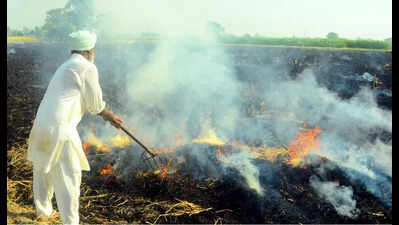
A recent analysis by the Centre for Science and Environment (CSE) highlights a significant pollution crisis in the National Capital Region (NCR) of India, revealing that air quality worsened after the stubble burning season, rather than improving as expected. The report, released on December 31, 2025, compares the air quality data from the early winter months of October and November—when farm fires are prevalent—with the post-farm fire period in December.
During the stubble burning phase, which lasted from October 1 to November 30, Delhi experienced three days of ‘severe’ air quality, with the highest Air Quality Index (AQI) reaching 428 on November 11. Contrarily, the subsequent phase saw even graver conditions, with five days classified as ‘severe’ and the worst air quality measured at 461 on December 14. This troubling trend highlights how pollution persists beyond the immediate effects of agricultural practices.
The CSE findings indicate that despite the cessation of stubble burning, the average PM2.5 concentration in December increased to 210 µg/m³, a 29% rise compared to the earlier period when the average was 163 µg/m³. Notably, while the contribution of farm fires to PM2.5 levels dropped to a negligible 0.2% in December, local and regional sources of pollution surged.
Anumita Roychowdhury, Executive Director for Research and Advocacy at CSE, emphasized the necessity for comprehensive strategies to address persistent pollution, stating, “These findings reveal a concerning reality that Delhi’s winter pollution does not dissipate once stubble burning ends; instead, it intensifies.” She pointed out that effective air quality management requires year-round actions targeting urban emissions, including those from vehicles and industries.
Sharanjeet Kaur, Deputy Programme Manager at CSE’s Urban Lab, noted the regional implications of this pollution crisis. While some towns recorded slight declines in PM2.5 levels, major urban areas saw sharp increases, with Noida experiencing a 38% rise and Delhi facing a 29% increase. Kaur attributed this regional spike to local emissions exacerbated by stagnant winter weather, which hampers pollutant dispersion.
The analysis draws on real-time data from air quality monitoring stations across Delhi-NCR. Shambhavi Shukla, Programme Manager for the Clean Air programme at CSE, explained that during the first half of December, local sources within Delhi constituted only about 35% of the total PM2.5 emissions, with the remaining 65% originating from surrounding districts and regions further away. Within the local contributions, vehicles emerged as the predominant source, responsible for nearly half of all emissions.
The CSE report underscores a critical transition in the pollution profile of the NCR, revealing that transport remains the largest contributor to PM2.5 levels, accounting for 46% of local emissions during the assessed period. Industrial activities accounted for 22%, while household emissions contributed 11%. Other sectors, including construction and waste burning, also played a role in sustaining high pollution levels.
As the NCR grapples with this escalating pollution crisis, the CSE analysis serves as a clarion call for coordinated efforts to combat air quality degradation. Addressing both local and regional pollution sources is essential to achieving sustainable air quality improvements in the future.

Albert Camus’ Insightful Quote on Human Identity Resurfaces

Drone Strikes and Missile Attacks Disrupt UAE Amid Rising Tensions

Japanese Yen Rises Sharply Against US Dollar Ahead of Key Decisions

Priyanka Chopra and Nick Jonas Avoid Near Miss en Route to Oscars

Gujarat Vaccinates Over 11 Lakh Infants in Major Health Drive

Alexandre Singh Wins Oscar, Celebrates Immigrant Heritage

Lok Sabha Speaker Issues Warning Over Placards in Parliament

Global Electrosurgical Devices Market Expands to $10.2 Billion by 2034

North Zone Dominates Cricket; SJAM-1 Shines in Table Tennis

SBI Announces QIP Floor Price at ₹811.05 Per Share

Cept Unveils ₹3.1 Crore Urban Mobility Plan for Sustainable Growth

New Blood Group Discovered in South Indian Woman at Rotary Centre

Konkani Cultural Organisation to Host Pearl Jubilee in Abu Dhabi

Torrential Rains Cause Flash Flooding in New York and New Jersey

Nothing Headphone 1 Review: A Bold Contender in Audio Design

Indian Stock Market Rebounds: Sensex and Nifty Rise After Four-Day Decline

Air India Crash Investigation Highlights Boeing Fuel Switch Concerns

Broad Advocates for Bowling Change Ahead of Final Test Against India
-
 World12 months ago
SBI Announces QIP Floor Price at ₹811.05 Per Share
-
 Lifestyle12 months ago
Cept Unveils ₹3.1 Crore Urban Mobility Plan for Sustainable Growth
-
 Science12 months ago
New Blood Group Discovered in South Indian Woman at Rotary Centre
-
 Top Stories12 months ago
Konkani Cultural Organisation to Host Pearl Jubilee in Abu Dhabi
-
 World12 months ago
Torrential Rains Cause Flash Flooding in New York and New Jersey
-
 Science12 months ago
Nothing Headphone 1 Review: A Bold Contender in Audio Design
-
 Business12 months ago
Indian Stock Market Rebounds: Sensex and Nifty Rise After Four-Day Decline
-
 Top Stories12 months ago
Air India Crash Investigation Highlights Boeing Fuel Switch Concerns
-
 Sports12 months ago
Broad Advocates for Bowling Change Ahead of Final Test Against India
-

 Sports12 months ago
Cristian Totti Retires at 19: Pressure of Fame Takes Toll
-

 Politics12 months ago
Abandoned Doberman Finds New Home After Journey to Prague
-
 Lifestyle12 months ago
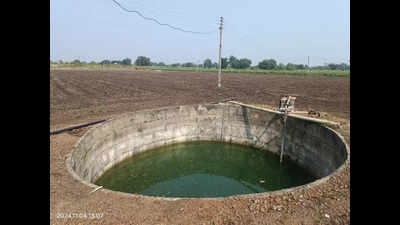
Villagers Unite to Raise ₹45 Lakh for Water Solutions in Vadgam