
Top Stories
Supreme Court Rejects Mandatory Menstrual Leave for Women

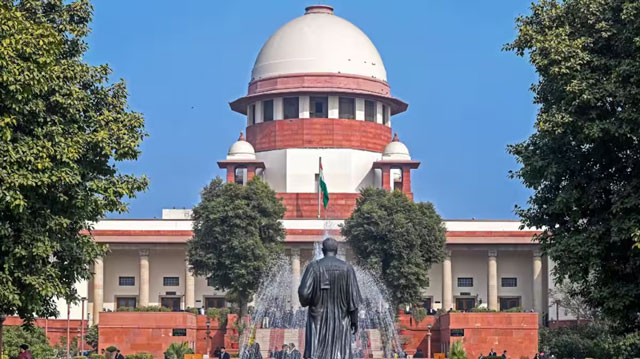
The Supreme Court of India has dismissed a petition that sought to implement mandatory paid menstrual leave for women across all workplaces. The ruling, delivered on March 13, 2024, highlighted concerns that such a policy could inadvertently hinder women’s career opportunities. The bench, led by Chief Justice Surya Kant and Justice Joymalya Bagchi, expressed apprehension that mandating employers to provide monthly leave could discourage them from hiring women altogether.
The petition was submitted by Shailendra Mani Tripathi, who urged the Union and state governments to formulate policies that acknowledge the health challenges women face during menstruation. These challenges include severe pain, conditions such as endometriosis and uterine fibroids, adenomyosis, and pelvic inflammatory disease. Tripathi’s request included provisions for leave or other forms of workplace support for women and female students affected by these conditions.
In their ruling, the justices noted that the absence of direct petitions from women seeking such relief raised questions about the intent behind the proposal.
“These petitions are deeply rooted, designed PILs. You are not a bona fide petitioner. This is basically only to create a type of impression in young women that you still have some natural issues,”
stated Chief Justice Kant.
The court emphasized that while it acknowledges the health concerns associated with menstruation, a mandatory leave policy could lead to detrimental long-term effects on women’s employment. The ruling pointed out that such a policy might limit career growth and opportunities for women in the workforce.
In a move that reflects a cautious approach toward gender-specific workplace laws, the Supreme Court encouraged the government to engage in consultations with relevant stakeholders to explore potential policies on this issue. This could involve creating supportive measures without enforcing mandatory leave by law.
The decision underscores the delicate balance between addressing women’s health needs and maintaining employment equity. As discussions around workplace policies evolve, the Court’s ruling serves as a reminder of the complexity surrounding gender-related legislative measures in India.

Albert Camus’ Insightful Quote on Human Identity Resurfaces

Drone Strikes and Missile Attacks Disrupt UAE Amid Rising Tensions

Japanese Yen Rises Sharply Against US Dollar Ahead of Key Decisions

Priyanka Chopra and Nick Jonas Avoid Near Miss en Route to Oscars

Gujarat Vaccinates Over 11 Lakh Infants in Major Health Drive

Alexandre Singh Wins Oscar, Celebrates Immigrant Heritage

Lok Sabha Speaker Issues Warning Over Placards in Parliament

Global Electrosurgical Devices Market Expands to $10.2 Billion by 2034

North Zone Dominates Cricket; SJAM-1 Shines in Table Tennis

SBI Announces QIP Floor Price at ₹811.05 Per Share

Cept Unveils ₹3.1 Crore Urban Mobility Plan for Sustainable Growth

Comparing Subscription Prices: Spotify, Apple Music, and YouTube Music in India

New Blood Group Discovered in South Indian Woman at Rotary Centre

Konkani Cultural Organisation to Host Pearl Jubilee in Abu Dhabi

Torrential Rains Cause Flash Flooding in New York and New Jersey

Nothing Headphone 1 Review: A Bold Contender in Audio Design

Air India Crash Investigation Highlights Boeing Fuel Switch Concerns

Broad Advocates for Bowling Change Ahead of Final Test Against India
-
 World1 year ago
SBI Announces QIP Floor Price at ₹811.05 Per Share
-
 Lifestyle1 year ago
Cept Unveils ₹3.1 Crore Urban Mobility Plan for Sustainable Growth
-
 Science1 year ago
Comparing Subscription Prices: Spotify, Apple Music, and YouTube Music in India
-
 Science1 year ago
New Blood Group Discovered in South Indian Woman at Rotary Centre
-
 Top Stories1 year ago
Konkani Cultural Organisation to Host Pearl Jubilee in Abu Dhabi
-
 World1 year ago
Torrential Rains Cause Flash Flooding in New York and New Jersey
-
 Science1 year ago
Nothing Headphone 1 Review: A Bold Contender in Audio Design
-
 Top Stories1 year ago
Air India Crash Investigation Highlights Boeing Fuel Switch Concerns
-
 Sports1 year ago
Broad Advocates for Bowling Change Ahead of Final Test Against India
-

 Business1 year ago
Indian Stock Market Rebounds: Sensex and Nifty Rise After Four-Day Decline
-

 Sports1 year ago
Cristian Totti Retires at 19: Pressure of Fame Takes Toll
-

 Politics1 year ago
Abandoned Doberman Finds New Home After Journey to Prague