
Top Stories
Himachal Pradesh Increases Toll Tax, Sparks Tourist Concerns

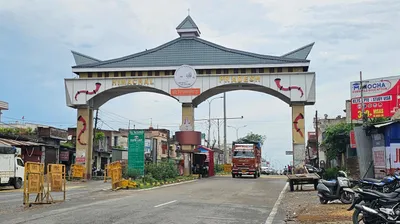
Himachal Pradesh has implemented a significant increase in toll taxes starting this April, a move expected to generate revenue for the financially struggling state. The new rates will affect tourists and commercial vehicles entering the region, with private cars facing a charge of Rs 170, up from Rs 70. Passenger vehicles with a capacity of twelve or more will now also pay Rs 170, while a 32-seater mini bus will incur a toll of Rs 320, a substantial rise from Rs 180. Commercial vehicles will now be levied Rs 600, compared to the previous Rs 320, and large goods vehicles will see their toll increase to Rs 900 from Rs 720.
The toll tax system in Himachal Pradesh dates back to 1975 when the Himachal Pradesh Tolls Act was enacted, initially imposing minimal charges of Re 1 to Rs 3 on various vehicle categories. The rationale behind this levy was to fund road maintenance, which can be particularly costly due to the challenging geographical conditions of the region. Over the years, several toll barriers have been established across national highways, especially in border districts such as Solan, Sirmaur, and Shimla.
The state government has relied on toll collection as a vital source of revenue. In the current fiscal year, the auctions for toll collection rights fetched Rs 173.89 crore, with projections for the next fiscal year suggesting a rise to Rs 228 crore, indicating a competitive bidding environment. Despite opposition from neighboring states, the government has maintained its toll charges on outstation and commercial vehicles.
While the intention behind the toll tax is to generate funds for road maintenance and improvements, the steep increase in rates raises concerns about its impact on tourism, a crucial sector for the state’s economy. Critics argue that the additional costs could deter visitors, prompting them to consider alternative destinations such as Uttarakhand.
Himachal Pradesh’s toll tax policy has drawn criticism not only for its financial implications but also for its implementation. An additional levy imposed by the National Highways Authority of India (NHAI) on the Parwanoo-Kaithlighat section of the Kalka-Shimla highway since April 2021 has further complicated the situation. Motorists have raised concerns that this contradicts NHAI’s own policy of charging tolls every 60 kilometers. For instance, travelers from Chandigarh currently pay tolls at both the Chandimandir and Sanwara plazas, despite the distance between them being less than 60 kilometers.
Legal challenges have arisen in response to the toll increases. Advocate Uttansh Monga from Nangal has filed a case in the high court, questioning the legality of the state charging tolls on roads maintained by the NHAI.
Former BJP Transport Minister MN Sofat has called the state’s toll tax an unwarranted burden, particularly in light of ongoing road safety issues. He highlighted that toll collection on the vital Parwanoo-Solan stretch was previously suspended due to poor road conditions, illustrating inconsistencies in the NHAI’s management.
As the state aims to boost revenue through these toll increases, concerns mount about the potential negative effects on tourist numbers. Hoteliers in the region worry that excessive charges may lead visitors to seek more affordable travel options. The ongoing debate around the toll tax reflects a broader struggle between revenue generation and maintaining a thriving tourism sector in Himachal Pradesh.

Albert Camus’ Insightful Quote on Human Identity Resurfaces

Drone Strikes and Missile Attacks Disrupt UAE Amid Rising Tensions

Japanese Yen Rises Sharply Against US Dollar Ahead of Key Decisions

Priyanka Chopra and Nick Jonas Avoid Near Miss en Route to Oscars

Gujarat Vaccinates Over 11 Lakh Infants in Major Health Drive

Alexandre Singh Wins Oscar, Celebrates Immigrant Heritage

Lok Sabha Speaker Issues Warning Over Placards in Parliament

Global Electrosurgical Devices Market Expands to $10.2 Billion by 2034

North Zone Dominates Cricket; SJAM-1 Shines in Table Tennis

SBI Announces QIP Floor Price at ₹811.05 Per Share

Cept Unveils ₹3.1 Crore Urban Mobility Plan for Sustainable Growth

Comparing Subscription Prices: Spotify, Apple Music, and YouTube Music in India

New Blood Group Discovered in South Indian Woman at Rotary Centre

Konkani Cultural Organisation to Host Pearl Jubilee in Abu Dhabi

Torrential Rains Cause Flash Flooding in New York and New Jersey

Nothing Headphone 1 Review: A Bold Contender in Audio Design

Air India Crash Investigation Highlights Boeing Fuel Switch Concerns

Broad Advocates for Bowling Change Ahead of Final Test Against India
-
 World1 year ago
SBI Announces QIP Floor Price at ₹811.05 Per Share
-
 Lifestyle1 year ago
Cept Unveils ₹3.1 Crore Urban Mobility Plan for Sustainable Growth
-
 Science1 year ago
Comparing Subscription Prices: Spotify, Apple Music, and YouTube Music in India
-
 Science1 year ago
New Blood Group Discovered in South Indian Woman at Rotary Centre
-
 Top Stories1 year ago
Konkani Cultural Organisation to Host Pearl Jubilee in Abu Dhabi
-
 World1 year ago
Torrential Rains Cause Flash Flooding in New York and New Jersey
-
 Science1 year ago
Nothing Headphone 1 Review: A Bold Contender in Audio Design
-
 Top Stories1 year ago
Air India Crash Investigation Highlights Boeing Fuel Switch Concerns
-
 Sports1 year ago
Broad Advocates for Bowling Change Ahead of Final Test Against India
-

 Business1 year ago
Indian Stock Market Rebounds: Sensex and Nifty Rise After Four-Day Decline
-

 Sports1 year ago
Cristian Totti Retires at 19: Pressure of Fame Takes Toll
-

 Politics1 year ago
Abandoned Doberman Finds New Home After Journey to Prague