
Top Stories
Delhi High Court Questions DGCA on Pilot Rest Regulations

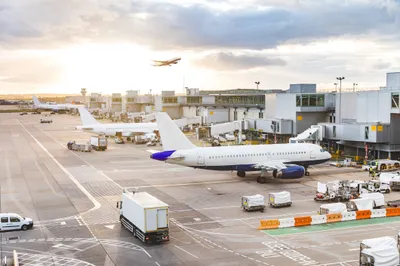
The Delhi High Court has raised concerns regarding the Directorate General of Civil Aviation’s (DGCA) decision to indefinitely relax rules about weekly rest and leave for pilots. This inquiry follows a public interest litigation (PIL) questioning the rationale behind the DGCA’s withdrawal of a new flight-duty norm that stated, “no leave shall be substituted by weekly rest.”
During a hearing on March 15, 2024, a bench composed of Chief Justice D K Upadhyaya and Justice Tejas Karia issued a notice to the DGCA and IndiGo, requiring both parties to respond to the PIL within two weeks. The court’s scrutiny arises from a relaxation granted on December 5, 2025, allowing IndiGo to increase pilot availability to mitigate operational disruptions. This decision followed the airline’s cancellation of hundreds of flights in early December due to inadequate preparations for implementing the new flight-duty regulations.
The DGCA’s legal representative stated that the regulator has been monitoring conditions since the flight-duty time limitations (FDTL) came into effect on November 1, 2025. The decision to withdraw the new rule was based on feedback from airlines indicating that pilots were combining weekly rest days with leave. The representative emphasized that while the weekly rest remains a mandatory requirement governed by civil aviation regulations, the specifics of leave are governed by individual contracts between pilots and airlines.
In addition, the DGCA provided IndiGo with a temporary exemption from night duty regulations until February 10, 2024. The court questioned the inconsistency of this approach, particularly why the withdrawal of the non-substitution rule lacked a defined timeframe. The judges highlighted the apparent disparity in the DGCA’s decision-making process, noting that the relaxation for night duty was limited, while the withdrawal of the weekly rest norm was indefinite.
The court commented, “The grievance seems to be that leave and weekly off can’t be mixed up, which you have withdrawn because of disruption in one particular airline.” The judges demanded clarification on the rationale for the indefinite rule change and stressed that it affects all airlines.
Concerns over public safety have been voiced in previous hearings, particularly regarding the risks associated with pilot fatigue. The petitioners, Sabari Roy Lenka, Aman Monga, and Kiran Singh, argue that the DGCA’s relaxation of fatigue regulations was improperly granted only to IndiGo and suggest that it may have been made with ulterior motives.
The DGCA is mandated by the International Civil Aviation Organization to enforce fatigue regulations uniformly, which includes preventing unsafe rostering, ensuring adequate staffing, and assessing airline preparedness. The petitioners claim that the DGCA has repeatedly failed to implement these necessary frameworks.
The matter is scheduled for further discussion in April 2024, as the court continues to seek clarity on the implications of the DGCA’s decisions for pilots and aviation safety in general.

Albert Camus’ Insightful Quote on Human Identity Resurfaces

Drone Strikes and Missile Attacks Disrupt UAE Amid Rising Tensions

Japanese Yen Rises Sharply Against US Dollar Ahead of Key Decisions

Priyanka Chopra and Nick Jonas Avoid Near Miss en Route to Oscars

Gujarat Vaccinates Over 11 Lakh Infants in Major Health Drive

Alexandre Singh Wins Oscar, Celebrates Immigrant Heritage

Lok Sabha Speaker Issues Warning Over Placards in Parliament

Global Electrosurgical Devices Market Expands to $10.2 Billion by 2034

North Zone Dominates Cricket; SJAM-1 Shines in Table Tennis

SBI Announces QIP Floor Price at ₹811.05 Per Share

Cept Unveils ₹3.1 Crore Urban Mobility Plan for Sustainable Growth

Comparing Subscription Prices: Spotify, Apple Music, and YouTube Music in India

New Blood Group Discovered in South Indian Woman at Rotary Centre

Konkani Cultural Organisation to Host Pearl Jubilee in Abu Dhabi

Torrential Rains Cause Flash Flooding in New York and New Jersey

Nothing Headphone 1 Review: A Bold Contender in Audio Design

Air India Crash Investigation Highlights Boeing Fuel Switch Concerns

Indian Stock Market Rebounds: Sensex and Nifty Rise After Four-Day Decline
-
 World1 year ago
SBI Announces QIP Floor Price at ₹811.05 Per Share
-
 Lifestyle1 year ago
Cept Unveils ₹3.1 Crore Urban Mobility Plan for Sustainable Growth
-
 Science12 months ago
Comparing Subscription Prices: Spotify, Apple Music, and YouTube Music in India
-
 Science12 months ago
New Blood Group Discovered in South Indian Woman at Rotary Centre
-
 Top Stories1 year ago
Konkani Cultural Organisation to Host Pearl Jubilee in Abu Dhabi
-
 World1 year ago
Torrential Rains Cause Flash Flooding in New York and New Jersey
-
 Science1 year ago
Nothing Headphone 1 Review: A Bold Contender in Audio Design
-
 Top Stories1 year ago
Air India Crash Investigation Highlights Boeing Fuel Switch Concerns
-
 Business1 year ago
Indian Stock Market Rebounds: Sensex and Nifty Rise After Four-Day Decline
-

 Sports12 months ago
Broad Advocates for Bowling Change Ahead of Final Test Against India
-

 Sports12 months ago
Cristian Totti Retires at 19: Pressure of Fame Takes Toll
-

 Politics1 year ago
Abandoned Doberman Finds New Home After Journey to Prague