
Science
Study Reveals Complex Neural Mechanisms Behind Macaque Facial Gestures

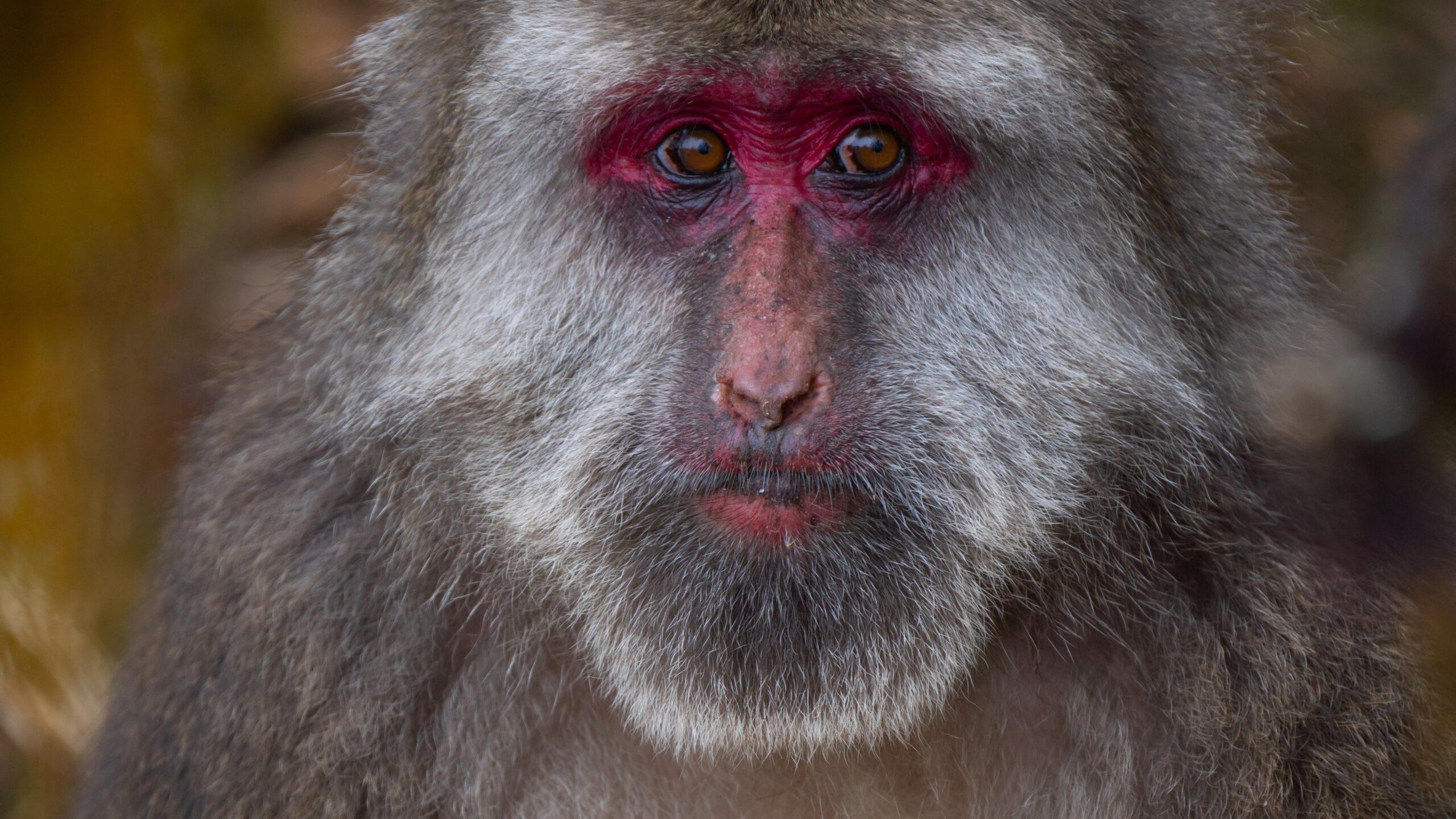
Recent research led by neuroscientist Geena Ianni at the University of Pennsylvania has uncovered intricate neural mechanisms that govern facial gestures in macaques. This groundbreaking study could pave the way for advancements in neural prostheses aimed at helping individuals with stroke or paralysis communicate through facial expressions, much like how speech is currently decoded from brain signals.
For years, scientists believed that the production of facial gestures was based on a clear division of labor within the brain. Ianni noted that earlier case reports indicated specific brain regions were responsible for emotional expressions while others controlled voluntary movements such as speech. However, the understanding of how facial expressions are generated remained limited. To address this gap, Ianni and her team designed an experiment focusing on macaques, primates that share much of their complex facial musculature with humans.
Innovative Research Methodology
The researchers utilized functional magnetic resonance imaging (fMRI) to observe brain activity in macaques while simultaneously recording their facial movements with a high-resolution camera. The macaques were exposed to various stimuli, including videos of other macaques making faces and interactive avatars. This approach elicited socially relevant facial expressions that are typical of the species.
Three specific facial gestures were selected for analysis: the lipsmack, indicating receptivity or submission; the threat face, used to challenge rivals; and chewing, a non-social, voluntary gesture. The team identified the brain areas responsible for these expressions through fMRI scans, and then proceeded to implant micro-electrode arrays into the identified regions with unprecedented precision.
New Insights into Facial Gesture Production
With the electrodes in place, the macaques were once again exposed to the same set of social stimuli. The findings revealed a surprising lack of division among brain regions regarding facial gesture production. Contrary to expectations, all four areas—primary motor cortex, ventral premotor cortex, primary somatosensory cortex, and cingulate cortex—were active across all types of gestures. This indicated a more integrated system than previously believed.
The research team then explored how the brain differentiates between social gestures and non-social ones like chewing. They discovered that the mechanism relies on distinct neural codes, which represent and transmit information differently over time. The cingulate cortex employed a static neural code, characterized by persistent firing patterns of neurons across multiple instances of the same gesture. In contrast, the motor and somatosensory cortices exhibited dynamic coding, with rapidly changing firing rates.
According to Ianni, this suggests that the cingulate cortex manages the social context of facial gestures, while the dynamic regions drive the physical execution of these expressions. This coordination allows for minute adjustments in facial muscles necessary for the fluidity of expressions.
The study marks a significant advance in the understanding of how facial gestures are generated in primates, serving as a foundational step toward developing neural prostheses that can decode such expressions in individuals who have lost the ability to communicate through their faces.
While the technology to create reliable neural prostheses capable of interpreting facial gestures is still in its infancy, Ianni remains optimistic about future developments. The groundwork laid by this research could eventually lead to more naturalistic communication devices, improving the lives of patients recovering from brain injuries.
The study, published on March 15, 2024, in the journal Science, highlights the complexity of facial expression generation and the potential for future applications in assistive communication technologies.

Albert Camus’ Insightful Quote on Human Identity Resurfaces

Drone Strikes and Missile Attacks Disrupt UAE Amid Rising Tensions

Japanese Yen Rises Sharply Against US Dollar Ahead of Key Decisions

Priyanka Chopra and Nick Jonas Avoid Near Miss en Route to Oscars

Gujarat Vaccinates Over 11 Lakh Infants in Major Health Drive

Alexandre Singh Wins Oscar, Celebrates Immigrant Heritage

Lok Sabha Speaker Issues Warning Over Placards in Parliament

Global Electrosurgical Devices Market Expands to $10.2 Billion by 2034

North Zone Dominates Cricket; SJAM-1 Shines in Table Tennis

SBI Announces QIP Floor Price at ₹811.05 Per Share

Cept Unveils ₹3.1 Crore Urban Mobility Plan for Sustainable Growth

Comparing Subscription Prices: Spotify, Apple Music, and YouTube Music in India

New Blood Group Discovered in South Indian Woman at Rotary Centre

Konkani Cultural Organisation to Host Pearl Jubilee in Abu Dhabi

Torrential Rains Cause Flash Flooding in New York and New Jersey

Nothing Headphone 1 Review: A Bold Contender in Audio Design

Air India Crash Investigation Highlights Boeing Fuel Switch Concerns

Indian Stock Market Rebounds: Sensex and Nifty Rise After Four-Day Decline
-
 World1 year ago
SBI Announces QIP Floor Price at ₹811.05 Per Share
-
 Lifestyle1 year ago
Cept Unveils ₹3.1 Crore Urban Mobility Plan for Sustainable Growth
-
 Science12 months ago
Comparing Subscription Prices: Spotify, Apple Music, and YouTube Music in India
-
 Science1 year ago
New Blood Group Discovered in South Indian Woman at Rotary Centre
-
 Top Stories1 year ago
Konkani Cultural Organisation to Host Pearl Jubilee in Abu Dhabi
-
 World1 year ago
Torrential Rains Cause Flash Flooding in New York and New Jersey
-
 Science1 year ago
Nothing Headphone 1 Review: A Bold Contender in Audio Design
-
 Top Stories1 year ago
Air India Crash Investigation Highlights Boeing Fuel Switch Concerns
-
 Business1 year ago
Indian Stock Market Rebounds: Sensex and Nifty Rise After Four-Day Decline
-

 Sports1 year ago
Broad Advocates for Bowling Change Ahead of Final Test Against India
-

 Sports1 year ago
Cristian Totti Retires at 19: Pressure of Fame Takes Toll
-

 Politics1 year ago
Abandoned Doberman Finds New Home After Journey to Prague