
Science
Sir Isaac Newton’s Bold Insights: A Legacy of Discovery

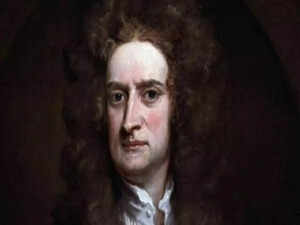
A quote attributed to the renowned physicist and mathematician Sir Isaac Newton serves as a powerful reminder of the courage required for significant scientific breakthroughs. On February 28, 2024, his words resonated profoundly: “No great discovery was ever made without a bold guess.” This statement encapsulates the essence of discovery that transcends time, reflecting on how imagination and daring thinking pave the way for progress in science.
Legacy of Scientific Inquiry
Newton, born on December 25, 1642, in Woolsthorpe, Lincolnshire, profoundly influenced the Scientific Revolution, shaping humanity’s understanding of fundamental concepts such as motion, light, and gravity. His monumental contributions laid the groundwork for modern scientific inquiry, inspiring generations of thinkers and innovators. The quote emphasizes that groundbreaking ideas often originate from the audacity to propose untested hypotheses.
Throughout his career, Newton exemplified this principle. His legendary work, Philosophiæ Naturalis Principia Mathematica, published in 1687, remains a cornerstone of scientific literature. The book established the laws of motion and universal gravitation, which explained not only earthly phenomena but also the movements of celestial bodies. His insights into light and color further revolutionized the field of optics, proving that white light comprises a spectrum of colors.
Formative Years and Academic Pursuits
Newton’s early life was marked by personal challenges. After the death of his father, his mother, Hannah Ayscough, remarried, leaving young Newton to be raised by his grandmother. This separation significantly impacted his personality and intellectual development. Initially, he was expected to manage the family estate, but his passion for learning led him back to education in Grantham and eventually to Cambridge University in 1661.
At Cambridge, Newton was influenced by the emerging ideas of the Scientific Revolution. Exposed to the works of thinkers like René Descartes, he began formulating his theories in mathematics and natural philosophy, laying the foundation for his future breakthroughs. His most fruitful period occurred during the mid-1660s when a plague outbreak forced the university to close. Newton returned home, where he made significant developments in calculus, optics, and gravity.
Newton’s relentless pursuit of knowledge established his reputation within academic circles. He became a fellow at Trinity College and later assumed the position of Lucasian Professor of Mathematics. His experiments with light culminated in the discovery that a prism could separate white light into a spectrum of colors.
The publication of the Principia catapulted Newton into international recognition, firmly positioning him as a leading figure in science. His work demonstrated that the same principles governing earthly objects also apply to celestial bodies, fundamentally changing humanity’s view of the universe.
The essence of Newton’s quote underscores the necessity of imagination in scientific exploration. Without the intellectual bravery to propose new ideas, many of history’s greatest discoveries may have remained unrealized. Newton’s theories on gravity and motion originated from conceptual insights that he meticulously developed into precise mathematical laws.
Contributions Beyond Science
As he progressed in his career, Newton expanded his influence beyond academia. He served as the warden and, later, the master of the Royal Mint, where he played a crucial role in overseeing England’s currency during a significant recoinage effort. His expertise was recognized when he was elected President of the Royal Society in 1703, highlighting his status as a key contributor to scientific advancement.
In 1705, Queen Anne knighted Newton, making him the first scientist to receive such an honor. Despite declining health in his later years, he remained a prominent figure in English science until his death on March 20, 1727, at the age of 84.
Newton’s legacy endures not only in his scientific contributions but also in his memorable quotes. His words, such as “If I have seen further it is by standing on the shoulders of Giants” and “What we know is a drop, what we don’t know is an ocean,” continue to inspire curiosity and intellectual exploration.
In essence, Newton’s life and work illustrate that discovery is not solely a product of rigorous measurement and logic; it also thrives on creativity and the courage to challenge prevailing beliefs. His insightful quote serves as a guiding principle for scientists and thinkers around the world, reinforcing the idea that bold imagination is a vital component of progress.

Albert Camus’ Insightful Quote on Human Identity Resurfaces

Drone Strikes and Missile Attacks Disrupt UAE Amid Rising Tensions

Japanese Yen Rises Sharply Against US Dollar Ahead of Key Decisions

Priyanka Chopra and Nick Jonas Avoid Near Miss en Route to Oscars

Gujarat Vaccinates Over 11 Lakh Infants in Major Health Drive

Alexandre Singh Wins Oscar, Celebrates Immigrant Heritage

Lok Sabha Speaker Issues Warning Over Placards in Parliament

Global Electrosurgical Devices Market Expands to $10.2 Billion by 2034

North Zone Dominates Cricket; SJAM-1 Shines in Table Tennis

SBI Announces QIP Floor Price at ₹811.05 Per Share

Cept Unveils ₹3.1 Crore Urban Mobility Plan for Sustainable Growth

New Blood Group Discovered in South Indian Woman at Rotary Centre

Konkani Cultural Organisation to Host Pearl Jubilee in Abu Dhabi

Torrential Rains Cause Flash Flooding in New York and New Jersey

Nothing Headphone 1 Review: A Bold Contender in Audio Design

Air India Crash Investigation Highlights Boeing Fuel Switch Concerns

Indian Stock Market Rebounds: Sensex and Nifty Rise After Four-Day Decline

Broad Advocates for Bowling Change Ahead of Final Test Against India
-
 World1 year ago
SBI Announces QIP Floor Price at ₹811.05 Per Share
-
 Lifestyle1 year ago
Cept Unveils ₹3.1 Crore Urban Mobility Plan for Sustainable Growth
-
 Science12 months ago
New Blood Group Discovered in South Indian Woman at Rotary Centre
-
 Top Stories1 year ago
Konkani Cultural Organisation to Host Pearl Jubilee in Abu Dhabi
-
 World1 year ago
Torrential Rains Cause Flash Flooding in New York and New Jersey
-
 Science1 year ago
Nothing Headphone 1 Review: A Bold Contender in Audio Design
-
 Top Stories1 year ago
Air India Crash Investigation Highlights Boeing Fuel Switch Concerns
-
 Business1 year ago
Indian Stock Market Rebounds: Sensex and Nifty Rise After Four-Day Decline
-
 Sports12 months ago
Broad Advocates for Bowling Change Ahead of Final Test Against India
-

 Sports12 months ago
Cristian Totti Retires at 19: Pressure of Fame Takes Toll
-

 Politics1 year ago
Abandoned Doberman Finds New Home After Journey to Prague
-

 Lifestyle1 year ago
Villagers Unite to Raise ₹45 Lakh for Water Solutions in Vadgam