
Science
Scientists Discover Possible Mercury Meteorites in Sahara Desert

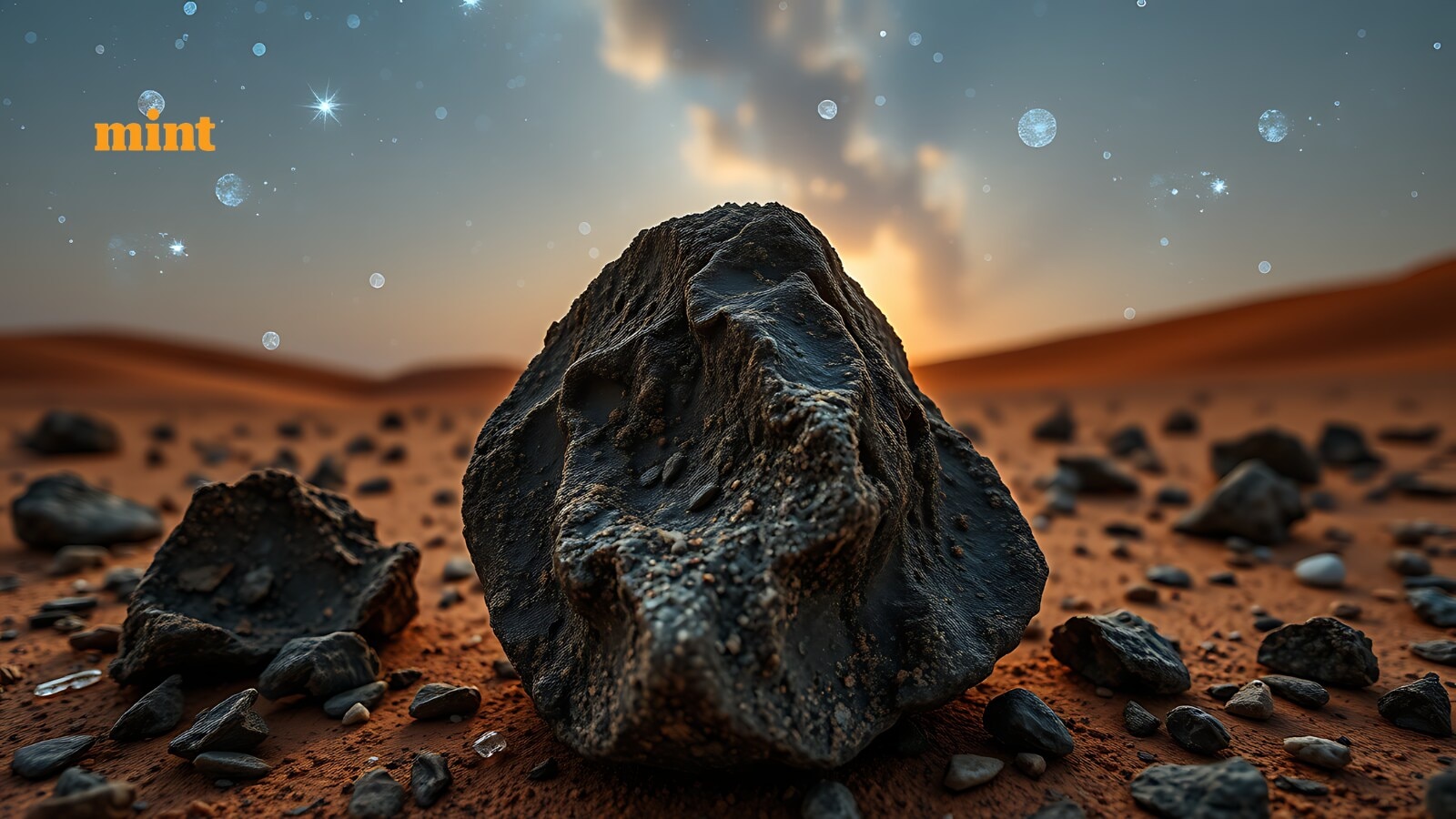
Researchers have made a groundbreaking discovery in the Sahara Desert, where two meteorites potentially originating from Mercury have been found. If confirmed, these meteorites would represent the first instances of material from Mercury, the closest planet to the Sun, ever identified on Earth.
Mercury’s proximity to the Sun makes it a challenging subject for study. Historically, only two spacecraft, Mariner 10 and MESSENGER, have successfully explored the planet, while a third mission, BepiColombo, is expected to arrive in 2026. In contrast, over 1,100 meteorites from Mars and the Moon have been documented on Earth, yet none have been confirmed to originate from Mercury.
Potential Origins of the Meteorites
Researchers suggest that Mercury may indeed be capable of ejecting rock fragments into space during asteroid impacts, despite its small size. The dynamics of this process are complicated by the planet’s need to overcome the gravitational pull of the Sun. According to Ben Rider-Stokes, a researcher involved in the study, “Based on the amount of lunar and Martian meteorites, we should have around 10 Mercury meteorites, according to dynamical modelling. However, Mercury is a lot closer to the Sun, so anything that’s ejected off Mercury also has to escape the Sun’s gravity to get to us. It is dynamically possible, just a lot harder.”
The two meteorites, designated as NWA 15915 and KG 022, could provide valuable insights into Mercury’s surface characteristics. However, their age raises questions; they appear to be around 500 million years older than Mercury’s known surface. Rider-Stokes believes this discrepancy might stem from inaccurate dating techniques rather than indicating a different origin.
Previous Findings and Current Implications
The search for meteorites from Mercury is not new. In 2012, a meteorite named NWA 7325, discovered in Morocco, was initially thought to be from Mercury. It generated excitement among scientists until further analysis revealed an excess of chromium, which did not align with Mercury’s chemical profile. Similarly, previous finds of aubrites in France were believed to originate from Mercury’s inner layer but were also dismissed due to their chemical inconsistencies.
The latest meteorites found in the Sahara may finally hold the key to understanding Mercury. Their mineral composition includes olivine and pyroxene, minerals that have been identified in data returned by NASA’s MESSENGER mission. Furthermore, the absence of iron in these meteorites aligns with established scientific models of Mercury’s surface.
Until samples can be brought back from Mercury or a direct mission to the planet takes place, confirming the origins of these meteorites remains a significant challenge. Nonetheless, the discovery of these potential Mercury meteorites in the Sahara opens a new avenue for understanding the solar system’s innermost planet.

Albert Camus’ Insightful Quote on Human Identity Resurfaces

Drone Strikes and Missile Attacks Disrupt UAE Amid Rising Tensions

Japanese Yen Rises Sharply Against US Dollar Ahead of Key Decisions

Priyanka Chopra and Nick Jonas Avoid Near Miss en Route to Oscars

Gujarat Vaccinates Over 11 Lakh Infants in Major Health Drive

Alexandre Singh Wins Oscar, Celebrates Immigrant Heritage

Lok Sabha Speaker Issues Warning Over Placards in Parliament

Global Electrosurgical Devices Market Expands to $10.2 Billion by 2034

North Zone Dominates Cricket; SJAM-1 Shines in Table Tennis

SBI Announces QIP Floor Price at ₹811.05 Per Share

Cept Unveils ₹3.1 Crore Urban Mobility Plan for Sustainable Growth

Comparing Subscription Prices: Spotify, Apple Music, and YouTube Music in India

New Blood Group Discovered in South Indian Woman at Rotary Centre

Konkani Cultural Organisation to Host Pearl Jubilee in Abu Dhabi

Torrential Rains Cause Flash Flooding in New York and New Jersey

Nothing Headphone 1 Review: A Bold Contender in Audio Design

Broad Advocates for Bowling Change Ahead of Final Test Against India

Air India Crash Investigation Highlights Boeing Fuel Switch Concerns
-
 World1 year ago
SBI Announces QIP Floor Price at ₹811.05 Per Share
-
 Lifestyle1 year ago
Cept Unveils ₹3.1 Crore Urban Mobility Plan for Sustainable Growth
-
 Science12 months ago
Comparing Subscription Prices: Spotify, Apple Music, and YouTube Music in India
-
 Science1 year ago
New Blood Group Discovered in South Indian Woman at Rotary Centre
-
 Top Stories1 year ago
Konkani Cultural Organisation to Host Pearl Jubilee in Abu Dhabi
-
 World1 year ago
Torrential Rains Cause Flash Flooding in New York and New Jersey
-
 Science1 year ago
Nothing Headphone 1 Review: A Bold Contender in Audio Design
-
 Sports1 year ago
Broad Advocates for Bowling Change Ahead of Final Test Against India
-
 Top Stories1 year ago
Air India Crash Investigation Highlights Boeing Fuel Switch Concerns
-

 Business1 year ago
Indian Stock Market Rebounds: Sensex and Nifty Rise After Four-Day Decline
-

 Sports1 year ago
Cristian Totti Retires at 19: Pressure of Fame Takes Toll
-

 Politics1 year ago
Abandoned Doberman Finds New Home After Journey to Prague