
Science
New Evidence Reveals Dynamic Climate during Snowball Earth Period

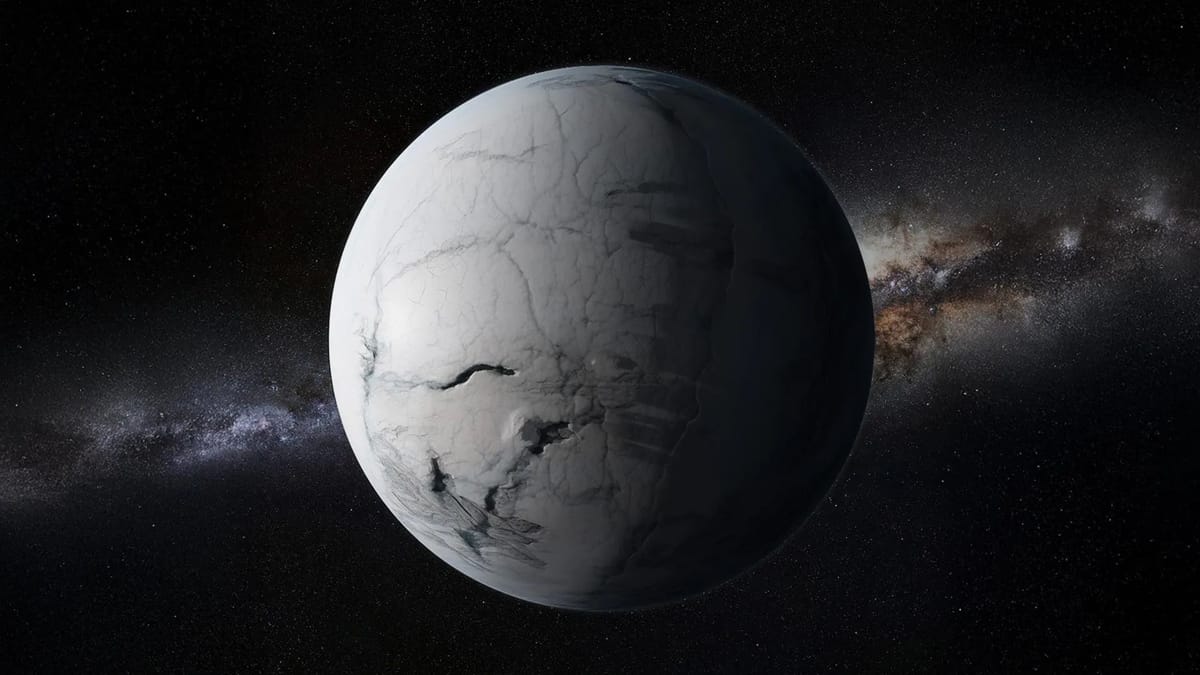
New research from the University of Southampton has unveiled that the Earth experienced significant climate fluctuations during the Cryogenian Period, specifically between 720 and 635 million years ago. This era, known as Snowball Earth, was previously thought to be characterized by a completely frozen planet. However, the latest findings indicate periods of thawing, referred to as slushball or waterbelt states, challenging long-held assumptions about this extreme ice age.
The study highlights that rather than remaining in a perpetual ice cover, the climate oscillated, demonstrating variability on annual, decadal, and centennial timescales during at least one interval of the Sturtian glaciation. These oscillations, akin to modern climate patterns such as seasonal changes and solar cycles, suggest a more complex climatic history than previously understood. The research team examined ancient laminated rocks known as varves found in the Port Askaig Formation on the Garvellach Islands, located off the west coast of Scotland.
Through the analysis of 2,600 individual layers, each representing one year of deposition, researchers uncovered evidence of climate signals embedded within the varves. The thickness of these layers varied, indicating that they formed due to seasonal freeze-thaw cycles in a calm, deep-water environment beneath the ice. Microscopic examinations revealed that these layers were not static but rather recorded a dynamic climate system.
Statistical analyses confirmed the existence of climate cycles occurring every few years to decades, closely resembling contemporary climate models. While the overall climate remained extremely cold and stable, these brief fluctuations were significant disturbances that could last thousands of years. According to the researchers, if approximately 15 percent of the ocean surface, particularly in tropical regions, remained ice-free, familiar atmosphere-ocean interactions could resume, allowing for these oscillatory patterns to emerge.
The findings suggest that while the Snowball Earth was predominantly frozen, it was intermittently interrupted by brief periods of thaw, characterized by limited open water. This research not only sheds light on the Earth’s past but also emphasizes the resilience and sensitivity of the climate system. It demonstrates that, even under extreme conditions, the climate can reactivate familiar oscillations when given minimal opportunities.
This research has significant implications for understanding how planetary systems respond to major disturbances. A paper detailing these findings has been published in the journal Earth and Planetary Science Letters, contributing to a growing body of knowledge regarding ancient climatic conditions and their relevance to current climate dynamics.

Albert Camus’ Insightful Quote on Human Identity Resurfaces

Drone Strikes and Missile Attacks Disrupt UAE Amid Rising Tensions

Japanese Yen Rises Sharply Against US Dollar Ahead of Key Decisions

Priyanka Chopra and Nick Jonas Avoid Near Miss en Route to Oscars

Gujarat Vaccinates Over 11 Lakh Infants in Major Health Drive

Alexandre Singh Wins Oscar, Celebrates Immigrant Heritage

Lok Sabha Speaker Issues Warning Over Placards in Parliament

Global Electrosurgical Devices Market Expands to $10.2 Billion by 2034

North Zone Dominates Cricket; SJAM-1 Shines in Table Tennis

SBI Announces QIP Floor Price at ₹811.05 Per Share

Cept Unveils ₹3.1 Crore Urban Mobility Plan for Sustainable Growth

Comparing Subscription Prices: Spotify, Apple Music, and YouTube Music in India

New Blood Group Discovered in South Indian Woman at Rotary Centre

Konkani Cultural Organisation to Host Pearl Jubilee in Abu Dhabi

Torrential Rains Cause Flash Flooding in New York and New Jersey

Nothing Headphone 1 Review: A Bold Contender in Audio Design

Air India Crash Investigation Highlights Boeing Fuel Switch Concerns

Broad Advocates for Bowling Change Ahead of Final Test Against India
-
 World1 year ago
SBI Announces QIP Floor Price at ₹811.05 Per Share
-
 Lifestyle1 year ago
Cept Unveils ₹3.1 Crore Urban Mobility Plan for Sustainable Growth
-
 Science1 year ago
Comparing Subscription Prices: Spotify, Apple Music, and YouTube Music in India
-
 Science1 year ago
New Blood Group Discovered in South Indian Woman at Rotary Centre
-
 Top Stories1 year ago
Konkani Cultural Organisation to Host Pearl Jubilee in Abu Dhabi
-
 World1 year ago
Torrential Rains Cause Flash Flooding in New York and New Jersey
-
 Science1 year ago
Nothing Headphone 1 Review: A Bold Contender in Audio Design
-
 Top Stories1 year ago
Air India Crash Investigation Highlights Boeing Fuel Switch Concerns
-
 Sports1 year ago
Broad Advocates for Bowling Change Ahead of Final Test Against India
-

 Business1 year ago
Indian Stock Market Rebounds: Sensex and Nifty Rise After Four-Day Decline
-

 Sports1 year ago
Cristian Totti Retires at 19: Pressure of Fame Takes Toll
-

 Politics1 year ago
Abandoned Doberman Finds New Home After Journey to Prague