
Science
Indian Satellite AFR Captures Images of International Space Station

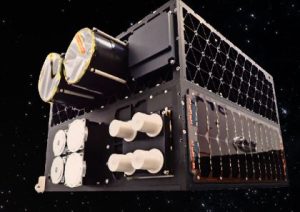
An Indian-built satellite, known as AFR, has successfully captured images of the International Space Station (ISS) while in orbit. The satellite, operated by Azista Space, recorded this remarkable feat from distances of approximately 250 km and 300 km, demonstrating its advanced imaging capabilities.
The 80 kg AFR satellite was launched in 2023 and is equipped with a sensor specifically designed to track the ISS. In total, the satellite captured the ISS in five distinct frames during sunlit conditions, achieving 100 percent success in two independent imaging attempts. The resulting images boast a sampling resolution of approximately 2.2 metres, validating Azista Space’s tracking algorithms and imaging precision.
“This achievement marks a pivotal milestone for Azista and a significant leap in India’s sovereign space preparedness,” stated Srinivas Reddy, Managing Director of Azista Space. He noted that AFR is the only Indian-built satellite to achieve such a feat, enhancing the country’s capabilities in non-Earth imaging (NEI) and space situational awareness (SSA).
Significance of Non-Earth Imaging
The images from the AFR satellite reveal the core structure of the ISS, providing critical insights into space situational awareness. This capability is particularly vital for military applications, as highlighted by Bharath Simha Reddy, Assistant General Manager at Azista Space. He emphasized that non-Earth imaging is crucial for determining the location of enemy satellites.
Azista Space has established a reputation for its strong capabilities in electro-optical payloads, image processing, and satellite bus engineering. This expertise allows the company to design and deliver end-to-end SSA satellites tailored to specific customer missions. The development of indigenous algorithms has been a key contributor to the satellite’s success in capturing these images.
Future Directions and Investments
The AFR satellite, initially launched as a technology demonstrator, has begun generating revenue through the acquisition of extensive ocean imagery, covering areas about 70 km wide and 7,000–10,000 km long. Clients both in India and internationally are purchasing these images, further establishing Azista Space’s presence in the global market.
In a strategic move to bolster India’s space capabilities, Azista Space plans to invest Rs 500 crore in setting up a space-grade electro-optical payload manufacturing facility in Sanand, Gujarat. This facility aims to support India’s burgeoning space and defence needs, enhancing the nation’s sovereign capabilities in military-grade electro-optical payloads. Reddy noted that this investment will play a critical role in national security and advanced surveillance requirements, positioning India among global leaders in this specialized domain.
The upcoming manufacturing facility is expected to significantly enhance indigenous production of advanced electro-optical systems, reducing reliance on imports while generating skilled employment opportunities. Azista Space is already exporting about 85 space subsystems to foreign customers, further solidifying its role in the international space industry.
As Azista Space continues to innovate and expand its capabilities, the success of the AFR satellite represents a noteworthy advancement in India’s space exploration efforts and technological prowess.

Albert Camus’ Insightful Quote on Human Identity Resurfaces

Drone Strikes and Missile Attacks Disrupt UAE Amid Rising Tensions

Japanese Yen Rises Sharply Against US Dollar Ahead of Key Decisions

Priyanka Chopra and Nick Jonas Avoid Near Miss en Route to Oscars

Gujarat Vaccinates Over 11 Lakh Infants in Major Health Drive

Alexandre Singh Wins Oscar, Celebrates Immigrant Heritage

Lok Sabha Speaker Issues Warning Over Placards in Parliament

Global Electrosurgical Devices Market Expands to $10.2 Billion by 2034

North Zone Dominates Cricket; SJAM-1 Shines in Table Tennis

SBI Announces QIP Floor Price at ₹811.05 Per Share

Cept Unveils ₹3.1 Crore Urban Mobility Plan for Sustainable Growth

New Blood Group Discovered in South Indian Woman at Rotary Centre

Konkani Cultural Organisation to Host Pearl Jubilee in Abu Dhabi

Torrential Rains Cause Flash Flooding in New York and New Jersey

Nothing Headphone 1 Review: A Bold Contender in Audio Design

Air India Crash Investigation Highlights Boeing Fuel Switch Concerns

Indian Stock Market Rebounds: Sensex and Nifty Rise After Four-Day Decline

Broad Advocates for Bowling Change Ahead of Final Test Against India
-
 World1 year ago
SBI Announces QIP Floor Price at ₹811.05 Per Share
-
 Lifestyle1 year ago
Cept Unveils ₹3.1 Crore Urban Mobility Plan for Sustainable Growth
-
 Science12 months ago
New Blood Group Discovered in South Indian Woman at Rotary Centre
-
 Top Stories1 year ago
Konkani Cultural Organisation to Host Pearl Jubilee in Abu Dhabi
-
 World1 year ago
Torrential Rains Cause Flash Flooding in New York and New Jersey
-
 Science1 year ago
Nothing Headphone 1 Review: A Bold Contender in Audio Design
-
 Top Stories1 year ago
Air India Crash Investigation Highlights Boeing Fuel Switch Concerns
-
 Business1 year ago
Indian Stock Market Rebounds: Sensex and Nifty Rise After Four-Day Decline
-
 Sports12 months ago
Broad Advocates for Bowling Change Ahead of Final Test Against India
-

 Sports12 months ago
Cristian Totti Retires at 19: Pressure of Fame Takes Toll
-

 Politics1 year ago
Abandoned Doberman Finds New Home After Journey to Prague
-
 Lifestyle1 year ago
Villagers Unite to Raise ₹45 Lakh for Water Solutions in Vadgam