
Science
ASI Launches Excavation at Iron Age Burial Site in Kodaikanal

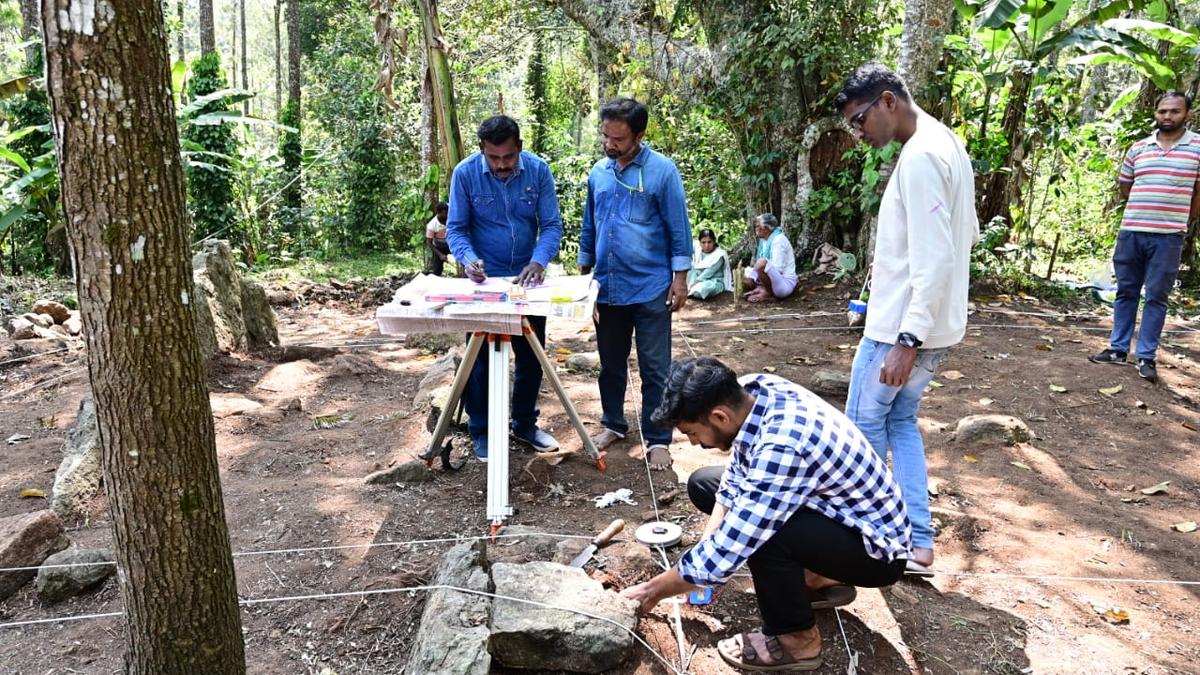
The Archaeological Survey of India (ASI) has commenced an excavation at an Iron Age burial site located in Kamanur, near Kodaikanal, in the lower Palani hills of Dindigul district, Tamil Nadu. This initiative is part of a comprehensive three-year project aimed at exploring several archaeological sites throughout the Palani hills region.
Excavation Director and Superintending Archaeologist R. N. Kumaran stated that various burial types, including cists, dolmens, urn burials, and pit burials, have already been identified in the area. The recent discovery of a burial complex during preliminary vegetation clearance prompted the ASI to undertake this excavation.
Historical Context and Previous Excavations
The Kodaikanal region has a rich archaeological history, with previous excavations carried out in the pre-Independence era and more recent efforts by Professor K. Rajan of Tamil University, Thanjavur, in 2004 and 2006 at Thandikudi. According to Mr. Kumaran, this marks the first excavation conducted by the ASI in this specific hilly area.
“The region has been extensively explored since colonial times, and many Iron Age sites have been identified,” Kumaran explained. “Kamanur is a promising site. The current excavation will help clarify the cultural practices of the people who settled in this region over 3,000 years ago.”
K. Rajan noted the significance of the site, emphasizing that various social groups were drawn to these hills, located approximately 3,000 feet above mean sea level, largely due to the economic opportunities provided by lucrative spices like pepper.
Community Engagement and Future Prospects
The excavation was officially inaugurated on January 21, 2024, in a ceremony attended by local leaders, including Murugesan, the Village Headman of Kamanur, and Magesh, the President of Thandikudi panchayat. Villagers expressed their enthusiasm for the initiative, urging the ASI to document the archaeological wealth of the entire Palani Hills region, particularly Kodaikanal.
Mr. Kumaran emphasized the importance of local involvement, stating, “The villagers are eager for the ASI to explore and document the archaeological treasures that lie within the Palani Hills.” The excavation team also includes P. Aravazhi, Superintendent Archaeologist (in-charge), A. Muthukumar, Assistant Superintending Archaeologist from ASI Tiruchi Circle, and M. Saranya, Assistant Superintending Archaeologist from ASI Bangalore Circle.
As the excavation progresses, it is anticipated that findings will provide valuable insights into the lives and customs of those who inhabited the region thousands of years ago, further enriching the historical narrative of the Palani hills and its ancient cultures.

Albert Camus’ Insightful Quote on Human Identity Resurfaces

Drone Strikes and Missile Attacks Disrupt UAE Amid Rising Tensions

Japanese Yen Rises Sharply Against US Dollar Ahead of Key Decisions

Priyanka Chopra and Nick Jonas Avoid Near Miss en Route to Oscars

Gujarat Vaccinates Over 11 Lakh Infants in Major Health Drive

Alexandre Singh Wins Oscar, Celebrates Immigrant Heritage

Lok Sabha Speaker Issues Warning Over Placards in Parliament

Global Electrosurgical Devices Market Expands to $10.2 Billion by 2034

North Zone Dominates Cricket; SJAM-1 Shines in Table Tennis

SBI Announces QIP Floor Price at ₹811.05 Per Share

Cept Unveils ₹3.1 Crore Urban Mobility Plan for Sustainable Growth

Comparing Subscription Prices: Spotify, Apple Music, and YouTube Music in India

New Blood Group Discovered in South Indian Woman at Rotary Centre

Konkani Cultural Organisation to Host Pearl Jubilee in Abu Dhabi

Torrential Rains Cause Flash Flooding in New York and New Jersey

Nothing Headphone 1 Review: A Bold Contender in Audio Design

Air India Crash Investigation Highlights Boeing Fuel Switch Concerns

Broad Advocates for Bowling Change Ahead of Final Test Against India
-
 World1 year ago
SBI Announces QIP Floor Price at ₹811.05 Per Share
-
 Lifestyle1 year ago
Cept Unveils ₹3.1 Crore Urban Mobility Plan for Sustainable Growth
-
 Science1 year ago
Comparing Subscription Prices: Spotify, Apple Music, and YouTube Music in India
-
 Science1 year ago
New Blood Group Discovered in South Indian Woman at Rotary Centre
-
 Top Stories1 year ago
Konkani Cultural Organisation to Host Pearl Jubilee in Abu Dhabi
-
 World1 year ago
Torrential Rains Cause Flash Flooding in New York and New Jersey
-
 Science1 year ago
Nothing Headphone 1 Review: A Bold Contender in Audio Design
-
 Top Stories1 year ago
Air India Crash Investigation Highlights Boeing Fuel Switch Concerns
-
 Sports1 year ago
Broad Advocates for Bowling Change Ahead of Final Test Against India
-

 Business1 year ago
Indian Stock Market Rebounds: Sensex and Nifty Rise After Four-Day Decline
-

 Sports1 year ago
Cristian Totti Retires at 19: Pressure of Fame Takes Toll
-

 Politics1 year ago
Abandoned Doberman Finds New Home After Journey to Prague