
Science
37% of Companies Plan to Replace Workers with AI by 2026

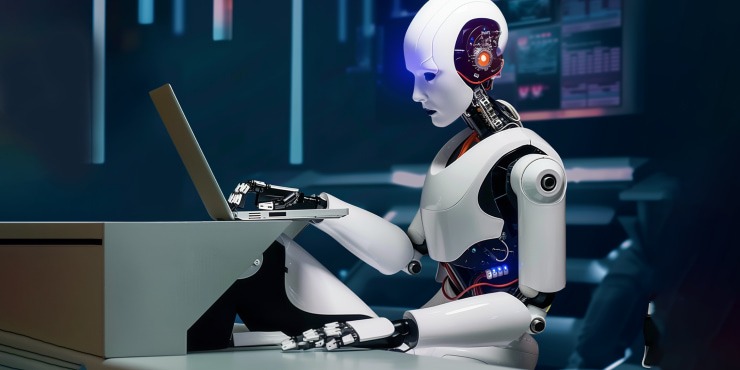
The integration of artificial intelligence (AI) into the workforce is accelerating, with a significant number of companies planning to replace human workers with AI systems by the end of 2026. A recent survey conducted by Resume.org revealed that approximately 37% of businesses anticipate this transition, while nearly 30% have already made cuts in their workforce to accommodate AI technologies.
According to Kara Dennison, head of career advising at Resume.org, “AI adoption is going to reshape the job market more dramatically over the next 18 to 24 months than we have seen in decades.” The survey findings underscore a pressing shift in employment dynamics, suggesting that workers in various sectors could face significant challenges.
The Extent of Job Displacement
The potential impact of AI on employment is alarming. In just the first half of 2025, an estimated 78,000 tech jobs were eliminated due to AI-driven decisions. Furthermore, Wall Street banks are projected to cut around 200,000 positions over the next three to five years, with a focus on entry-level and back-office roles.
A study from the Massachusetts Institute of Technology (MIT) utilized a labor simulation tool to evaluate AI’s capability to replace human jobs. The study concluded that AI could technically replace 11.7% of the total American workforce. In a broader context, Goldman Sachs predicts that generative AI may substitute the equivalent of 25 million full-time roles worldwide in 2026.
The survey also indicated that half of the business leaders have already reduced hiring rates, with 39% implementing layoffs in 2025. Alarmingly, 58% of executives believe further layoffs are likely before the year concludes.
Jobs at Risk and Opportunities
The threat posed by AI is not uniform across all professions. Roles that involve repetitive, codifiable tasks are at the highest risk of automation. For instance:
– Data entry and administrative roles face a staggering 95% risk, with up to 7.5 million jobs potentially eliminated by 2027.
– Paralegals and legal researchers are projected to see an 80% risk of automation by 2026.
– Medical transcriptionists are already experiencing 99% automation in many healthcare settings.
– Retail cashiers face a 65% risk as self-checkout systems become ubiquitous.
Conversely, jobs that rely on human experience, emotional intelligence, and physical skills are less threatened. Professions in teaching, caregiving, skilled trades, and construction remain largely insulated from the impact of AI. Notably, 94% of construction companies report difficulty in finding workers, indicating that tradespeople are not easily replaceable by AI.
Several corporations have publicly acknowledged their shift towards AI integration. For example, IBM has replaced numerous human resources employees with AI tools, while Klarna has halved its workforce over four years due to increasing AI capabilities. HP plans to eliminate up to 6,000 jobs by 2028, citing improvements in productivity driven by AI.
Young workers are experiencing the most significant impact as they enter the job market. Research from Stanford University found that employment among individuals aged 22 to 25 in sectors exposed to AI has dropped by 16%. This decline contrasts with the relative stability of older workers, who possess valuable experience that AI cannot replicate.
Dario Amodei, CEO of Anthropic, has warned that AI could eliminate around 50% of entry-level white-collar positions within five years, a prediction that is beginning to manifest in hiring trends.
Despite these challenges, it is essential to recognize the potential for job creation alongside job displacement. A study conducted by the European Central Bank found that companies investing heavily in AI are currently hiring more workers to develop, oversee, and implement these systems. New roles are emerging rapidly, with positions such as AI and Machine Learning Engineers growing at a rate of 41.8% annually. The median annual salary for AI-related jobs in the U.S. stands at approximately $157,000, significantly higher than the national average.
Strategies for Workers
Workers who aim to navigate this transition effectively should consider adapting to AI technologies rather than resisting them. Experts recommend several strategies:
– Familiarize yourself with AI tools applicable to your current job, such as ChatGPT, Copilot, and Claude, to enhance productivity and reduce the risk of replacement.
– Develop skills that AI cannot easily replicate, including leadership, creative problem-solving, emotional intelligence, and complex negotiation.
– Consider transitioning into AI-adjacent roles, where opportunities in prompt engineering, AI oversight, and data ethics are on the rise.
– If you are in a high-risk role, begin exploring alternative career paths now to minimize future disruptions.
– Explore skilled trades such as construction, electrical work, plumbing, and HVAC, which continue to be in high demand and are less vulnerable to automation.
The rapid evolution of the job market due to AI integration is a reality that cannot be ignored. For millions of workers in routine, entry-level, and data-heavy roles, the urgency to adapt is increasing. Conversely, those with experience and specialized skills may find opportunities for growth amid this technological shift.
The choices made by workers today will significantly influence their job security in the future. Adaptability, willingness to learn, and proactive planning are crucial for navigating the challenges and opportunities presented by AI in the workplace.

Albert Camus’ Insightful Quote on Human Identity Resurfaces

Drone Strikes and Missile Attacks Disrupt UAE Amid Rising Tensions

Japanese Yen Rises Sharply Against US Dollar Ahead of Key Decisions

Priyanka Chopra and Nick Jonas Avoid Near Miss en Route to Oscars

Gujarat Vaccinates Over 11 Lakh Infants in Major Health Drive

Alexandre Singh Wins Oscar, Celebrates Immigrant Heritage

Lok Sabha Speaker Issues Warning Over Placards in Parliament

Global Electrosurgical Devices Market Expands to $10.2 Billion by 2034

North Zone Dominates Cricket; SJAM-1 Shines in Table Tennis

SBI Announces QIP Floor Price at ₹811.05 Per Share

Cept Unveils ₹3.1 Crore Urban Mobility Plan for Sustainable Growth

New Blood Group Discovered in South Indian Woman at Rotary Centre

Konkani Cultural Organisation to Host Pearl Jubilee in Abu Dhabi

Torrential Rains Cause Flash Flooding in New York and New Jersey

Nothing Headphone 1 Review: A Bold Contender in Audio Design

Indian Stock Market Rebounds: Sensex and Nifty Rise After Four-Day Decline

Air India Crash Investigation Highlights Boeing Fuel Switch Concerns

Broad Advocates for Bowling Change Ahead of Final Test Against India
-
 World9 months ago
SBI Announces QIP Floor Price at ₹811.05 Per Share
-
 Lifestyle9 months ago
Cept Unveils ₹3.1 Crore Urban Mobility Plan for Sustainable Growth
-
 Science8 months ago
New Blood Group Discovered in South Indian Woman at Rotary Centre
-
 Top Stories9 months ago
Konkani Cultural Organisation to Host Pearl Jubilee in Abu Dhabi
-
 World9 months ago
Torrential Rains Cause Flash Flooding in New York and New Jersey
-
 Science9 months ago
Nothing Headphone 1 Review: A Bold Contender in Audio Design
-
 Business9 months ago
Indian Stock Market Rebounds: Sensex and Nifty Rise After Four-Day Decline
-
 Top Stories9 months ago
Air India Crash Investigation Highlights Boeing Fuel Switch Concerns
-
 Sports8 months ago
Broad Advocates for Bowling Change Ahead of Final Test Against India
-

 Sports8 months ago
Cristian Totti Retires at 19: Pressure of Fame Takes Toll
-

 Politics9 months ago
Abandoned Doberman Finds New Home After Journey to Prague
-

 Top Stories9 months ago
Patna Bank Manager Abhishek Varun Found Dead in Well