
Politics
Zelensky Reveals 20-Point Peace Plan to Resolve Russia-Ukraine Conflict

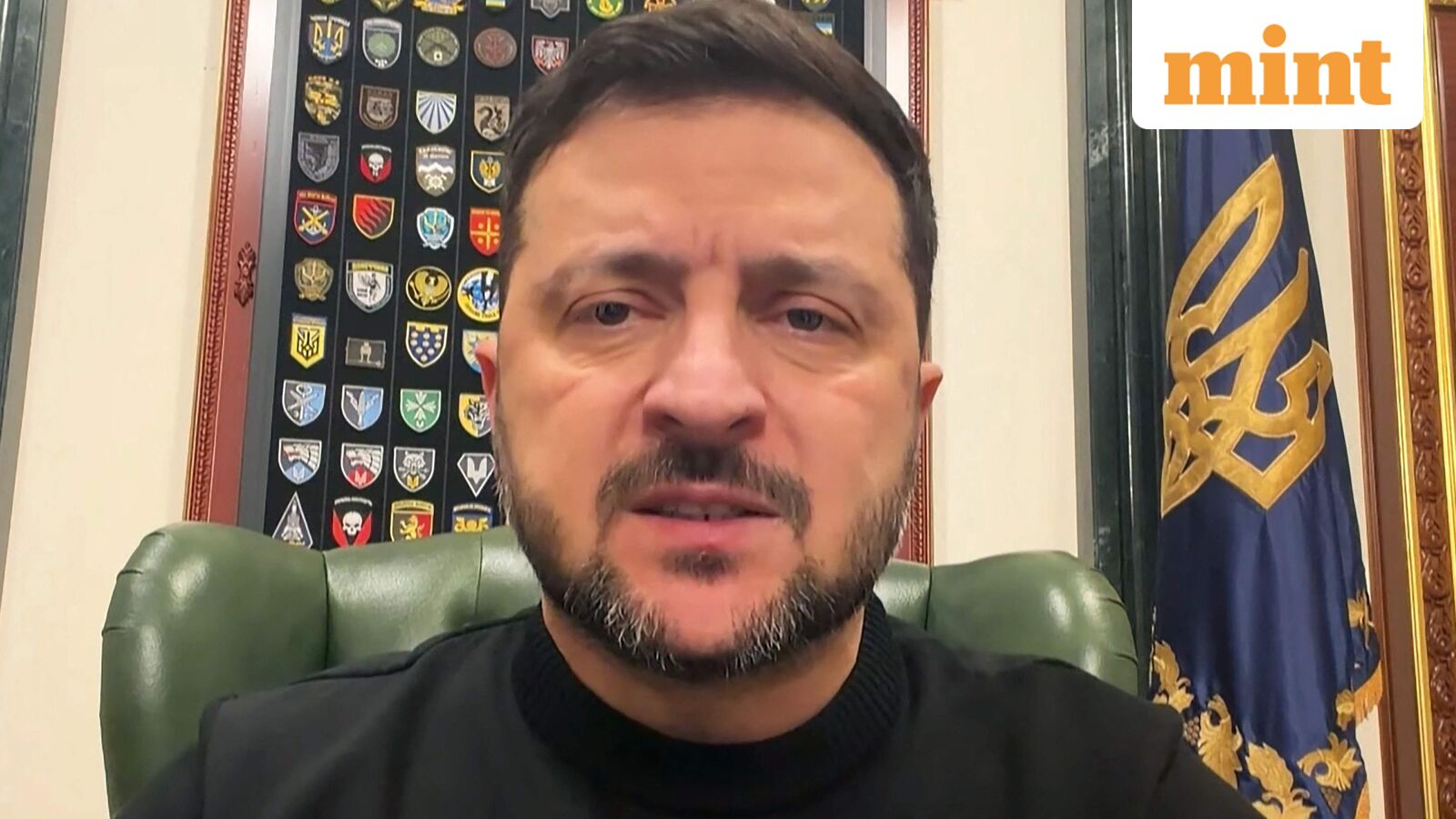
Ukrainian President Volodymyr Zelensky has introduced a comprehensive 20-point peace plan aimed at ending the ongoing conflict with Russia. This proposal, developed in collaboration with the United States, outlines key security guarantees, territorial arrangements, and a framework for reconstruction. Zelensky shared the plan with journalists in Kyiv, where he emphasized its importance for establishing a path toward a ceasefire.
The peace proposal includes reaffirmation of Ukraine’s sovereignty and a commitment to a “full and unconditional” non-aggression agreement between Ukraine and Russia. A crucial feature of the plan is the establishment of a monitoring mechanism that will utilize space-based unmanned surveillance to oversee the line of contact, provide early warnings of violations, and facilitate conflict resolution. Once all parties endorse the plan, an immediate full ceasefire is set to take effect.
Security and Military Arrangements
Under the proposed framework, Ukraine would maintain a peacetime armed force of 800,000 personnel. It would also receive security guarantees from the United States, NATO, and other European signatories, aligning with NATO’s Article 5. Zelensky explained that these guarantees would activate a coordinated military response, along with the reinstatement of global sanctions against Russia in the event of further aggression. However, these guarantees would be nullified should Ukraine initiate an unprovoked attack on Russian territory.
Economic Reconstruction and Development
The plan outlines Ukraine’s commitment to joining the European Union within a defined timeframe. It also provides for privileged access to European markets in the short term. A separate global development package is proposed, which includes the establishment of a Ukraine Development Fund and joint investment initiatives aimed at enhancing energy infrastructure and large-scale reconstruction of war-affected areas. The World Bank is expected to offer a special financing package to accelerate these recovery efforts.
Zelensky announced a target of $200 billion for post-war reconstruction through various recovery and humanitarian funds. This capital will be sourced from both the United States and European nations, designed to ensure transparent and effective investment in Ukraine’s economy.
The plan further stipulates that Ukraine will remain a non-nuclear state in accordance with the Nuclear Non-Proliferation Treaty, while the Zaporizhzhia Nuclear Power Plant would operate jointly under the oversight of Ukraine, the United States, and Russia.
Territorial and Humanitarian Provisions
The proposal recognizes the current troop deployment lines in the eastern regions of Donetsk, Luhansk, Zaporizhzhia, and Kherson as the official line of contact. It calls for the withdrawal of Russian forces from the Dnipropetrovsk, Mykolaiv, Sumy, and Kharkiv regions to facilitate the agreement’s implementation. To ensure compliance, international forces may be deployed, subject to approval by Ukraine’s parliament or through a referendum.
Additionally, a humanitarian committee would oversee the exchange of prisoners of war on an all-for-all basis, ensuring the return of detained civilians, political prisoners, and children. Measures to alleviate civilian suffering and address war-related trauma are also included in the plan.
Ukraine is tasked with holding elections as soon as possible after the agreement is signed. Zelensky indicated that the deal would be legally binding and monitored by a Peace Council, which he proposed would be chaired by a leading figure, potentially Donald Trump. This council would impose sanctions for any violations of the agreement.
While the plan outlines many provisions, Zelensky acknowledged that some issues—particularly regarding long-term territorial arrangements and the future governance of the Zaporizhzhia nuclear plant—remain unresolved. He stated these matters should be addressed at the leadership level.
Zelensky concluded by indicating that Kyiv is now awaiting a response from Moscow following the United States’ communication of the proposal to Russian officials. The success of this peace initiative hinges on cooperation and agreement from all parties involved, aiming to bring an end to the prolonged conflict in Ukraine.

Albert Camus’ Insightful Quote on Human Identity Resurfaces

Drone Strikes and Missile Attacks Disrupt UAE Amid Rising Tensions

Japanese Yen Rises Sharply Against US Dollar Ahead of Key Decisions

Priyanka Chopra and Nick Jonas Avoid Near Miss en Route to Oscars

Gujarat Vaccinates Over 11 Lakh Infants in Major Health Drive

Alexandre Singh Wins Oscar, Celebrates Immigrant Heritage

Lok Sabha Speaker Issues Warning Over Placards in Parliament

Global Electrosurgical Devices Market Expands to $10.2 Billion by 2034

North Zone Dominates Cricket; SJAM-1 Shines in Table Tennis

SBI Announces QIP Floor Price at ₹811.05 Per Share

Cept Unveils ₹3.1 Crore Urban Mobility Plan for Sustainable Growth

Comparing Subscription Prices: Spotify, Apple Music, and YouTube Music in India

New Blood Group Discovered in South Indian Woman at Rotary Centre

Konkani Cultural Organisation to Host Pearl Jubilee in Abu Dhabi

Torrential Rains Cause Flash Flooding in New York and New Jersey

Nothing Headphone 1 Review: A Bold Contender in Audio Design

Broad Advocates for Bowling Change Ahead of Final Test Against India

Air India Crash Investigation Highlights Boeing Fuel Switch Concerns
-
 World1 year ago
SBI Announces QIP Floor Price at ₹811.05 Per Share
-
 Lifestyle1 year ago
Cept Unveils ₹3.1 Crore Urban Mobility Plan for Sustainable Growth
-
 Science12 months ago
Comparing Subscription Prices: Spotify, Apple Music, and YouTube Music in India
-
 Science1 year ago
New Blood Group Discovered in South Indian Woman at Rotary Centre
-
 Top Stories1 year ago
Konkani Cultural Organisation to Host Pearl Jubilee in Abu Dhabi
-
 World1 year ago
Torrential Rains Cause Flash Flooding in New York and New Jersey
-
 Science1 year ago
Nothing Headphone 1 Review: A Bold Contender in Audio Design
-
 Sports1 year ago
Broad Advocates for Bowling Change Ahead of Final Test Against India
-
 Top Stories1 year ago
Air India Crash Investigation Highlights Boeing Fuel Switch Concerns
-

 Business1 year ago
Indian Stock Market Rebounds: Sensex and Nifty Rise After Four-Day Decline
-

 Sports1 year ago
Cristian Totti Retires at 19: Pressure of Fame Takes Toll
-

 Politics1 year ago
Abandoned Doberman Finds New Home After Journey to Prague