
Politics
Trump Reveals Greenland Deal Framework After NATO Discussions

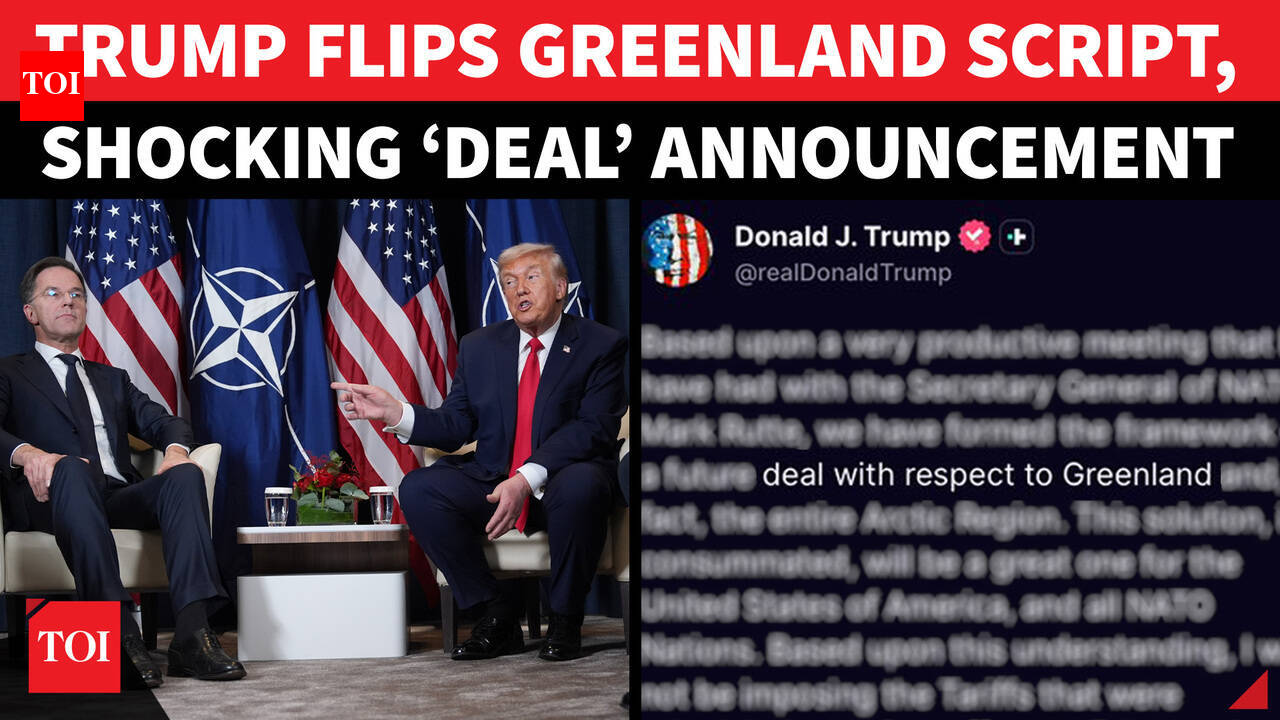
U.S. President Donald Trump has announced a significant development regarding Greenland, stating that a preliminary agreement has been reached in discussions with NATO Secretary General Mark Rutte. This announcement came shortly after Trump’s return to the World Economic Forum in Davos, Switzerland, and is poised to alter the dynamics of transatlantic relations.
During a press briefing, Trump described the emerging framework as a “framework of a future deal,” indicating that the negotiations have already yielded positive outcomes. Notably, Washington has decided to pause punitive tariffs on several European countries as part of the initial agreements. This pause aims to foster a more cooperative environment as discussions continue.
Details of the Framework and Implications
The specifics of the framework remain largely undisclosed, but Trump’s comments suggest a move towards enhancing U.S.-European relations. In recent months, trade tensions have escalated between the United States and various European nations, primarily due to tariffs imposed on imported goods. The decision to halt these tariffs could signify an effort to mend fences and create a more favorable trade atmosphere.
The Greenland negotiations have long been a point of interest, particularly following Trump’s initial proposal to purchase the territory from Denmark in 2019. While that idea faced substantial backlash, the current talks appear to focus on collaboration rather than acquisition. Rutte, representing NATO, has emphasized the importance of unity among member states in addressing shared challenges.
Reactions from Europe and Future Prospects
Reactions to Trump’s announcement have been mixed within Europe. Some leaders view this development as a potential opportunity to strengthen economic ties, while others remain cautious, wary of the underlying motives behind the U.S. administration’s stance. The decision to pause tariffs is welcomed by many in the European business community, who see it as a relief amid ongoing trade disputes.
Analysts suggest that if the discussions progress positively, there could be broader implications not just for Greenland but for NATO’s collective strategy in the Arctic region. The Arctic has become increasingly important due to climate change and its potential for resource development, making cooperation essential among nations with interests in the area.
Trump’s next steps will be closely monitored as he continues to engage with European leaders. The framework’s future success will depend on the ability of both parties to navigate the complexities of international relations while addressing domestic pressures.
In conclusion, the announcement of a framework regarding Greenland marks a notable shift in U.S.-European relations. As further details emerge, the global community will be watching closely to see how these negotiations unfold and what they mean for the future of transatlantic cooperation.

Albert Camus’ Insightful Quote on Human Identity Resurfaces

Drone Strikes and Missile Attacks Disrupt UAE Amid Rising Tensions

Japanese Yen Rises Sharply Against US Dollar Ahead of Key Decisions

Priyanka Chopra and Nick Jonas Avoid Near Miss en Route to Oscars

Gujarat Vaccinates Over 11 Lakh Infants in Major Health Drive

Alexandre Singh Wins Oscar, Celebrates Immigrant Heritage

Lok Sabha Speaker Issues Warning Over Placards in Parliament

Global Electrosurgical Devices Market Expands to $10.2 Billion by 2034

North Zone Dominates Cricket; SJAM-1 Shines in Table Tennis

SBI Announces QIP Floor Price at ₹811.05 Per Share

Cept Unveils ₹3.1 Crore Urban Mobility Plan for Sustainable Growth

Comparing Subscription Prices: Spotify, Apple Music, and YouTube Music in India

New Blood Group Discovered in South Indian Woman at Rotary Centre

Konkani Cultural Organisation to Host Pearl Jubilee in Abu Dhabi

Torrential Rains Cause Flash Flooding in New York and New Jersey

Nothing Headphone 1 Review: A Bold Contender in Audio Design

Air India Crash Investigation Highlights Boeing Fuel Switch Concerns

Broad Advocates for Bowling Change Ahead of Final Test Against India
-
 World1 year ago
SBI Announces QIP Floor Price at ₹811.05 Per Share
-
 Lifestyle1 year ago
Cept Unveils ₹3.1 Crore Urban Mobility Plan for Sustainable Growth
-
 Science1 year ago
Comparing Subscription Prices: Spotify, Apple Music, and YouTube Music in India
-
 Science1 year ago
New Blood Group Discovered in South Indian Woman at Rotary Centre
-
 Top Stories1 year ago
Konkani Cultural Organisation to Host Pearl Jubilee in Abu Dhabi
-
 World1 year ago
Torrential Rains Cause Flash Flooding in New York and New Jersey
-
 Science1 year ago
Nothing Headphone 1 Review: A Bold Contender in Audio Design
-
 Top Stories1 year ago
Air India Crash Investigation Highlights Boeing Fuel Switch Concerns
-
 Sports1 year ago
Broad Advocates for Bowling Change Ahead of Final Test Against India
-

 Business1 year ago
Indian Stock Market Rebounds: Sensex and Nifty Rise After Four-Day Decline
-

 Sports1 year ago
Cristian Totti Retires at 19: Pressure of Fame Takes Toll
-

 Politics1 year ago
Abandoned Doberman Finds New Home After Journey to Prague