
Politics
Karnataka Confrontation Revives Debate on Role of Governors

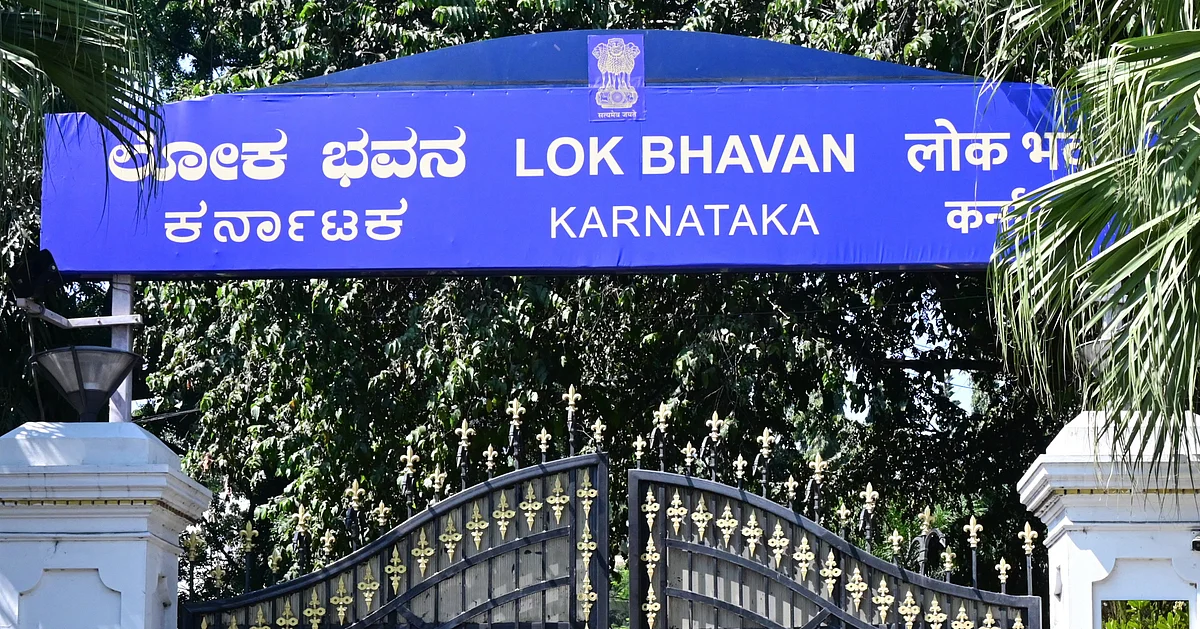
The recent confrontation between the Congress government in Karnataka and Governor Thaawar Chand Gehlot during a joint address to the legislature has reignited discussions concerning the role and necessity of governors in Indian states. This incident, along with similar clashes in Tamil Nadu and Kerala, raises questions about constitutional clarity, political misuse, and the diminishing dignity of institutions.
The controversy began when Gehlot declined to read specific sections of the address that criticized the central government, particularly the VB-G RAM (G) Act. Veteran Kannada activist and former lawmaker Vatal Nagaraj argues that these confrontations reveal a fundamental issue with the governor’s position. He suggested that the office of the governor could be abolished, stating, “Raj Bhavan, with its sprawling residence and high maintenance costs, has become a white elephant.” Nagaraj emphasized that changing the name of the governor’s office to Lok Bhavan does not enhance its connection to the people.
Nagaraj further questioned the democratic legitimacy of an unelected official overseeing an elected government. “Let the governor be elected like the President, and let there be a provision to recall the governor too,” he proposed, highlighting a desire for reform in the governance structure.
Conversely, Suresh Kumar, a senior leader of the BJP and former law and parliamentary affairs minister, opposed calls to eliminate the governor’s position, warning it would undermine constitutional safeguards. “I’m not in favour of abolishing the governor’s office as there’ll be no checks and balances,” Kumar stated. He asserted that the governor’s role is vital, particularly when there are allegations against a chief minister, as the state government may not permit prosecution.
Kumar referenced the late Justice Rama Jois, who criticized the joint address as a “colonial hangover.” He noted that the governor is often compelled to deliver politically charged speeches prepared by the Cabinet, only to face scrutiny during debates.
The debate over the governor’s role continues to intensify, especially as Kumar questioned the expectation for the governor to take a political stance. “Governor can’t criticize the Centre and its policies. He’s appointed by the President of India,” he said. He warned that forcing the governor to express opposition to central laws could undermine the Constitution and democracy.
Seeking a balanced perspective, Justice Santosh Hegde, a former judge of the Supreme Court and former Lokayukta of Karnataka, pointed to a flaw in the Constitution regarding the governor’s duties. “There is a lacuna in the Constitution,” he stated. “It doesn’t define whether the governor is bound to read out the entire speech or whether he can omit portions that are defamatory, false or unconstitutional.” Hegde highlighted that while Article 176 mandates the governor to address the legislature, it does not specify the manner or content of that address.
He suggested that ongoing confrontations across various states may necessitate judicial or legislative intervention. “The Supreme Court can clarify whether the governor is legally bound to read the speech in full or whether discretionary powers apply,” Hegde remarked, noting that the court could also recommend a parliamentary amendment on this matter.
The discussion has gained national attention following an announcement by M K Stalin, Chief Minister of Tamil Nadu, that the DMK aims to pursue an amendment to abolish the governor’s joint address. This follows repeated confrontations with Governor R N Ravi, which the DMK alleges demonstrate a pattern of governors undermining elected governments. They have expressed intent to collaborate with Karnataka and Kerala to develop wider consensus on this issue.
The Congress party has similarly criticized governors in several non-BJP-ruled states, accusing them of acting as “agents” of the central government. They point to delays in bill approvals and public remarks that undermine state authorities as evidence of this trend.
As these debates unfold, the future of the governor’s role in India remains uncertain, with advocates on both sides of the discussion calling for clarity and reform in the relationship between state leadership and the central authority.

Albert Camus’ Insightful Quote on Human Identity Resurfaces

Drone Strikes and Missile Attacks Disrupt UAE Amid Rising Tensions

Japanese Yen Rises Sharply Against US Dollar Ahead of Key Decisions

Priyanka Chopra and Nick Jonas Avoid Near Miss en Route to Oscars

Gujarat Vaccinates Over 11 Lakh Infants in Major Health Drive

Alexandre Singh Wins Oscar, Celebrates Immigrant Heritage

Lok Sabha Speaker Issues Warning Over Placards in Parliament

Global Electrosurgical Devices Market Expands to $10.2 Billion by 2034

North Zone Dominates Cricket; SJAM-1 Shines in Table Tennis

SBI Announces QIP Floor Price at ₹811.05 Per Share

Cept Unveils ₹3.1 Crore Urban Mobility Plan for Sustainable Growth

Comparing Subscription Prices: Spotify, Apple Music, and YouTube Music in India

New Blood Group Discovered in South Indian Woman at Rotary Centre

Konkani Cultural Organisation to Host Pearl Jubilee in Abu Dhabi

Torrential Rains Cause Flash Flooding in New York and New Jersey

Nothing Headphone 1 Review: A Bold Contender in Audio Design

Air India Crash Investigation Highlights Boeing Fuel Switch Concerns

Indian Stock Market Rebounds: Sensex and Nifty Rise After Four-Day Decline
-
 World1 year ago
SBI Announces QIP Floor Price at ₹811.05 Per Share
-
 Lifestyle1 year ago
Cept Unveils ₹3.1 Crore Urban Mobility Plan for Sustainable Growth
-
 Science12 months ago
Comparing Subscription Prices: Spotify, Apple Music, and YouTube Music in India
-
 Science12 months ago
New Blood Group Discovered in South Indian Woman at Rotary Centre
-
 Top Stories1 year ago
Konkani Cultural Organisation to Host Pearl Jubilee in Abu Dhabi
-
 World1 year ago
Torrential Rains Cause Flash Flooding in New York and New Jersey
-
 Science1 year ago
Nothing Headphone 1 Review: A Bold Contender in Audio Design
-
 Top Stories1 year ago
Air India Crash Investigation Highlights Boeing Fuel Switch Concerns
-
 Business1 year ago
Indian Stock Market Rebounds: Sensex and Nifty Rise After Four-Day Decline
-

 Sports12 months ago
Broad Advocates for Bowling Change Ahead of Final Test Against India
-

 Sports12 months ago
Cristian Totti Retires at 19: Pressure of Fame Takes Toll
-

 Politics1 year ago
Abandoned Doberman Finds New Home After Journey to Prague