
Politics
Karnataka Cabinet Approves Rohith Vemula Bill to Combat Discrimination

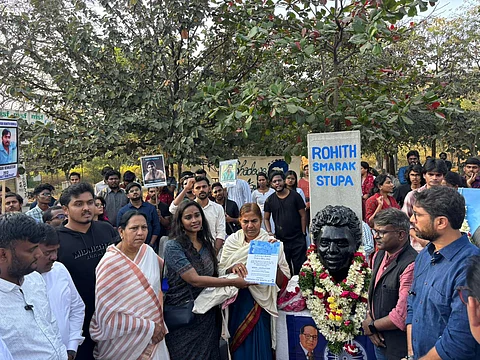
The Karnataka Cabinet granted approval for the Rohith Vemula bill draft on February 26, 2024. This legislation aims to protect Dalit and Adivasi students from discrimination and harassment within higher educational institutions. The bill is expected to be presented during the upcoming budget session, scheduled from March 6 to March 27, 2024.
Named in honor of Rohith Vemula, a PhD scholar at the University of Hyderabad who died by suicide on January 17, 2016, the Rohith Act seeks to address caste-based discrimination in educational settings. The draft of this anti-discrimination law was recently leaked to the media, revealing that it has been the result of extensive discussions between the state government and advocates for caste justice.
The Rohith Act differs from the Scheduled Castes and Scheduled Tribes (Prevention of Atrocities) Act as it functions as a civil law. Its primary goal is to facilitate the resolution of caste discrimination cases internally within educational institutions, minimizing the need for court involvement. Institutions will be required to establish internal committees to address caste harassment, mirroring the structure of the existing Gender Sensitisation Committee Against Sexual Harassment (GSCASH).
If enacted, this legislation would mark an important acknowledgment of Rohith Vemula’s identity as a Dalit and highlight that his tragic death was linked to caste discrimination. Despite a decade passing since Rohith’s death, investigations into the circumstances surrounding it have yielded little progress. Historically, the government of Telangana, particularly during the tenure of the Bharat Rashtra Samithi (BRS), has often taken a confrontational stance against those advocating for justice in this case. The situation has not significantly improved under the current Congress administration, as police cases targeting students involved in the campaign have yet to be retracted.
The Rohith Vemula bill represents a crucial step towards fostering an equitable educational environment for marginalized communities in Karnataka. By providing a framework to combat discrimination, it aims to empower students and create a more inclusive academic landscape. The bill’s introduction may serve as a catalyst for broader discussions on caste-based issues in Indian society, reflecting a growing recognition of the need for systemic change.

Albert Camus’ Insightful Quote on Human Identity Resurfaces

Drone Strikes and Missile Attacks Disrupt UAE Amid Rising Tensions

Japanese Yen Rises Sharply Against US Dollar Ahead of Key Decisions

Priyanka Chopra and Nick Jonas Avoid Near Miss en Route to Oscars

Gujarat Vaccinates Over 11 Lakh Infants in Major Health Drive

Alexandre Singh Wins Oscar, Celebrates Immigrant Heritage

Lok Sabha Speaker Issues Warning Over Placards in Parliament

Global Electrosurgical Devices Market Expands to $10.2 Billion by 2034

North Zone Dominates Cricket; SJAM-1 Shines in Table Tennis

SBI Announces QIP Floor Price at ₹811.05 Per Share

Cept Unveils ₹3.1 Crore Urban Mobility Plan for Sustainable Growth

Comparing Subscription Prices: Spotify, Apple Music, and YouTube Music in India

New Blood Group Discovered in South Indian Woman at Rotary Centre

Konkani Cultural Organisation to Host Pearl Jubilee in Abu Dhabi

Torrential Rains Cause Flash Flooding in New York and New Jersey

Nothing Headphone 1 Review: A Bold Contender in Audio Design

Air India Crash Investigation Highlights Boeing Fuel Switch Concerns

Broad Advocates for Bowling Change Ahead of Final Test Against India
-
 World1 year ago
SBI Announces QIP Floor Price at ₹811.05 Per Share
-
 Lifestyle1 year ago
Cept Unveils ₹3.1 Crore Urban Mobility Plan for Sustainable Growth
-
 Science1 year ago
Comparing Subscription Prices: Spotify, Apple Music, and YouTube Music in India
-
 Science1 year ago
New Blood Group Discovered in South Indian Woman at Rotary Centre
-
 Top Stories1 year ago
Konkani Cultural Organisation to Host Pearl Jubilee in Abu Dhabi
-
 World1 year ago
Torrential Rains Cause Flash Flooding in New York and New Jersey
-
 Science1 year ago
Nothing Headphone 1 Review: A Bold Contender in Audio Design
-
 Top Stories1 year ago
Air India Crash Investigation Highlights Boeing Fuel Switch Concerns
-
 Sports1 year ago
Broad Advocates for Bowling Change Ahead of Final Test Against India
-

 Business1 year ago
Indian Stock Market Rebounds: Sensex and Nifty Rise After Four-Day Decline
-

 Sports1 year ago
Cristian Totti Retires at 19: Pressure of Fame Takes Toll
-

 Politics1 year ago
Abandoned Doberman Finds New Home After Journey to Prague