
Lifestyle
Explore the Elegance of “Diaphanous”: A Modern Vocabulary Gem

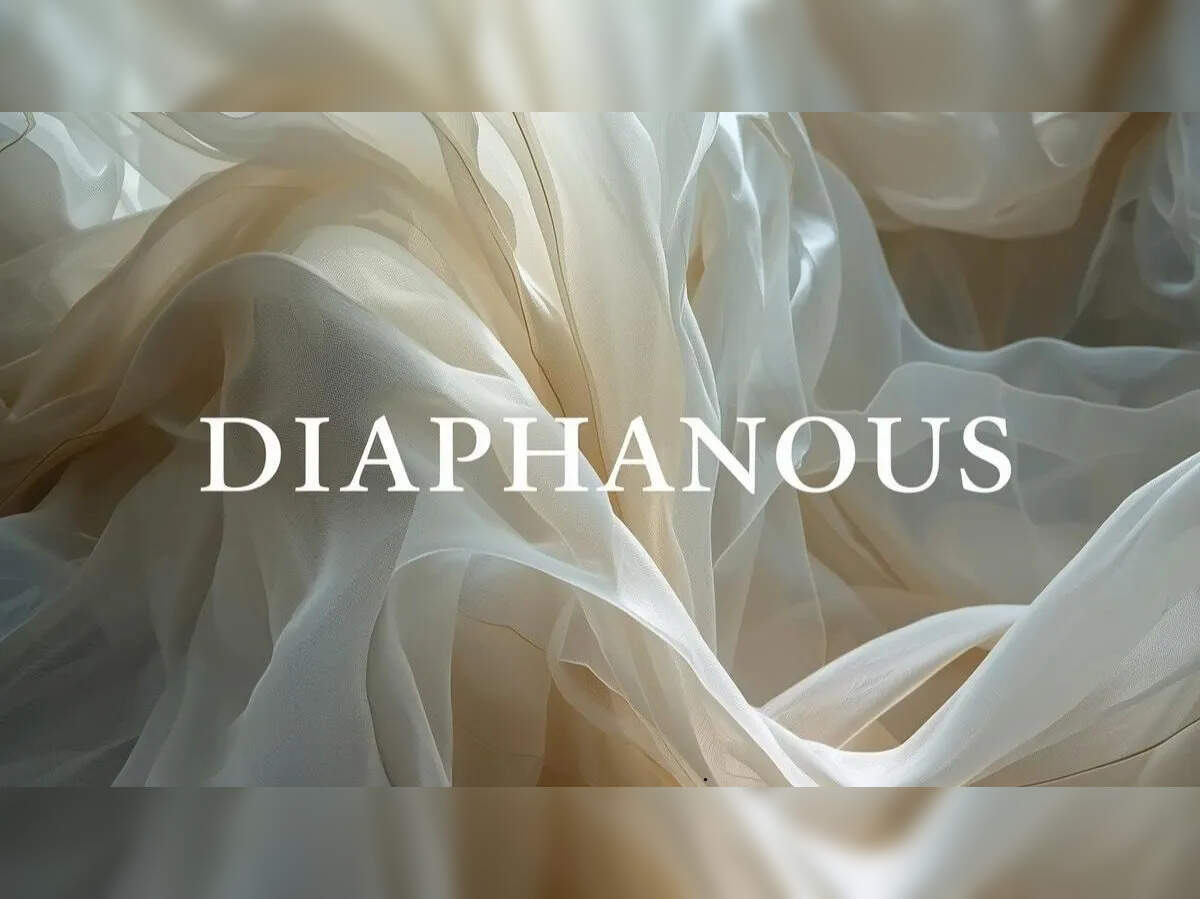
The word “diaphanous” has gained renewed attention, particularly during fashion weeks, highlighting its relevance in modern vocabulary. Despite over 1.5 billion English speakers worldwide, fewer than 12% of native speakers can accurately define this term. This disparity underscores how advanced vocabulary often remains underutilized in everyday communication.
The Surge in Interest
According to Google Trends, searches for “diaphanous meaning” surged by 38% during fashion week coverage in 2024. Critics frequently employed the term to describe sheer fabrics showcased on global runways, demonstrating that “diaphanous” is far from outdated. Its vibrant usage reflects a growing appreciation for nuanced language, especially in contexts where clarity and elegance are paramount.
Understanding “diaphanous” requires grasping its dual meanings. Literally, it pertains to materials that are light, delicate, and almost transparent. For instance, a silk veil or morning mist can be described as diaphanous. Figuratively, it conveys a sense of something insubstantial or fleeting, like a diaphanous memory or an argument lacking depth.
Defining Diaphanous
As an adjective, “diaphanous” encapsulates three core ideas: transparency, lightness, and delicacy. Unlike “transparent,” which is a technical term, “diaphanous” carries a poetic quality that evokes beauty and softness. This makes it particularly popular in fields such as fashion journalism, literary fiction, and art critique.
Correct pronunciation is essential for effective communication. “Diaphanous” is pronounced as die-AF-uh-nuhs, with the stress on the second syllable. Mispronunciations, such as “dee-a-fan-ous,” can undermine a speaker’s credibility, especially in formal or academic contexts.
The term’s etymology reveals its historical depth. Originating from the Greek word “diaphanēs,” with “dia” meaning “through” and “phanein” meaning “to show,” it entered the English language in the early 17th century. Throughout the Renaissance, writers favored expressive vocabulary, and “diaphanous” became a staple in poetry and descriptive prose.
In contemporary usage, “diaphanous” is most effective within formal and literary contexts. Its application is ideal for describing physical materials that exhibit both translucence and delicacy. For example, while a frosted glass window may be translucent, it does not possess the diaphanous quality that suggests fragility and movement. Similarly, in figurative language, it can describe ideas or emotions that feel ephemeral or insubstantial.
Examples of effective usage include:
“The bride wore a diaphanous veil that shimmered in the sunlight.”
“Morning fog formed a diaphanous layer over the valley.”
In these instances, the term enhances the imagery by capturing both the lightness and delicateness of the subject matter.
While “diaphanous” typically carries a positive connotation in fashion and literary contexts, it can imply weakness in intellectual discussions. The tone largely depends on the surrounding context. For instance, a diaphanous argument suggests an argument lacking substance or depth, while a diaphanous hope indicates a fragile belief.
Interestingly, “diaphanous” can be applied to describe a person’s presence or manner, suggesting they are light and barely noticed in a crowd. This usage remains poetic rather than clinical, enhancing the imagery without detracting from the subject’s character.
Mastering the Use of Diaphanous
To effectively incorporate “diaphanous” into writing, one must practice and understand its context. Observing its use in reputable fashion magazines, literary works, and cultural reviews can provide insights into how it enhances descriptive language. Descriptive exercises focused on light, air, or fabric can further develop proficiency.
Writers should maintain a balance between sophistication and readability. Overuse of elegant vocabulary can dilute impact; therefore, careful selection based on audience and context is essential. In financial news, for instance, “diaphanous” may not fit, whereas in lifestyle features, it can elevate storytelling.
Throughout history, “diaphanous” has captivated writers due to its visual imagery and emotional resonance. It often appears in romantic poetry and dramatic prose, evoking themes of transparency, vulnerability, and grace. In modern cultural commentary, the term finds applications in describing:
- Runway fashion collections
- Ballet costumes
- Artistic installations
- Nature photography
- Seasonal transitions
In conclusion, “diaphanous” is a term that embodies both elegance and complexity, making it a valuable addition to any writer’s vocabulary. Its usage reflects a commitment to linguistic richness and the art of precise expression, ensuring that it remains relevant in contemporary discourse.

Albert Camus’ Insightful Quote on Human Identity Resurfaces

Drone Strikes and Missile Attacks Disrupt UAE Amid Rising Tensions

Japanese Yen Rises Sharply Against US Dollar Ahead of Key Decisions

Priyanka Chopra and Nick Jonas Avoid Near Miss en Route to Oscars

Gujarat Vaccinates Over 11 Lakh Infants in Major Health Drive

Alexandre Singh Wins Oscar, Celebrates Immigrant Heritage

Lok Sabha Speaker Issues Warning Over Placards in Parliament

Global Electrosurgical Devices Market Expands to $10.2 Billion by 2034

North Zone Dominates Cricket; SJAM-1 Shines in Table Tennis

SBI Announces QIP Floor Price at ₹811.05 Per Share

Cept Unveils ₹3.1 Crore Urban Mobility Plan for Sustainable Growth

Comparing Subscription Prices: Spotify, Apple Music, and YouTube Music in India

New Blood Group Discovered in South Indian Woman at Rotary Centre

Konkani Cultural Organisation to Host Pearl Jubilee in Abu Dhabi

Torrential Rains Cause Flash Flooding in New York and New Jersey

Nothing Headphone 1 Review: A Bold Contender in Audio Design

Air India Crash Investigation Highlights Boeing Fuel Switch Concerns

Broad Advocates for Bowling Change Ahead of Final Test Against India
-
 World1 year ago
SBI Announces QIP Floor Price at ₹811.05 Per Share
-
 Lifestyle1 year ago
Cept Unveils ₹3.1 Crore Urban Mobility Plan for Sustainable Growth
-
 Science1 year ago
Comparing Subscription Prices: Spotify, Apple Music, and YouTube Music in India
-
 Science1 year ago
New Blood Group Discovered in South Indian Woman at Rotary Centre
-
 Top Stories1 year ago
Konkani Cultural Organisation to Host Pearl Jubilee in Abu Dhabi
-
 World1 year ago
Torrential Rains Cause Flash Flooding in New York and New Jersey
-
 Science1 year ago
Nothing Headphone 1 Review: A Bold Contender in Audio Design
-
 Top Stories1 year ago
Air India Crash Investigation Highlights Boeing Fuel Switch Concerns
-
 Sports1 year ago
Broad Advocates for Bowling Change Ahead of Final Test Against India
-

 Business1 year ago
Indian Stock Market Rebounds: Sensex and Nifty Rise After Four-Day Decline
-

 Sports1 year ago
Cristian Totti Retires at 19: Pressure of Fame Takes Toll
-

 Politics1 year ago
Abandoned Doberman Finds New Home After Journey to Prague