
Business
US Supreme Court Ruling Reshapes Trade Dynamics, Boosts India


The US Supreme Court has struck down President Donald Trump’s reciprocal tariffs imposed under the International Emergency Economic Powers Act (IEEPA). This decision is poised to significantly alter global trade dynamics, particularly benefiting India and other emerging markets. According to financial services firm Emkay, the ruling could catalyze a trade reset, diminishing the US’s immediate leverage under the IEEPA framework while potentially presenting narrower fallout compared to previous tariff escalations.
In response to the court’s ruling, the Trump administration swiftly announced a blanket 15% global tariff under Section 122. This provision permits temporary import restrictions for up to 150 days to mitigate balance-of-payments deficits. Following this adjustment, the effective US tariff rate has decreased to approximately 14%, down from around 16% prior to the ruling, and nearly 28% at its peak in April 2025. This recalibration offers relief to countries previously subjected to steep reciprocal tariffs, creating a more level playing field among trading partners.
Despite this relief, tariffs enforced under Section 232, which include duties on steel, aluminium, copper, and automobiles, remain intact. Emkay notes that the extent of this relief will vary depending on countries’ exposure to these sector-specific tariffs. For instance, nations like Japan and South Korea could face greater impact due to their automotive exports, whereas India’s exposure is primarily indirect, stemming from steel and aluminium inputs.
The financial implications of the ruling extend further, with Emkay estimating that US customs revenue collected under IEEPA since April 2025 could reach between $140 billion and $175 billion, which may now need to be refunded. Although details regarding refunds remain ambiguous, the scale of potential repayments could generate a temporary fiscal boost.
Emkay emphasizes that while Section 122 grants the Trump administration additional time, restoring the previous breadth and intensity of tariffs may prove challenging. Alternative legal avenues, such as Sections 201, 301, and 338, exist but are either legally contestable, time-consuming, or sector-specific. Moreover, political factors—such as diminishing approval ratings and the upcoming midterm elections in November 2026—could further restrict aggressive tariff strategies.
As a result of the ruling, Emkay anticipates that many nations will reevaluate their trade agreements with the US. With headline tariffs now capped at 15% globally under Section 122, countries may find little incentive to adhere to prior, more stringent commitments regarding investment, market access, or non-tariff barriers.
For India, this ruling is seen as a positive shift. Emkay reports that approximately 55% of India’s exports will now face only a 15% tariff, while around 40%, including key sectors like electronics, pharmaceuticals, and petroleum products, remain exempt. The remaining exports are subject to Section 232 tariffs, but India’s direct exposure is limited. Consequently, India’s effective tariff rate is projected to fall within the 11% to 13% range, which is favorable compared to China’s rate of above 15% and is comparable to other Asian competitors.
While India technically has the option to resume purchasing Russian crude oil, it may opt for caution to maintain stable relations with Washington. The evolving landscape of tariffs and trade commitments suggests a new chapter in international trade, with India positioned to navigate these changes effectively.

Albert Camus’ Insightful Quote on Human Identity Resurfaces

Drone Strikes and Missile Attacks Disrupt UAE Amid Rising Tensions

Japanese Yen Rises Sharply Against US Dollar Ahead of Key Decisions

Priyanka Chopra and Nick Jonas Avoid Near Miss en Route to Oscars

Gujarat Vaccinates Over 11 Lakh Infants in Major Health Drive

Alexandre Singh Wins Oscar, Celebrates Immigrant Heritage

Lok Sabha Speaker Issues Warning Over Placards in Parliament

Global Electrosurgical Devices Market Expands to $10.2 Billion by 2034

North Zone Dominates Cricket; SJAM-1 Shines in Table Tennis

SBI Announces QIP Floor Price at ₹811.05 Per Share

Cept Unveils ₹3.1 Crore Urban Mobility Plan for Sustainable Growth

New Blood Group Discovered in South Indian Woman at Rotary Centre

Konkani Cultural Organisation to Host Pearl Jubilee in Abu Dhabi

Torrential Rains Cause Flash Flooding in New York and New Jersey

Nothing Headphone 1 Review: A Bold Contender in Audio Design

Indian Stock Market Rebounds: Sensex and Nifty Rise After Four-Day Decline

Air India Crash Investigation Highlights Boeing Fuel Switch Concerns

Broad Advocates for Bowling Change Ahead of Final Test Against India
-
 World12 months ago
SBI Announces QIP Floor Price at ₹811.05 Per Share
-
 Lifestyle12 months ago
Cept Unveils ₹3.1 Crore Urban Mobility Plan for Sustainable Growth
-
 Science11 months ago
New Blood Group Discovered in South Indian Woman at Rotary Centre
-
 Top Stories12 months ago
Konkani Cultural Organisation to Host Pearl Jubilee in Abu Dhabi
-
 World12 months ago
Torrential Rains Cause Flash Flooding in New York and New Jersey
-
 Science12 months ago
Nothing Headphone 1 Review: A Bold Contender in Audio Design
-
 Business12 months ago
Indian Stock Market Rebounds: Sensex and Nifty Rise After Four-Day Decline
-
 Top Stories12 months ago
Air India Crash Investigation Highlights Boeing Fuel Switch Concerns
-
 Sports11 months ago
Broad Advocates for Bowling Change Ahead of Final Test Against India
-

 Sports11 months ago
Cristian Totti Retires at 19: Pressure of Fame Takes Toll
-

 Politics12 months ago
Abandoned Doberman Finds New Home After Journey to Prague
-
 Lifestyle12 months ago
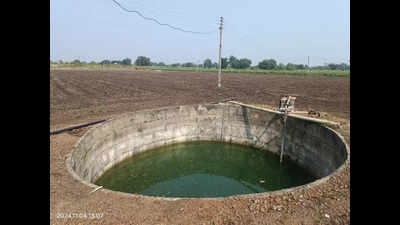
Villagers Unite to Raise ₹45 Lakh for Water Solutions in Vadgam