
Top Stories
Excise Department Intensifies Crackdown on Illegal Liquor Outlets in Nellore

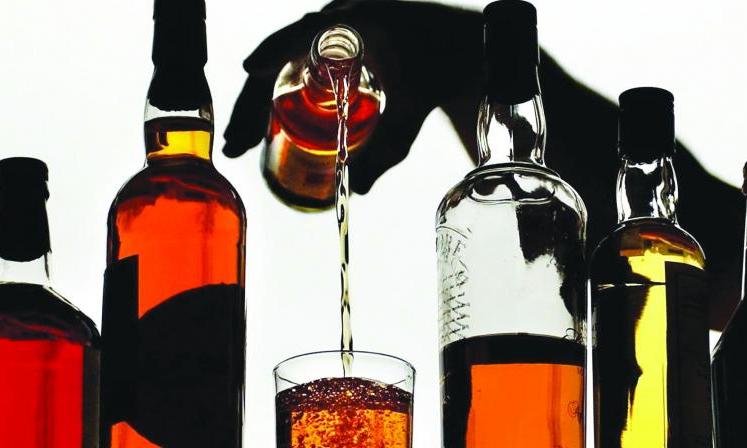
The excise department in SPSR Nellore district has launched a rigorous crackdown on unauthorized liquor outlets, commonly referred to as “belt shops.” From October 1, 2025, to February 16, 2026, officials executed multiple raids across various villages and semi-urban areas, resulting in the booking of 1,244 cases against these illegal operators. An equivalent number of arrests were made, highlighting the scale of the operation.
During this enforcement initiative, authorities confiscated a substantial quantity of illegal liquor, totaling 2,606.85 litres of Indian Made Foreign Liquor (IMFL). In addition, 18 vehicles, allegedly used for the transportation of these illicit products, were impounded. Officials have expressed concern that these belt shops not only contribute to revenue loss for the government but also create public disturbances, including issues of overcharging and unregulated consumption.
Targeting Public Consumption and Distillery Operations
The excise department’s efforts have also focused on addressing public drinking. As part of the campaign, 618 cases were registered against individuals found consuming alcohol in public spaces. Penalties were imposed on 620 individuals for these offenses. Special teams were deployed to carry out decoy operations aimed at detecting violations of the Maximum Retail Price (MRP), leading to two arrests for selling liquor above the legal price.
Furthermore, the crackdown extended to illicitly distilled liquor. Twelve cases related to this issue were registered, resulting in the arrest of 14 individuals and the destruction of 85 litres of illegally produced liquor, along with 640 litres of fermented jaggery, which is commonly used in its production. Two additional vehicles associated with these operations were seized.
Deputy Excise Commissioner M Sankaraiah noted that repeat offenders are under constant surveillance. The department has requested the district collector to consider alternative livelihood options for those consistently involved in illicit brewing. The problem of illegally distilled liquor is particularly prevalent in the Kavali and Bogole mandals, with hotspots identified in Chenchulakshmipuram, Kapprallatippa, and Biradavolu in the Podalakur mandal.
Challenges in Enforcement Operations
Despite the extensive efforts, the excise department faces significant challenges due to a shortage of personnel. Since 2014, there have been no new recruitments, leaving many excise stations operating below their sanctioned strength. Each station at the panchayat level requires between 10 to 12 constables, along with three head constables, two sub-inspectors (SIs), and one circle inspector (CI). However, many stations currently function with only two or three constables.
A senior official remarked on the difficulties posed by this staffing shortage, stating, “If some of them go on leave, the situation becomes extremely difficult. How can we conduct routine route watch and vehicular checks with such limited staff?”
In addition to the crackdown on illegal liquor, authorities also registered 19 cases under the Narcotic Drugs and Psychotropic Substances (NDPS) Act, seizing 224 kg of ganja and arresting 46 individuals, along with the confiscation of one vehicle.
The ongoing enforcement operations reflect the excise department’s commitment to combatting illegal liquor trade and its associated issues in the region.

Albert Camus’ Insightful Quote on Human Identity Resurfaces

Drone Strikes and Missile Attacks Disrupt UAE Amid Rising Tensions

Japanese Yen Rises Sharply Against US Dollar Ahead of Key Decisions

Priyanka Chopra and Nick Jonas Avoid Near Miss en Route to Oscars

Gujarat Vaccinates Over 11 Lakh Infants in Major Health Drive

Alexandre Singh Wins Oscar, Celebrates Immigrant Heritage

Lok Sabha Speaker Issues Warning Over Placards in Parliament

Global Electrosurgical Devices Market Expands to $10.2 Billion by 2034

North Zone Dominates Cricket; SJAM-1 Shines in Table Tennis

SBI Announces QIP Floor Price at ₹811.05 Per Share

Cept Unveils ₹3.1 Crore Urban Mobility Plan for Sustainable Growth

New Blood Group Discovered in South Indian Woman at Rotary Centre

Konkani Cultural Organisation to Host Pearl Jubilee in Abu Dhabi

Torrential Rains Cause Flash Flooding in New York and New Jersey

Nothing Headphone 1 Review: A Bold Contender in Audio Design

Air India Crash Investigation Highlights Boeing Fuel Switch Concerns

Indian Stock Market Rebounds: Sensex and Nifty Rise After Four-Day Decline

Broad Advocates for Bowling Change Ahead of Final Test Against India
-
 World1 year ago
SBI Announces QIP Floor Price at ₹811.05 Per Share
-
 Lifestyle1 year ago
Cept Unveils ₹3.1 Crore Urban Mobility Plan for Sustainable Growth
-
 Science12 months ago
New Blood Group Discovered in South Indian Woman at Rotary Centre
-
 Top Stories1 year ago
Konkani Cultural Organisation to Host Pearl Jubilee in Abu Dhabi
-
 World1 year ago
Torrential Rains Cause Flash Flooding in New York and New Jersey
-
 Science1 year ago
Nothing Headphone 1 Review: A Bold Contender in Audio Design
-
 Top Stories1 year ago
Air India Crash Investigation Highlights Boeing Fuel Switch Concerns
-
 Business1 year ago
Indian Stock Market Rebounds: Sensex and Nifty Rise After Four-Day Decline
-
 Sports12 months ago
Broad Advocates for Bowling Change Ahead of Final Test Against India
-

 Sports12 months ago
Cristian Totti Retires at 19: Pressure of Fame Takes Toll
-

 Politics1 year ago
Abandoned Doberman Finds New Home After Journey to Prague
-
 Lifestyle1 year ago
Villagers Unite to Raise ₹45 Lakh for Water Solutions in Vadgam