
Top Stories
AI Revolutionizes India’s Space Missions, Experts Say

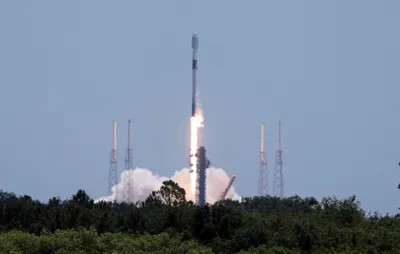
Artificial intelligence (AI) is poised to significantly transform India’s future in space exploration, according to experts who participated in a recent session titled “Beyond Earth: How AI is Powering the Next Era of Space Exploration.” This gathering featured scientists, researchers, and industry leaders discussing the growing role of AI in enhancing the efficiency of satellites and space missions.
The session highlighted that space is increasingly becoming a testing ground for advanced AI systems. As missions evolve from manual operations to autonomous systems, AI is expected to take on a crucial role in decision-making processes. A new seed fund scheme was announced, offering up to Rs 1 crore to startups focused on developing AI solutions tailored for the space sector.
AI’s Role in Autonomous Space Missions
Representatives from the Indian Space Research Organisation (ISRO), including scientists from the U R Rao Satellite Centre (URSC) and the Indian Institute of Remote Sensing (IISU), emphasized the necessity of AI for deep-space missions. Given that signals from Earth can take as long as 20 minutes to reach spacecraft, these satellites must operate autonomously and make decisions independently. Autonomous navigation, robotics, and AI-based life-support systems are becoming essential components of future missions.
Despite the potential benefits, experts underscored the importance of reliability. AI systems must undergo rigorous testing to ensure they are explainable and predictable before deployment in critical missions. The development of advanced robots, compact AI models for space use, and robotic arms for future space stations is already in progress at ISRO. These innovations aim to assist astronauts, facilitate experiments, and manage operations aboard space stations.
Data Processing and Real-Time Adjustments
The session also addressed how AI is revolutionizing data processing in remote sensing. With satellites generating vast amounts of complex raw data through various sensors, AI plays a pivotal role in cleaning, combining, and analyzing this information. This technological advancement enhances the accuracy of weather forecasts, disaster alerts, and national planning. Experts stressed that high-quality data is crucial for reliable AI outcomes.
Moreover, representatives from private space companies outlined their initiatives to update AI models directly within satellites, akin to software updates on mobile devices. This capability allows systems to adapt to real-time changes in weather conditions, natural disasters, or geopolitical situations.
Dr. Dipti Patil from MKSSS Cummins College of Engineering for Women noted that innovative AI techniques, such as physics-informed neural networks, are facilitating the validation of autonomous systems. She emphasized the growing interest in space technology among students and the expanding job opportunities within the burgeoning space startup ecosystem.
Dr. Jagriti Dabas from ARMS 4 AI highlighted the necessity for a solid foundational knowledge in data and the ability to adapt as AI technology evolves. The discussion concluded with a consensus that the future of space exploration will increasingly rely on intelligent, autonomous systems capable of safely operating far from Earth.
As AI continues to evolve, its integration into space missions signifies not merely an enhancement in technology but also a pivotal shift in how humanity approaches exploration beyond our planet.

Albert Camus’ Insightful Quote on Human Identity Resurfaces

Drone Strikes and Missile Attacks Disrupt UAE Amid Rising Tensions

Japanese Yen Rises Sharply Against US Dollar Ahead of Key Decisions

Priyanka Chopra and Nick Jonas Avoid Near Miss en Route to Oscars

Gujarat Vaccinates Over 11 Lakh Infants in Major Health Drive

Alexandre Singh Wins Oscar, Celebrates Immigrant Heritage

Lok Sabha Speaker Issues Warning Over Placards in Parliament

Global Electrosurgical Devices Market Expands to $10.2 Billion by 2034

North Zone Dominates Cricket; SJAM-1 Shines in Table Tennis

SBI Announces QIP Floor Price at ₹811.05 Per Share

Cept Unveils ₹3.1 Crore Urban Mobility Plan for Sustainable Growth

New Blood Group Discovered in South Indian Woman at Rotary Centre

Konkani Cultural Organisation to Host Pearl Jubilee in Abu Dhabi

Torrential Rains Cause Flash Flooding in New York and New Jersey

Nothing Headphone 1 Review: A Bold Contender in Audio Design

Air India Crash Investigation Highlights Boeing Fuel Switch Concerns

Indian Stock Market Rebounds: Sensex and Nifty Rise After Four-Day Decline

Broad Advocates for Bowling Change Ahead of Final Test Against India
-
 World1 year ago
SBI Announces QIP Floor Price at ₹811.05 Per Share
-
 Lifestyle1 year ago
Cept Unveils ₹3.1 Crore Urban Mobility Plan for Sustainable Growth
-
 Science12 months ago
New Blood Group Discovered in South Indian Woman at Rotary Centre
-
 Top Stories1 year ago
Konkani Cultural Organisation to Host Pearl Jubilee in Abu Dhabi
-
 World1 year ago
Torrential Rains Cause Flash Flooding in New York and New Jersey
-
 Science1 year ago
Nothing Headphone 1 Review: A Bold Contender in Audio Design
-
 Top Stories1 year ago
Air India Crash Investigation Highlights Boeing Fuel Switch Concerns
-
 Business1 year ago
Indian Stock Market Rebounds: Sensex and Nifty Rise After Four-Day Decline
-
 Sports12 months ago
Broad Advocates for Bowling Change Ahead of Final Test Against India
-

 Sports12 months ago
Cristian Totti Retires at 19: Pressure of Fame Takes Toll
-
 Politics1 year ago
Abandoned Doberman Finds New Home After Journey to Prague
-
 Lifestyle1 year ago
Villagers Unite to Raise ₹45 Lakh for Water Solutions in Vadgam