
World
China Warns US Actions on Taiwan Could Ignite Confrontation

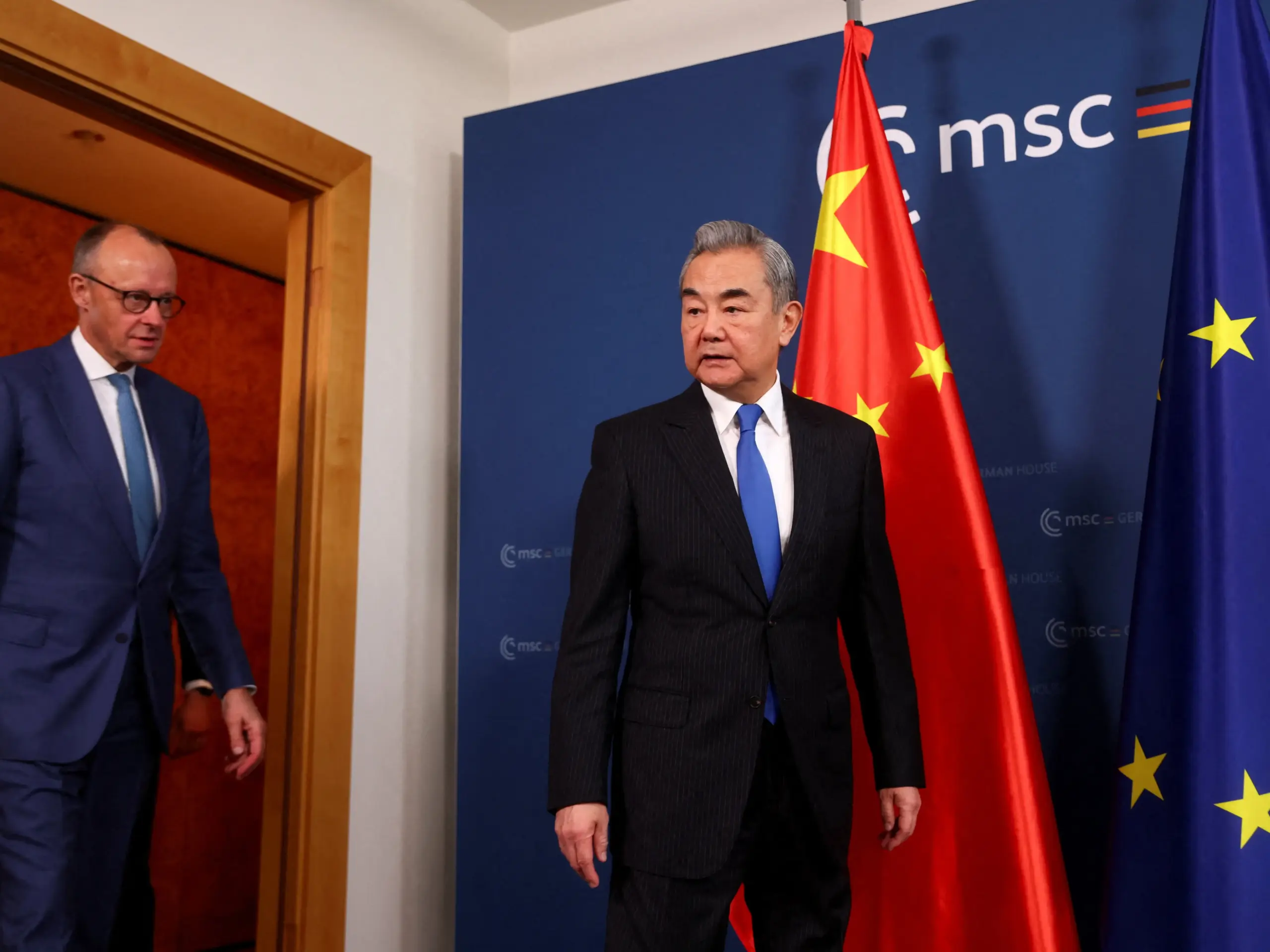
On February 14, 2024, during the Munich Security Conference in Germany, China’s Foreign Minister Wang Yi issued a stark warning to the United States regarding its actions related to Taiwan. He cautioned that interference in Taiwan’s affairs could lead to a direct confrontation between the two global powers. Wang expressed concern over potential U.S. policies that might seek to “instigate and plot to split China through Taiwan,” emphasizing that such actions would cross what Beijing considers its “red line.”
“This could very likely lead to a confrontation between China and the United States,” Wang Yi stated, underscoring the gravity of the situation. He articulated China’s desire for Washington to adopt a “positive and pragmatic” approach in its dealings with Beijing. However, he also made it clear that if this did not occur, China would be “prepared to deal with various risks.” This statement reflects the heightened tensions surrounding Taiwan, which China regards as part of its territory.
China’s Stance on Taiwan and Military Preparedness
Beijing maintains that self-ruled Taiwan is a core interest, labeling it the “core of China’s core interest.” This designation highlights Taiwan’s significance in Sino-American relations. Recently, Xi Jinping, the President of China, has intensified pressure on Taiwan, framing the reunification of the island with the mainland as an “unstoppable” historic mission. In a notable address on New Year’s Day 2026, Xi used the phrase “Now or never,” signaling a sense of urgency regarding Taiwan’s status.
China has not ruled out the use of force to reclaim control over Taiwan, a stance that raises concerns among international observers. In response to this increasing militarization, the United States has bolstered its support for Taiwan by providing military equipment and training. This support positions the U.S. as Taiwan’s primary military ally, essential for the island’s defense should a conflict arise with China.
Regional Implications and Japan’s Military Relations
During the conference, Wang also addressed China’s relations with Japan, which have deteriorated under Prime Minister Sanae Takaichi, who took office in October. He urged the Japanese public to resist manipulation by far-right forces and warned against the resurgence of militarism in Japan. “All peace-loving countries should send a clear warning to Japan: if it chooses to walk back on this path, it will only be heading toward self-destruction,” Wang cautioned.
This commentary on Japan reflects the broader regional dynamics in East Asia, where military posturing and alliances are increasingly critical. As tensions rise between China and the U.S. over Taiwan, the implications for neighboring countries like Japan become more pronounced, necessitating careful diplomatic navigation.
As the international community watches closely, the potential for conflict over Taiwan remains a pressing concern. Both the U.S. and China face the challenge of managing their strategic interests while avoiding escalation that could have dire consequences for regional and global stability.

Albert Camus’ Insightful Quote on Human Identity Resurfaces

Drone Strikes and Missile Attacks Disrupt UAE Amid Rising Tensions

Japanese Yen Rises Sharply Against US Dollar Ahead of Key Decisions

Priyanka Chopra and Nick Jonas Avoid Near Miss en Route to Oscars

Gujarat Vaccinates Over 11 Lakh Infants in Major Health Drive

Alexandre Singh Wins Oscar, Celebrates Immigrant Heritage

Lok Sabha Speaker Issues Warning Over Placards in Parliament

Global Electrosurgical Devices Market Expands to $10.2 Billion by 2034

North Zone Dominates Cricket; SJAM-1 Shines in Table Tennis

SBI Announces QIP Floor Price at ₹811.05 Per Share

Cept Unveils ₹3.1 Crore Urban Mobility Plan for Sustainable Growth

New Blood Group Discovered in South Indian Woman at Rotary Centre

Konkani Cultural Organisation to Host Pearl Jubilee in Abu Dhabi

Torrential Rains Cause Flash Flooding in New York and New Jersey

Nothing Headphone 1 Review: A Bold Contender in Audio Design

Indian Stock Market Rebounds: Sensex and Nifty Rise After Four-Day Decline

Air India Crash Investigation Highlights Boeing Fuel Switch Concerns

Broad Advocates for Bowling Change Ahead of Final Test Against India
-
 World12 months ago
SBI Announces QIP Floor Price at ₹811.05 Per Share
-
 Lifestyle12 months ago
Cept Unveils ₹3.1 Crore Urban Mobility Plan for Sustainable Growth
-
 Science11 months ago
New Blood Group Discovered in South Indian Woman at Rotary Centre
-
 Top Stories12 months ago
Konkani Cultural Organisation to Host Pearl Jubilee in Abu Dhabi
-
 World12 months ago
Torrential Rains Cause Flash Flooding in New York and New Jersey
-
 Science12 months ago
Nothing Headphone 1 Review: A Bold Contender in Audio Design
-
 Business12 months ago
Indian Stock Market Rebounds: Sensex and Nifty Rise After Four-Day Decline
-
 Top Stories12 months ago
Air India Crash Investigation Highlights Boeing Fuel Switch Concerns
-
 Sports11 months ago
Broad Advocates for Bowling Change Ahead of Final Test Against India
-

 Sports11 months ago
Cristian Totti Retires at 19: Pressure of Fame Takes Toll
-

 Politics12 months ago
Abandoned Doberman Finds New Home After Journey to Prague
-

 Lifestyle12 months ago
Villagers Unite to Raise ₹45 Lakh for Water Solutions in Vadgam