
Science
Families Seek ASI Help to Uncover Secrets of Ancient Inscriptions

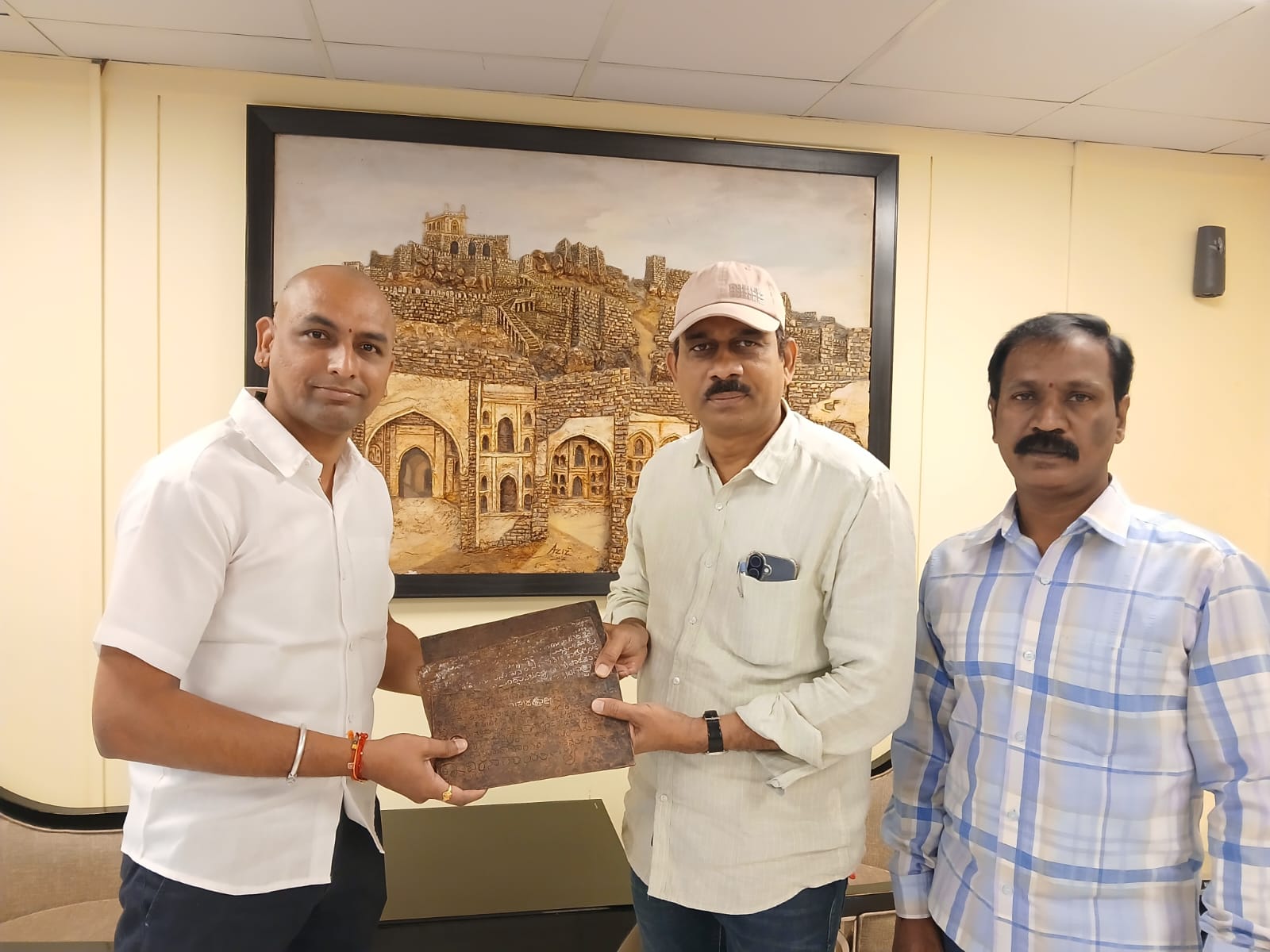
Families from two regions in India have reached out to the Archaeological Survey of India (ASI) for assistance in deciphering ancient copper plate inscriptions believed to hold significant historical value. On Friday, representatives from Ponnapalli in Guntur district and Rakatla in Anantapur district contacted Dr. K. Muniratnam Reddy, the director of ASI’s Epigraphy branch, asking for an expert analysis of their family heirlooms.
The inscriptions have been part of these families’ legacies for generations, and their request underscores a growing interest in ancient texts and the history they may reveal. The Rakatla copper plate underwent a chemical treatment by the ASI’s science branch, which has prepared it for detailed examination.
Historical Significance of the Inscriptions
According to Dr. Muniratnam Reddy, the copper plate from Guntur features inscriptions in Telugu script that date back to the 14th century. The Anantapur plate, on the other hand, is inscribed in Sanskrit using the Nandanagiri script, dating to the 16th century. The analysis of these texts aims to shed light on their historical contexts and significance.
The families’ initiative reflects a broader movement in India to preserve and understand cultural heritage. As scholars and the public alike become more aware of the value of ancient inscriptions, requests for expert interpretation are likely to increase. The ASI has emphasized its commitment to supporting such inquiries, which play a crucial role in documenting India’s rich history.
Inscriptions like these often contain vital information about the socio-political landscape of their time, including administrative details, land grants, and cultural practices. The deciphering process will involve not only reading the inscriptions but also contextualizing them within the broader historical narrative of India.
As the study progresses, both families eagerly await insights that could connect them more deeply to their heritage. The ASI’s examination of these artifacts could provide not just answers but also foster a greater appreciation for the region’s rich historical tapestry.
This collaboration between families and the ASI represents an important step in preserving India’s historical legacy and highlights the potential for further discoveries in the realm of ancient inscriptions.

Albert Camus’ Insightful Quote on Human Identity Resurfaces

Drone Strikes and Missile Attacks Disrupt UAE Amid Rising Tensions

Japanese Yen Rises Sharply Against US Dollar Ahead of Key Decisions

Priyanka Chopra and Nick Jonas Avoid Near Miss en Route to Oscars

Gujarat Vaccinates Over 11 Lakh Infants in Major Health Drive

Alexandre Singh Wins Oscar, Celebrates Immigrant Heritage

Lok Sabha Speaker Issues Warning Over Placards in Parliament

Global Electrosurgical Devices Market Expands to $10.2 Billion by 2034

North Zone Dominates Cricket; SJAM-1 Shines in Table Tennis

SBI Announces QIP Floor Price at ₹811.05 Per Share

Cept Unveils ₹3.1 Crore Urban Mobility Plan for Sustainable Growth

New Blood Group Discovered in South Indian Woman at Rotary Centre

Konkani Cultural Organisation to Host Pearl Jubilee in Abu Dhabi

Torrential Rains Cause Flash Flooding in New York and New Jersey

Nothing Headphone 1 Review: A Bold Contender in Audio Design

Air India Crash Investigation Highlights Boeing Fuel Switch Concerns

Indian Stock Market Rebounds: Sensex and Nifty Rise After Four-Day Decline

Broad Advocates for Bowling Change Ahead of Final Test Against India
-
 World1 year ago
SBI Announces QIP Floor Price at ₹811.05 Per Share
-
 Lifestyle1 year ago
Cept Unveils ₹3.1 Crore Urban Mobility Plan for Sustainable Growth
-
 Science12 months ago
New Blood Group Discovered in South Indian Woman at Rotary Centre
-
 Top Stories1 year ago
Konkani Cultural Organisation to Host Pearl Jubilee in Abu Dhabi
-
 World1 year ago
Torrential Rains Cause Flash Flooding in New York and New Jersey
-
 Science1 year ago
Nothing Headphone 1 Review: A Bold Contender in Audio Design
-
 Top Stories1 year ago
Air India Crash Investigation Highlights Boeing Fuel Switch Concerns
-
 Business1 year ago
Indian Stock Market Rebounds: Sensex and Nifty Rise After Four-Day Decline
-
 Sports12 months ago
Broad Advocates for Bowling Change Ahead of Final Test Against India
-

 Sports12 months ago
Cristian Totti Retires at 19: Pressure of Fame Takes Toll
-

 Politics1 year ago
Abandoned Doberman Finds New Home After Journey to Prague
-
 Lifestyle1 year ago
Villagers Unite to Raise ₹45 Lakh for Water Solutions in Vadgam