
Business
India and US Set to Finalize Trade Pact by Mid-March

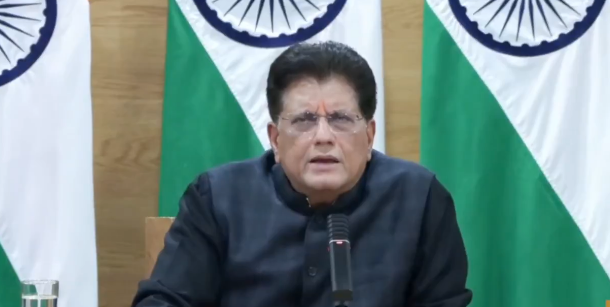
India and the United States are on track to sign the initial phase of a significant bilateral trade agreement by mid-March 2024. This agreement aims to reduce import duties on Indian goods entering the US, according to Piyush Goyal, India’s Minister of Commerce and Industry. The anticipated pact has been a focal point of discussions between the two nations, reflecting their commitment to enhancing trade relations.
The agreement is expected to lower tariffs on Indian products from the current rate of 50 percent to 18 percent. This reduction will be facilitated through an executive order from the US, which is likely to be issued shortly after the signing of a joint statement. Goyal indicated that this joint statement could be finalized within the next 4-5 days. He noted, “The first tranche of the bilateral trade agreement is almost ready, and we expect to finalize and sign a joint statement between the US and India.”
India’s commitment to reduce import duties on select US goods will follow the agreement’s ratification, although Goyal clarified that no specific investment commitments are included in this initial phase. Rajesh Agrawal, the Commerce Secretary, emphasized that the legal framework of the agreement will empower both nations to adjust their respective tariffs.
Details of the Agreement and Economic Implications
The agreement comes as part of a broader strategy to enhance bilateral trade, with a target set for USD 500 billion in purchases over the next five years. Goyal elaborated on India’s growing needs, stating, “With the fast-paced growth at which India is going ahead, the country will need large volumes of energy, data center equipment, and ICT products.” He projected that India’s steel production capacity will nearly double from its current level of 140 million tonnes to 300 million tonnes in the coming years.
India’s demand for aircraft is particularly noteworthy. Goyal highlighted that current and future orders placed with Boeing could reach USD 100 billion when including engines and spare parts. Additionally, significant concessions announced in the recent budget for data centers indicate a robust investment environment. “We can clearly see before our eyes the potential that we can procure from the US over the next five years,” he remarked.
Agrawal noted that India’s current purchases from global markets exceed USD 300 billion, with the US positioned to supply essential goods such as oil, liquefied petroleum gas (LPG), liquefied natural gas (LNG), and various technology products. “If we can buy USD 500 billion from the US, it will only add to our diversification and resilience in our supply chain,” he stated.
Next Steps in Trade Relations
The formal agreement is currently being drafted and is expected to take approximately one to one and a half months to finalize. Goyal expressed optimism about the swift progression of negotiations, indicating ongoing discussions about further concessions that could be achieved post-agreement. The joint statement will be signed virtually, reflecting the modernized approach to international negotiations.
This trade agreement could mark a pivotal moment in US-India relations. By reducing tariffs, both countries aim to strengthen their economic ties while addressing mutual trade interests. As the March deadline approaches, stakeholders from both nations are keenly awaiting the official affirmation of this partnership.

Albert Camus’ Insightful Quote on Human Identity Resurfaces

Drone Strikes and Missile Attacks Disrupt UAE Amid Rising Tensions

Japanese Yen Rises Sharply Against US Dollar Ahead of Key Decisions

Priyanka Chopra and Nick Jonas Avoid Near Miss en Route to Oscars

Gujarat Vaccinates Over 11 Lakh Infants in Major Health Drive

Alexandre Singh Wins Oscar, Celebrates Immigrant Heritage

Lok Sabha Speaker Issues Warning Over Placards in Parliament

Global Electrosurgical Devices Market Expands to $10.2 Billion by 2034

North Zone Dominates Cricket; SJAM-1 Shines in Table Tennis

SBI Announces QIP Floor Price at ₹811.05 Per Share

Cept Unveils ₹3.1 Crore Urban Mobility Plan for Sustainable Growth

New Blood Group Discovered in South Indian Woman at Rotary Centre

Konkani Cultural Organisation to Host Pearl Jubilee in Abu Dhabi

Torrential Rains Cause Flash Flooding in New York and New Jersey

Nothing Headphone 1 Review: A Bold Contender in Audio Design

Indian Stock Market Rebounds: Sensex and Nifty Rise After Four-Day Decline

Air India Crash Investigation Highlights Boeing Fuel Switch Concerns

Broad Advocates for Bowling Change Ahead of Final Test Against India
-
 World12 months ago
SBI Announces QIP Floor Price at ₹811.05 Per Share
-
 Lifestyle12 months ago
Cept Unveils ₹3.1 Crore Urban Mobility Plan for Sustainable Growth
-
 Science12 months ago
New Blood Group Discovered in South Indian Woman at Rotary Centre
-
 Top Stories12 months ago
Konkani Cultural Organisation to Host Pearl Jubilee in Abu Dhabi
-
 World12 months ago
Torrential Rains Cause Flash Flooding in New York and New Jersey
-
 Science12 months ago
Nothing Headphone 1 Review: A Bold Contender in Audio Design
-
 Business12 months ago
Indian Stock Market Rebounds: Sensex and Nifty Rise After Four-Day Decline
-
 Top Stories12 months ago
Air India Crash Investigation Highlights Boeing Fuel Switch Concerns
-
 Sports12 months ago
Broad Advocates for Bowling Change Ahead of Final Test Against India
-

 Sports12 months ago
Cristian Totti Retires at 19: Pressure of Fame Takes Toll
-

 Politics12 months ago
Abandoned Doberman Finds New Home After Journey to Prague
-

 Lifestyle12 months ago
Villagers Unite to Raise ₹45 Lakh for Water Solutions in Vadgam