
Science
Discovery of Ancient Rhinos in Tamil Nadu Reveals Trade Links

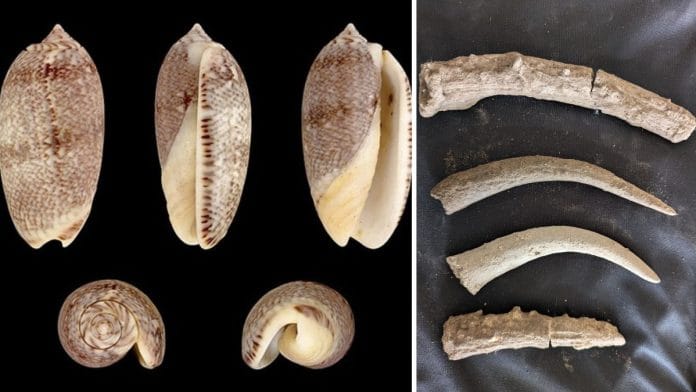
A recent archaeological discovery in Tamil Nadu has uncovered four leg bones that date back approximately 3,600 years, significantly altering the understanding of wildlife history in India. These rare metacarpal and carpal bones belong to the Indian rhinoceros, confirming the species’ presence in the southern part of the country during the Neolithic period. Currently classified as a ‘vulnerable’ species by the IUCN Red List, Indian rhinos once roamed the grasslands across the entire subcontinent.
The findings were made by a team of archaeologists from Tamil University in Thanjavur and represent some of the first direct evidence of the one-horned rhino’s habitat extending into southern India. Previous studies have identified rhino remains and motifs in regions such as Odisha and Harappan civilization sites in Haryana, but this discovery marks a significant first for the Southern Neolithic Zone.
The research paper detailing the findings was presented during a three-day International Symposium on Archaeological Studies in Tamil Nadu on January 26, 2024. The paper highlights that the presence of rhinoceros remains in this area is particularly noteworthy, as it is rarely reported in South Indian archaeological contexts. The research team, comprised of experts from several Indian states including Kerala, Maharashtra, Gujarat, Bihar, and Madhya Pradesh, meticulously excavated and analyzed a total of 47,000 archaeological remains found in the Molapalayam area. These included animal, human, and plant remains, as well as jewellery and pottery.
Insights into Neolithic Life and Trade
The Neolithic Age, spanning from around 7,000 BCE to 1,700 BCE, marked a pivotal shift towards agriculture, masonry, and a more settled lifestyle for humans. While Neolithic sites and artefacts have been found in Tamil Nadu since the 1800s, the Molapalayam site was only discovered in 2019 and excavated in 2021 and 2024 by the same team. The Western Ghats and the Noyyal river basin provide rich insights into the region’s ancient cultures and wildlife history.
Professor V Selvakumar, a leading researcher on the project, noted the significance of the Molapalayam area. He explained, “This area receives regular monsoon rains, making it suitable for cultivation, and the adjacent forests provided a rich habitat for wildlife.” The research indicates that the region was once home to various animals, including antelopes, leopards, nilgai, blackbuck, monitor lizards, and wild cats.
Interestingly, Selvakumar highlighted the rarity of finding leg bones, as the skin and horn of the rhino are typically traded, while bones are less likely to be utilized by humans.
Beyond the wildlife findings, the excavations shed light on the trade relations of the Neolithic communities in Molapalayam. Selvakumar revealed that marine shell jewellery and pendants were discovered, including a pendant made from a freshwater mussel shaped like a fish. This suggests that the Neolithic people engaged in trade and communication with coastal communities, as they could not have crafted these artefacts locally.
Human Life and Ecological Adaptations
The excavations at Molapalayam delve into a variety of fields, providing clues about agriculture, botany, livestock rearing, burial practices, and hunting methods. The presence of polished deer horns and antlers indicates human utilization, as global studies show that such tools were often used for digging. Selvakumar elaborated on how this reflects the ecological characteristics of the grasslands that once thrived in the region.
Today, the area surrounding Coimbatore, where the excavations took place, is predominantly farmland, having transformed over millennia from grasslands into cultivated land. The Neolithic communities began this transition around 3,500 years ago, cultivating crops such as kodo millet, black gram, jujubes, and foxtail millet.
This study is crucial for understanding the lifestyles of communities that populated the subcontinent thousands of years ago. Selvakumar concluded, “The Neolithic people chose this site based on its geography, and centuries later, we have built a civilization influenced by the same features. The people of Molapalayam continue to farm this land, sowing seeds at the same time each year, relying on the same monsoon rains as their ancient predecessors.”
The discovery of the rhino bones not only enriches the historical narrative of Tamil Nadu but also enhances understanding of the interplay between nature and early human settlements.

Albert Camus’ Insightful Quote on Human Identity Resurfaces

Drone Strikes and Missile Attacks Disrupt UAE Amid Rising Tensions

Japanese Yen Rises Sharply Against US Dollar Ahead of Key Decisions

Priyanka Chopra and Nick Jonas Avoid Near Miss en Route to Oscars

Gujarat Vaccinates Over 11 Lakh Infants in Major Health Drive

Alexandre Singh Wins Oscar, Celebrates Immigrant Heritage

Lok Sabha Speaker Issues Warning Over Placards in Parliament

Global Electrosurgical Devices Market Expands to $10.2 Billion by 2034

North Zone Dominates Cricket; SJAM-1 Shines in Table Tennis

SBI Announces QIP Floor Price at ₹811.05 Per Share

Cept Unveils ₹3.1 Crore Urban Mobility Plan for Sustainable Growth

New Blood Group Discovered in South Indian Woman at Rotary Centre

Konkani Cultural Organisation to Host Pearl Jubilee in Abu Dhabi

Torrential Rains Cause Flash Flooding in New York and New Jersey

Nothing Headphone 1 Review: A Bold Contender in Audio Design

Indian Stock Market Rebounds: Sensex and Nifty Rise After Four-Day Decline

Air India Crash Investigation Highlights Boeing Fuel Switch Concerns

Broad Advocates for Bowling Change Ahead of Final Test Against India
-
 World12 months ago
SBI Announces QIP Floor Price at ₹811.05 Per Share
-
 Lifestyle12 months ago
Cept Unveils ₹3.1 Crore Urban Mobility Plan for Sustainable Growth
-
 Science12 months ago
New Blood Group Discovered in South Indian Woman at Rotary Centre
-
 Top Stories12 months ago
Konkani Cultural Organisation to Host Pearl Jubilee in Abu Dhabi
-
 World12 months ago
Torrential Rains Cause Flash Flooding in New York and New Jersey
-
 Science12 months ago
Nothing Headphone 1 Review: A Bold Contender in Audio Design
-
 Business12 months ago
Indian Stock Market Rebounds: Sensex and Nifty Rise After Four-Day Decline
-
 Top Stories12 months ago
Air India Crash Investigation Highlights Boeing Fuel Switch Concerns
-
 Sports12 months ago
Broad Advocates for Bowling Change Ahead of Final Test Against India
-

 Sports12 months ago
Cristian Totti Retires at 19: Pressure of Fame Takes Toll
-

 Politics12 months ago
Abandoned Doberman Finds New Home After Journey to Prague
-
 Lifestyle12 months ago
Villagers Unite to Raise ₹45 Lakh for Water Solutions in Vadgam