
World
Trump Considers Tariffs to Secure Greenland Amid Geopolitical Tensions

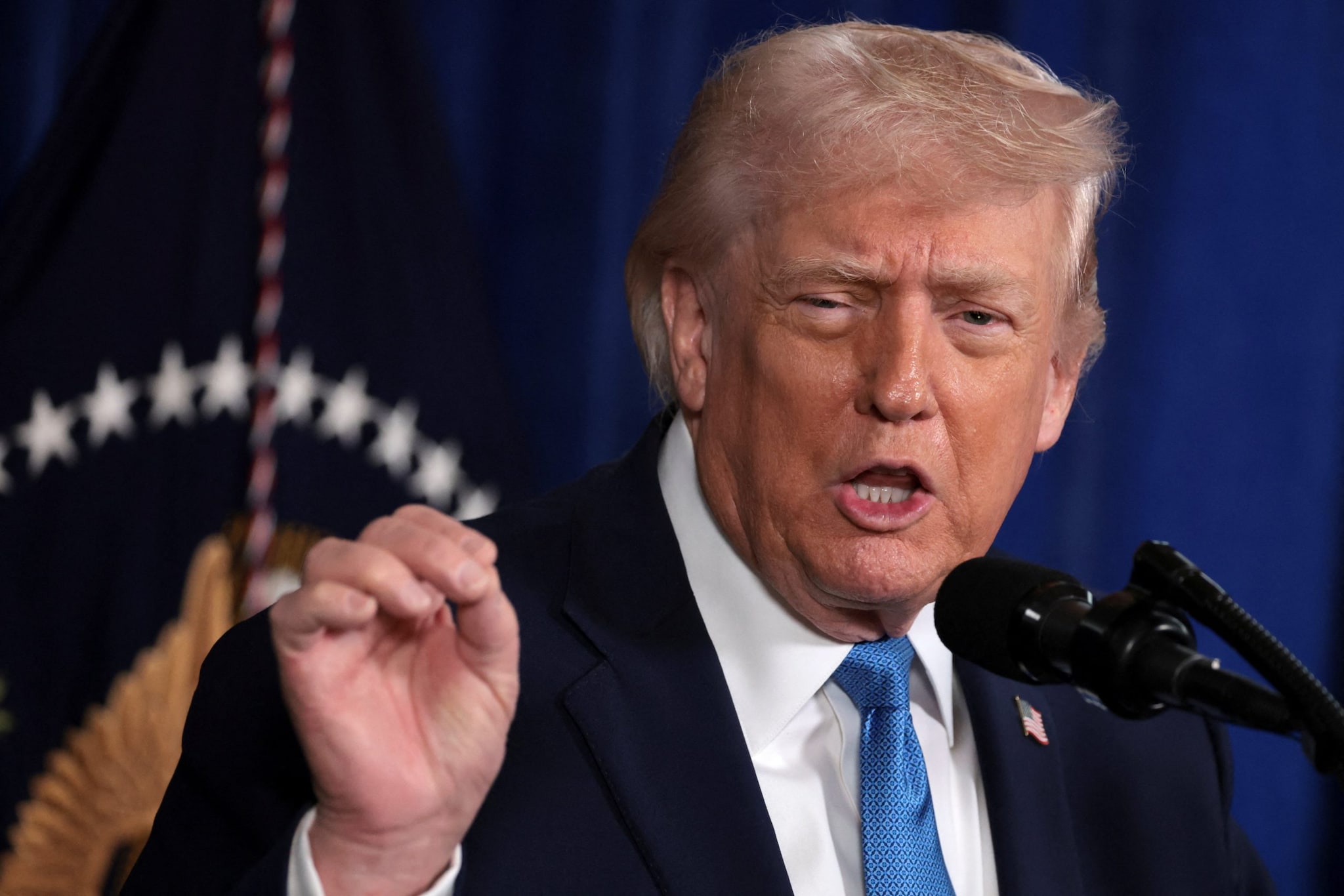
President Donald Trump has indicated that he may impose tariffs on countries that do not support the United States’ efforts to acquire Greenland. This statement marks a significant escalation in his administration’s approach to the strategically important Arctic territory. During a health-care-related event at the White House on March 15, 2024, Trump stated, “We need Greenland for national security. So I may do that,” according to a report by CNBC.
Trump’s remarks highlight his readiness to utilize tariffs as a foreign policy strategy, a tactic he has employed to exert pressure on both allies and adversaries. His comments raise the prospect of economic coercion being used to further U.S. ambitions in the Arctic region. The White House has not provided immediate clarification regarding Trump’s statements.
In recent discussions, the Trump administration has acknowledged that it is exploring multiple avenues to secure control over Greenland, including potential military options. Trump has underscored the necessity of American ownership of the territory, citing security threats from China and Russia. This assertion comes despite the presence of a significant U.S. military installation on the island.
The idea of purchasing Greenland was initially proposed by Trump but has been firmly rejected by both the Greenlandic and Danish governments, which have emphasized that the territory is not for sale and do not wish to become part of the United States.
Economic Coercion Tactics and Global Reactions
Trump’s threat of tariffs regarding Greenland coincided with similar comments he made about international drug pricing during the same event. He warned world leaders that if they did not agree to raise drug prices under a “most favoured nations” framework, they would face substantial tariffs on all exports to the U.S. “I may do that for Greenland too. I may put a tariff on countries if they don’t go along with Greenland, because we need Greenland for national security,” he reiterated.
A delegation from Greenland and Denmark recently met with Vice President JD Vance and Secretary of State Marco Rubio in Washington, where they expressed a “fundamental disagreement” with Trump’s position regarding the territory’s future.
Since resuming office, Trump has significantly increased the use of tariffs, raising the average U.S. tariff rate to an estimated 17%. Many of these tariffs were enacted under the International Emergency Economic Powers Act (IEEPA), a decision that is currently facing legal challenges and is now under review by the U.S. Supreme Court. Trump has cautioned that a ruling against him could jeopardize his broader economic agenda.
“I hope we win the Supreme Court case because if we don’t, [it’d] be a shame for our country,” Trump stated, emphasizing the implications of the court’s decision on his administration’s economic strategies.
As the geopolitical landscape continues to evolve, the implications of Trump’s tariff threats regarding Greenland could reshape diplomatic relations between the U.S. and its international partners, particularly in the Arctic region. The potential for economic measures to influence territorial claims underscores the complex interplay between national security interests and global diplomacy.

Albert Camus’ Insightful Quote on Human Identity Resurfaces

Drone Strikes and Missile Attacks Disrupt UAE Amid Rising Tensions

Japanese Yen Rises Sharply Against US Dollar Ahead of Key Decisions

Priyanka Chopra and Nick Jonas Avoid Near Miss en Route to Oscars

Gujarat Vaccinates Over 11 Lakh Infants in Major Health Drive

Alexandre Singh Wins Oscar, Celebrates Immigrant Heritage

Lok Sabha Speaker Issues Warning Over Placards in Parliament

Global Electrosurgical Devices Market Expands to $10.2 Billion by 2034

North Zone Dominates Cricket; SJAM-1 Shines in Table Tennis

SBI Announces QIP Floor Price at ₹811.05 Per Share

Cept Unveils ₹3.1 Crore Urban Mobility Plan for Sustainable Growth

New Blood Group Discovered in South Indian Woman at Rotary Centre

Konkani Cultural Organisation to Host Pearl Jubilee in Abu Dhabi

Torrential Rains Cause Flash Flooding in New York and New Jersey

Nothing Headphone 1 Review: A Bold Contender in Audio Design

Indian Stock Market Rebounds: Sensex and Nifty Rise After Four-Day Decline

Air India Crash Investigation Highlights Boeing Fuel Switch Concerns

Broad Advocates for Bowling Change Ahead of Final Test Against India
-
 World12 months ago
SBI Announces QIP Floor Price at ₹811.05 Per Share
-
 Lifestyle12 months ago
Cept Unveils ₹3.1 Crore Urban Mobility Plan for Sustainable Growth
-
 Science12 months ago
New Blood Group Discovered in South Indian Woman at Rotary Centre
-
 Top Stories12 months ago
Konkani Cultural Organisation to Host Pearl Jubilee in Abu Dhabi
-
 World12 months ago
Torrential Rains Cause Flash Flooding in New York and New Jersey
-
 Science12 months ago
Nothing Headphone 1 Review: A Bold Contender in Audio Design
-
 Business12 months ago
Indian Stock Market Rebounds: Sensex and Nifty Rise After Four-Day Decline
-
 Top Stories12 months ago
Air India Crash Investigation Highlights Boeing Fuel Switch Concerns
-
 Sports12 months ago
Broad Advocates for Bowling Change Ahead of Final Test Against India
-

 Sports12 months ago
Cristian Totti Retires at 19: Pressure of Fame Takes Toll
-

 Politics12 months ago
Abandoned Doberman Finds New Home After Journey to Prague
-
 Lifestyle12 months ago
Villagers Unite to Raise ₹45 Lakh for Water Solutions in Vadgam