
World
Trump Revives Monroe Doctrine to Justify Actions in Venezuela

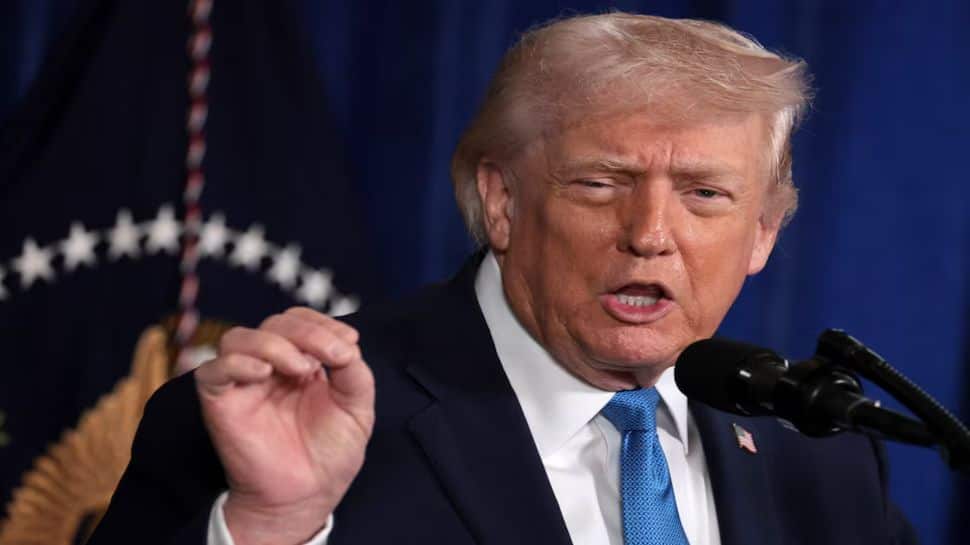
US President Donald Trump has invoked the nearly 200-year-old Monroe Doctrine to justify recent US actions in Venezuela. On January 3, he described efforts to capture Venezuelan President Nicolas Maduro as a modern interpretation of the doctrine originally articulated by President James Monroe in 1823. Trump asserted that the United States would “run the country” until a “safe, proper and judicious transition” could be achieved.
During his address, Trump remarked, “The Monroe Doctrine is a big deal, but we have superseded it by a lot, by a real lot. They now call it the Donroe document.” He emphasized that “American dominance in the Western Hemisphere will never be questioned again.” This invocation of the Monroe Doctrine highlights a significant historical moment in US foreign policy.
Historical Context of the Monroe Doctrine
The Monroe Doctrine was articulated on December 2, 1823, during Monroe’s annual State of the Union address to Congress. The policy was based on the idea that the Americas should be free from European interference. Monroe warned that any European intervention in the Americas would be seen as a threat to the US, establishing a clear separation between the political affairs of Europe and those of the Western Hemisphere.
In exchange for this stance, Monroe assured European nations that the United States would respect existing colonies and would not interfere in European affairs. He declared that North and South America were no longer open to colonization by European powers, aiming to protect the sovereignty of nations in the region.
In 1904, President Theodore Roosevelt expanded upon the Monroe Doctrine with what became known as the Roosevelt Corollary. This addition asserted the US’s right to intervene in Latin American countries to prevent European involvement, particularly in instances of debt disputes or political instability. Roosevelt’s justification followed the Venezuelan crisis of 1902-1903, where Venezuela faced threats from European creditors due to unpaid debts.
Legacy and Recent Applications
Throughout the 20th century, the expanded Monroe Doctrine was frequently cited to rationalize US interventions in Latin America. These actions included military involvement in the Dominican Republic, Haiti, and Nicaragua. In the 1980s, President Ronald Reagan adopted a hardline approach to the region, supporting anti-communist factions such as the Contras in Nicaragua, which led to controversy and allegations of human rights abuses.
The US has applied sustained pressure on Cuba since Fidel Castro’s revolution, employing military threats and significant economic sanctions that persist today. Reports have also surfaced regarding attempts to undermine the leadership of Maduro’s predecessor, Hugo Chavez, prior to his death in 2013.
Trump’s recent invocation of the Monroe Doctrine in the context of Venezuela underscores the enduring relevance of this historic policy in shaping contemporary US foreign relations in Latin America. This approach reflects a commitment to assert American influence and control in a region that has historically been a focal point for US policy.

Albert Camus’ Insightful Quote on Human Identity Resurfaces

Drone Strikes and Missile Attacks Disrupt UAE Amid Rising Tensions

Japanese Yen Rises Sharply Against US Dollar Ahead of Key Decisions

Priyanka Chopra and Nick Jonas Avoid Near Miss en Route to Oscars

Gujarat Vaccinates Over 11 Lakh Infants in Major Health Drive

Alexandre Singh Wins Oscar, Celebrates Immigrant Heritage

Lok Sabha Speaker Issues Warning Over Placards in Parliament

Global Electrosurgical Devices Market Expands to $10.2 Billion by 2034

North Zone Dominates Cricket; SJAM-1 Shines in Table Tennis

SBI Announces QIP Floor Price at ₹811.05 Per Share

Cept Unveils ₹3.1 Crore Urban Mobility Plan for Sustainable Growth

New Blood Group Discovered in South Indian Woman at Rotary Centre

Konkani Cultural Organisation to Host Pearl Jubilee in Abu Dhabi

Torrential Rains Cause Flash Flooding in New York and New Jersey

Nothing Headphone 1 Review: A Bold Contender in Audio Design

Indian Stock Market Rebounds: Sensex and Nifty Rise After Four-Day Decline

Air India Crash Investigation Highlights Boeing Fuel Switch Concerns

Broad Advocates for Bowling Change Ahead of Final Test Against India
-
 World12 months ago
SBI Announces QIP Floor Price at ₹811.05 Per Share
-
 Lifestyle12 months ago
Cept Unveils ₹3.1 Crore Urban Mobility Plan for Sustainable Growth
-
 Science12 months ago
New Blood Group Discovered in South Indian Woman at Rotary Centre
-
 Top Stories12 months ago
Konkani Cultural Organisation to Host Pearl Jubilee in Abu Dhabi
-
 World12 months ago
Torrential Rains Cause Flash Flooding in New York and New Jersey
-
 Science12 months ago
Nothing Headphone 1 Review: A Bold Contender in Audio Design
-
 Business12 months ago
Indian Stock Market Rebounds: Sensex and Nifty Rise After Four-Day Decline
-
 Top Stories12 months ago
Air India Crash Investigation Highlights Boeing Fuel Switch Concerns
-
 Sports12 months ago
Broad Advocates for Bowling Change Ahead of Final Test Against India
-

 Sports12 months ago
Cristian Totti Retires at 19: Pressure of Fame Takes Toll
-

 Politics12 months ago
Abandoned Doberman Finds New Home After Journey to Prague
-

 Lifestyle12 months ago
Villagers Unite to Raise ₹45 Lakh for Water Solutions in Vadgam