
Business
US-China Economic Bubbles: What to Expect by 2026

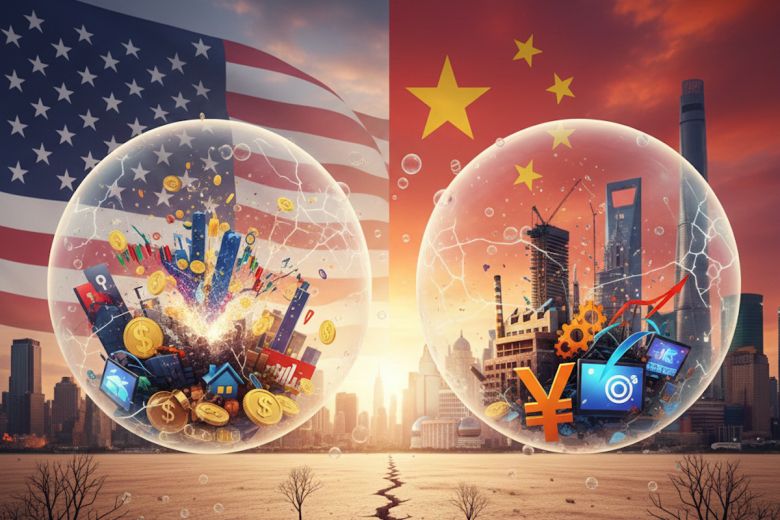
As the global economy prepares for 2026, significant concerns are mounting regarding potential financial bubbles in both the United States and China. With a national debt exceeding US $38 trillion and ongoing tensions over trade policies, the implications of these bubbles could resonate throughout international markets.
US Economic Pressures and Political Tensions
US President Donald Trump has increasingly targeted the Federal Reserve, raising alarms among policymakers and investors. His recent threats—including a potential lawsuit against Fed Chair Jerome Powell—have highlighted a troubling pattern of interference in monetary policy. This behavior is particularly alarming for Asian nations, which are the largest holders of US Treasury securities. Japan, for instance, holds nearly $1.2 trillion in US debt, while China holds approximately $689 billion.
Despite a Congress that appears increasingly dysfunctional and tariffs that have strained international trade relations, the yields on 10-year Treasury bonds remain around 4%. While the dollar has weakened against the euro this year, it has remained stable against the yen, underscoring the complexities of currency dynamics amid rising geopolitical tensions.
Trump’s ongoing campaign for a weaker dollar reflects a misunderstanding of past economic agreements, such as the 1985 Plaza Accord, and risks undermining the US’s position as the issuer of the world’s primary reserve currency. His administration’s approach has drawn criticism, suggesting a lack of awareness of the potential pitfalls of such a strategy.
China’s Economic Challenges and Potential Bubbles
Meanwhile, China faces its own set of economic challenges that could lead to significant market disruptions. Key concerns include a deepening property crisis and significant industrial overcapacity. Analysts at Fitch Ratings note that the country’s new home sales are projected to underperform, with an anticipated decline of 11.2% year-on-year as of November.
The ongoing property crisis has raised fears of a ripple effect that could destabilize not only the Chinese economy but also global markets. Neil Shearing from Capital Economics emphasizes the urgent need for the Chinese government to enhance domestic consumption and stabilize the property market to avert catastrophic outcomes. Despite government pledges to address these issues, the structural challenges remain a defining characteristic of China’s economy.
As the dynamics between the US and China evolve, the relationship between Trump and Chinese leader Xi Jinping will be critical. Xi may leverage the prospect of large-scale US Treasury sales, creating a potential crisis for the US economy if tensions escalate further. Japan, under Prime Minister Sanae Takaichi, has opted for a conciliatory approach towards Trump, despite conflicting interests on various fronts, including Taiwan and North Korea.
As 2026 approaches, the interaction between these two dominant economies will be pivotal. The potential for tariff increases from the US in response to trade imbalances could further exacerbate inflation risks and destabilize markets worldwide. The success or failure of Trump’s anticipated “grand bargain” trade deal with China remains uncertain, with many analysts predicting that significant agreements may not materialize until early 2027.
Adding to the complexity of the situation is the burgeoning interest in artificial intelligence (AI) investments. Some experts, including those at Oaktree Capital Management, warn of a potential bubble in this sector, highlighting the risks associated with overvaluation and hyperbolic expectations. Conversely, others believe that AI’s market share within data center construction will grow substantially in the coming years, suggesting a more optimistic outlook.
As both the US and China navigate these turbulent waters, the potential for economic bubbles looms large. The repercussions of any significant financial disruptions will likely resonate globally, emphasizing the interconnectedness of modern economies. If either nation’s bubbles burst, the ramifications for international markets could be profound, demonstrating the critical need for prudent economic management and cooperation in an increasingly volatile landscape.
In conclusion, as we look ahead to 2026, both the United States and China must address their respective financial vulnerabilities. The choices made in the coming months will shape the global economic landscape for years to come.

Albert Camus’ Insightful Quote on Human Identity Resurfaces

Drone Strikes and Missile Attacks Disrupt UAE Amid Rising Tensions

Japanese Yen Rises Sharply Against US Dollar Ahead of Key Decisions

Priyanka Chopra and Nick Jonas Avoid Near Miss en Route to Oscars

Gujarat Vaccinates Over 11 Lakh Infants in Major Health Drive

Alexandre Singh Wins Oscar, Celebrates Immigrant Heritage

Lok Sabha Speaker Issues Warning Over Placards in Parliament

Global Electrosurgical Devices Market Expands to $10.2 Billion by 2034

North Zone Dominates Cricket; SJAM-1 Shines in Table Tennis

SBI Announces QIP Floor Price at ₹811.05 Per Share

Cept Unveils ₹3.1 Crore Urban Mobility Plan for Sustainable Growth

New Blood Group Discovered in South Indian Woman at Rotary Centre

Konkani Cultural Organisation to Host Pearl Jubilee in Abu Dhabi

Torrential Rains Cause Flash Flooding in New York and New Jersey

Nothing Headphone 1 Review: A Bold Contender in Audio Design

Indian Stock Market Rebounds: Sensex and Nifty Rise After Four-Day Decline

Air India Crash Investigation Highlights Boeing Fuel Switch Concerns

Broad Advocates for Bowling Change Ahead of Final Test Against India
-
 World12 months ago
SBI Announces QIP Floor Price at ₹811.05 Per Share
-
 Lifestyle12 months ago
Cept Unveils ₹3.1 Crore Urban Mobility Plan for Sustainable Growth
-
 Science12 months ago
New Blood Group Discovered in South Indian Woman at Rotary Centre
-
 Top Stories12 months ago
Konkani Cultural Organisation to Host Pearl Jubilee in Abu Dhabi
-
 World12 months ago
Torrential Rains Cause Flash Flooding in New York and New Jersey
-
 Science12 months ago
Nothing Headphone 1 Review: A Bold Contender in Audio Design
-
 Business12 months ago
Indian Stock Market Rebounds: Sensex and Nifty Rise After Four-Day Decline
-
 Top Stories12 months ago
Air India Crash Investigation Highlights Boeing Fuel Switch Concerns
-
 Sports12 months ago
Broad Advocates for Bowling Change Ahead of Final Test Against India
-

 Sports12 months ago
Cristian Totti Retires at 19: Pressure of Fame Takes Toll
-

 Politics12 months ago
Abandoned Doberman Finds New Home After Journey to Prague
-

 Lifestyle12 months ago
Villagers Unite to Raise ₹45 Lakh for Water Solutions in Vadgam