
Entertainment
Bollywood Struggles to Connect with Gen Z Audiences

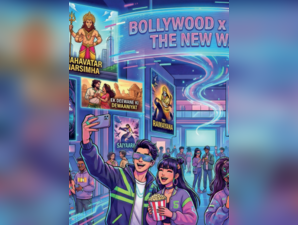
Bollywood is facing challenges in engaging with its Gen Z audience, a demographic that has increasingly turned to global cinema and diverse entertainment options. Industry experts highlight that this younger generation does not feel adequately represented in mainstream Hindi films, which often follow outdated storytelling templates.
Ameya Naik, a film producer and founder of Fantasy Films, emphasizes that Bollywood has struggled to capture the attention of Gen Z. “Today, Gen Z audiences have access to cinema and entertainment content from the world over. Through short videos, they discover classics and indie films. But Bollywood is particularly not serving them,” he states. This disconnect is evident as Gen Z prefers content that resonates with their values and aesthetics.
Understanding this demographic’s unique communication style is crucial. They often use lowercase letters and emojis, prioritizing authenticity over traditional narratives. Suniel Wadhwa, co-founder and director of Karmic Films, notes that Gen Z is not rejecting Hindi cinema outright; rather, they are dismissing anything that feels formulaic or disconnected from their realities. “What pulls them in is strong music, emotional integrity, cultural identity, and fresh storytelling,” Wadhwa explains.
Recent research from the entertainment and technology firm NRG reveals that 48% of Gen Z enjoy watching movies in theaters rather than at home. This statistic underscores a significant opportunity for filmmakers. Industry observers have also noted that this generation shows a keen interest in experimenting with various genres, including animation, horror, and mythology. The success of films such as the horror-comedy Munjya (2024), romantic drama Saiyaara (2025), and the animated feature Mahavatar Narsimha (2025) exemplifies this trend.
Producer Rajesh R Nair highlights the financial implications of neglecting Gen Z. “A film cannot do a business of ₹500-600 crore without the participation of Gen Z audiences,” he asserts. Nair points out that Bollywood creators often overlook what this demographic values: authenticity in storytelling. If filmmakers succeed in delivering this authenticity, they are likely to gain acceptance from younger viewers.
Marketing to Gen Z presents another significant hurdle for producers. Naveen Chandra, founder of 91 Film Studios, which focuses on regional films, stresses the importance of innovative marketing strategies. “Gen Z are digital natives. Makers must come up with smart marketing strategies that will create online buzz about their films,” he advises. The challenge lies in capturing their attention amidst a vast array of content and a shorter attention span.
Looking ahead, Bollywood is set to release a series of ambitious projects that could potentially appeal to younger audiences. Upcoming titles include the epic Ramayana, Yash’s Toxic, and Sanjay Leela Bhansali’s Love & War, among others. The question remains: will these films resonate with Gen Z?
For now, the relationship between Bollywood and Gen Z appears distant, lacking the connection needed for a successful collaboration. As filmmakers strive to innovate their storytelling and marketing strategies, the industry must adapt to meet the expectations of this rapidly evolving audience.

Albert Camus’ Insightful Quote on Human Identity Resurfaces

Drone Strikes and Missile Attacks Disrupt UAE Amid Rising Tensions

Japanese Yen Rises Sharply Against US Dollar Ahead of Key Decisions

Priyanka Chopra and Nick Jonas Avoid Near Miss en Route to Oscars

Gujarat Vaccinates Over 11 Lakh Infants in Major Health Drive

Alexandre Singh Wins Oscar, Celebrates Immigrant Heritage

Lok Sabha Speaker Issues Warning Over Placards in Parliament

Global Electrosurgical Devices Market Expands to $10.2 Billion by 2034

North Zone Dominates Cricket; SJAM-1 Shines in Table Tennis

SBI Announces QIP Floor Price at ₹811.05 Per Share

Cept Unveils ₹3.1 Crore Urban Mobility Plan for Sustainable Growth

New Blood Group Discovered in South Indian Woman at Rotary Centre

Konkani Cultural Organisation to Host Pearl Jubilee in Abu Dhabi

Torrential Rains Cause Flash Flooding in New York and New Jersey

Nothing Headphone 1 Review: A Bold Contender in Audio Design

Indian Stock Market Rebounds: Sensex and Nifty Rise After Four-Day Decline

Air India Crash Investigation Highlights Boeing Fuel Switch Concerns

Broad Advocates for Bowling Change Ahead of Final Test Against India
-
 World12 months ago
SBI Announces QIP Floor Price at ₹811.05 Per Share
-
 Lifestyle12 months ago
Cept Unveils ₹3.1 Crore Urban Mobility Plan for Sustainable Growth
-
 Science11 months ago
New Blood Group Discovered in South Indian Woman at Rotary Centre
-
 Top Stories12 months ago
Konkani Cultural Organisation to Host Pearl Jubilee in Abu Dhabi
-
 World12 months ago
Torrential Rains Cause Flash Flooding in New York and New Jersey
-
 Science12 months ago
Nothing Headphone 1 Review: A Bold Contender in Audio Design
-
 Business12 months ago
Indian Stock Market Rebounds: Sensex and Nifty Rise After Four-Day Decline
-
 Top Stories12 months ago
Air India Crash Investigation Highlights Boeing Fuel Switch Concerns
-
 Sports12 months ago
Broad Advocates for Bowling Change Ahead of Final Test Against India
-

 Sports12 months ago
Cristian Totti Retires at 19: Pressure of Fame Takes Toll
-

 Politics12 months ago
Abandoned Doberman Finds New Home After Journey to Prague
-

 Lifestyle12 months ago
Villagers Unite to Raise ₹45 Lakh for Water Solutions in Vadgam