
World
China Deploys Over 100 DF-31 Missiles Near Mongolia, Pentagon Reports


A recent Pentagon report indicates that China has deployed more than 100 DF-31 intercontinental ballistic missiles (ICBMs) in three newly constructed silo fields near the Mongolian border. This development underscores Beijing’s ongoing commitment to enhancing its nuclear capabilities. The DF-31 missiles, capable of rapid launch and designed to evade most air defense systems, reflect a significant shift in China’s military posture.
The report, which remains unpublished, marks the first time officials have provided an estimate of the number of DF-31 missiles stationed in these silos. The Pentagon had previously noted the construction of these missile fields, but the new assessment highlights the scale of China’s military advancements. According to estimates, China’s nuclear arsenal may reach approximately 600 warheads by 2024, with projections suggesting it could exceed 1,000 by 2030.
Details on the DF-31 Missile
The DF-31, also known as Dong Feng-31 and designated CSS-10 by NATO, represents China’s third generation of road-mobile ICBMs. Introduced in 2006, this missile system features a solid-fuel propulsion mechanism, enabling quick launches with minimal preparation time. The basic DF-31 variant boasts an impressive range of 7,000 to 8,000 kilometres, while its enhanced versions, the DF-31A and DF-31AG, can reach distances between 11,000 and 11,700 kilometres, effectively covering much of the continental United States.
Measuring approximately 13 to 15 metres in length, with a diameter of 2 metres and a launch weight of around 42,000 kilograms, the DF-31 is engineered for precision. It can carry a single nuclear warhead with a yield of up to 1 megaton. Certain variants are equipped with Multiple Independently Targetable Reentry Vehicle (MIRV) capabilities, allowing a single missile to strike multiple targets simultaneously.
The missile’s inertial navigation system ensures an accuracy range of 100 to 300 metres, making it a formidable addition to China’s strategic arsenal. Notably, the DF-31 can be launched from both road-mobile transporter erector launchers and the newly constructed silos, enhancing its off-road mobility and survivability. The inclusion of decoy warheads further complicates the task of missile defense systems, reinforcing the missile’s effectiveness.
Implications of China’s Nuclear Expansion
Experts suggest that the deployment of DF-31 missiles in silos offers increased protection against potential first strikes, thereby enhancing the resilience of China’s nuclear arsenal. This strategic move allows the DF-31 family to target vast regions across the United States, Europe, and Asia, presenting a significant challenge to global stability.
While the United States and its allies are closely monitoring these developments, Beijing has yet to issue an official statement regarding the new missile deployments. Analysts express concerns that the expansion of China’s nuclear capabilities could have far-reaching implications for both regional and global security. As the geopolitical landscape continues to evolve, the international community will need to address the potential consequences of these advancements in military technology.

Albert Camus’ Insightful Quote on Human Identity Resurfaces

Drone Strikes and Missile Attacks Disrupt UAE Amid Rising Tensions

Japanese Yen Rises Sharply Against US Dollar Ahead of Key Decisions

Priyanka Chopra and Nick Jonas Avoid Near Miss en Route to Oscars

Gujarat Vaccinates Over 11 Lakh Infants in Major Health Drive

Alexandre Singh Wins Oscar, Celebrates Immigrant Heritage

Lok Sabha Speaker Issues Warning Over Placards in Parliament

Global Electrosurgical Devices Market Expands to $10.2 Billion by 2034

North Zone Dominates Cricket; SJAM-1 Shines in Table Tennis

SBI Announces QIP Floor Price at ₹811.05 Per Share

Cept Unveils ₹3.1 Crore Urban Mobility Plan for Sustainable Growth

New Blood Group Discovered in South Indian Woman at Rotary Centre

Konkani Cultural Organisation to Host Pearl Jubilee in Abu Dhabi

Torrential Rains Cause Flash Flooding in New York and New Jersey

Nothing Headphone 1 Review: A Bold Contender in Audio Design

Indian Stock Market Rebounds: Sensex and Nifty Rise After Four-Day Decline

Air India Crash Investigation Highlights Boeing Fuel Switch Concerns

Broad Advocates for Bowling Change Ahead of Final Test Against India
-
 World12 months ago
SBI Announces QIP Floor Price at ₹811.05 Per Share
-
 Lifestyle12 months ago
Cept Unveils ₹3.1 Crore Urban Mobility Plan for Sustainable Growth
-
 Science12 months ago
New Blood Group Discovered in South Indian Woman at Rotary Centre
-
 Top Stories12 months ago
Konkani Cultural Organisation to Host Pearl Jubilee in Abu Dhabi
-
 World12 months ago
Torrential Rains Cause Flash Flooding in New York and New Jersey
-
 Science12 months ago
Nothing Headphone 1 Review: A Bold Contender in Audio Design
-
 Business12 months ago
Indian Stock Market Rebounds: Sensex and Nifty Rise After Four-Day Decline
-
 Top Stories12 months ago
Air India Crash Investigation Highlights Boeing Fuel Switch Concerns
-
 Sports12 months ago
Broad Advocates for Bowling Change Ahead of Final Test Against India
-

 Sports12 months ago
Cristian Totti Retires at 19: Pressure of Fame Takes Toll
-

 Politics12 months ago
Abandoned Doberman Finds New Home After Journey to Prague
-
 Lifestyle12 months ago
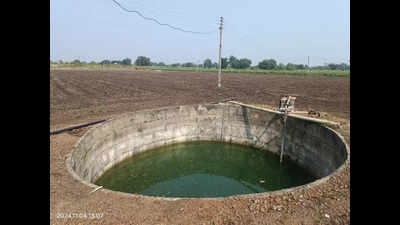
Villagers Unite to Raise ₹45 Lakh for Water Solutions in Vadgam