
Health
Stephen Hawking’s Legacy: Redefining Existence and Consciousness

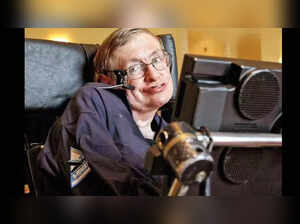
Stephen Hawking, renowned physicist and cosmologist, passed away on March 14, 2018, leaving behind a profound legacy that reshaped our understanding of the universe. Diagnosed with a rare motor neuron disease at the age of 21, Hawking defied expectations by living for more than five decades, becoming one of the most recognizable scientific figures worldwide. His work transcended physical limitations, showcasing the remarkable capacity of the human mind to explore complex questions about existence and the cosmos.
Challenging Conventional Beliefs
Hawking’s approach to the universe was grounded in evidence and reason rather than spiritual beliefs. He often described himself as a scientist committed to understanding the laws of nature, asserting that the universe operated independently of any divine influence. In his acclaimed book, A Brief History of Time, he proposed that the universe might be self-contained, lacking both edges and a definite beginning. This perspective challenges traditional notions of creation, suggesting that existence is governed by mathematical principles rather than divine intention.
One of Hawking’s most provocative assertions drew a parallel between the human brain and a computer. He famously stated, “There is no heaven or afterlife for broken-down computers.” This statement encapsulated his belief that consciousness arises from the brain’s physical processes. According to Hawking, once those processes cease, so too does awareness, eliminating the concept of an enduring soul. For him, the idea of an afterlife served more as an emotional comfort than a scientifically grounded reality.
A Cosmos Governed by Laws, Not Deities
Hawking’s skepticism towards the existence of God was analytical rather than antagonistic. In his later work, The Grand Design, he argued that natural laws, such as gravity, could explain the universe’s existence without necessitating a creator. He viewed the concept of God as a metaphor for human wonder rather than an active force influencing the cosmos. While religion may offer comfort and tradition, Hawking believed that physics provides the framework for understanding reality.
His views on memory, identity, and emotion were equally grounded in a scientific perspective. Hawking maintained that these aspects of human experience are inseparable from the brain’s structural integrity. When the brain fails, he argued, the self dissolves. Yet, this outlook did not diminish the meaning of life for him. He encouraged individuals to embrace curiosity, discovery, and experience, urging them to look outward at the universe rather than inward at existential fears.
Hawking perceived visions of heaven and hell as human constructs developed to cope with mortality. Throughout history, people have created narratives of afterlife to manage loss and uncertainty. While he recognized the human impulse behind these beliefs, he found no empirical evidence to support them. For Hawking, the true marvel lay in the universe itself—the intricacies of its laws and the enigmas surrounding its origins.
Rejecting the notion of an afterlife did not lead Hawking to adopt a nihilistic worldview. His extensive research on topics ranging from black holes to singularities established a new understanding of the cosmos. He believed that legacy is defined not by the desire for immortality but by the impact one leaves behind: ideas shared, minds influenced, and pathways opened for future generations.
Hawking’s perspective calls for a quiet courage to accept life’s limitations without succumbing to despair. He argued that meaning is derived from present actions rather than future rewards. His philosophy resonates with those that prioritize living fully in the moment, underscoring the importance of how we navigate the time we have.
In reflecting on Hawking’s life and work, we are reminded that the pursuit of knowledge and understanding can bring profound purpose, even in the face of life’s inevitable end. His legacy continues to inspire curiosity and exploration, encouraging us to look toward the stars with wonder and determination.

Albert Camus’ Insightful Quote on Human Identity Resurfaces

Drone Strikes and Missile Attacks Disrupt UAE Amid Rising Tensions

Japanese Yen Rises Sharply Against US Dollar Ahead of Key Decisions

Priyanka Chopra and Nick Jonas Avoid Near Miss en Route to Oscars

Gujarat Vaccinates Over 11 Lakh Infants in Major Health Drive

Alexandre Singh Wins Oscar, Celebrates Immigrant Heritage

Lok Sabha Speaker Issues Warning Over Placards in Parliament

Global Electrosurgical Devices Market Expands to $10.2 Billion by 2034

North Zone Dominates Cricket; SJAM-1 Shines in Table Tennis

SBI Announces QIP Floor Price at ₹811.05 Per Share

Cept Unveils ₹3.1 Crore Urban Mobility Plan for Sustainable Growth

New Blood Group Discovered in South Indian Woman at Rotary Centre

Konkani Cultural Organisation to Host Pearl Jubilee in Abu Dhabi

Torrential Rains Cause Flash Flooding in New York and New Jersey

Nothing Headphone 1 Review: A Bold Contender in Audio Design

Indian Stock Market Rebounds: Sensex and Nifty Rise After Four-Day Decline

Air India Crash Investigation Highlights Boeing Fuel Switch Concerns

Broad Advocates for Bowling Change Ahead of Final Test Against India
-
 World12 months ago
SBI Announces QIP Floor Price at ₹811.05 Per Share
-
 Lifestyle12 months ago
Cept Unveils ₹3.1 Crore Urban Mobility Plan for Sustainable Growth
-
 Science12 months ago
New Blood Group Discovered in South Indian Woman at Rotary Centre
-
 Top Stories12 months ago
Konkani Cultural Organisation to Host Pearl Jubilee in Abu Dhabi
-
 World12 months ago
Torrential Rains Cause Flash Flooding in New York and New Jersey
-
 Science12 months ago
Nothing Headphone 1 Review: A Bold Contender in Audio Design
-
 Business12 months ago
Indian Stock Market Rebounds: Sensex and Nifty Rise After Four-Day Decline
-
 Top Stories12 months ago
Air India Crash Investigation Highlights Boeing Fuel Switch Concerns
-
 Sports12 months ago
Broad Advocates for Bowling Change Ahead of Final Test Against India
-

 Sports12 months ago
Cristian Totti Retires at 19: Pressure of Fame Takes Toll
-

 Politics12 months ago
Abandoned Doberman Finds New Home After Journey to Prague
-

 Lifestyle12 months ago
Villagers Unite to Raise ₹45 Lakh for Water Solutions in Vadgam