
World
Protests Erupt in Iran Over Economic Crisis, Resulting in 3 Deaths

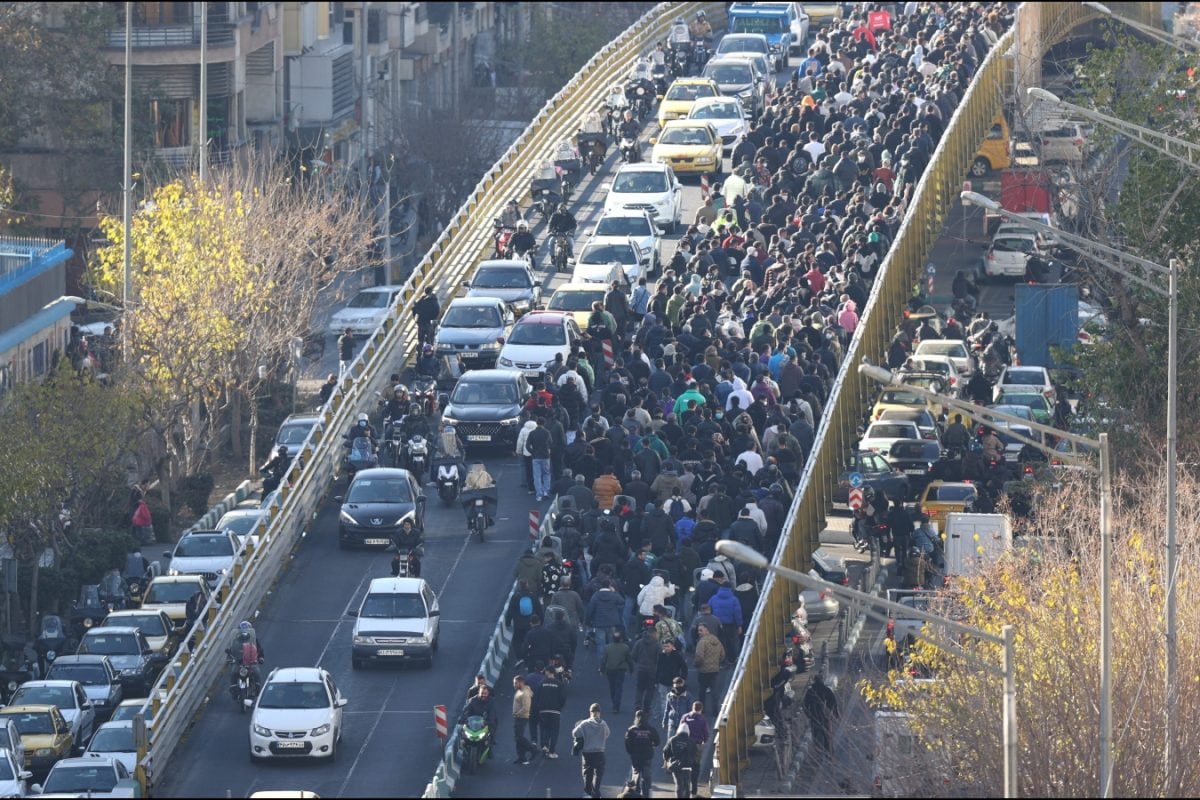
Protests in Iran have escalated dramatically, resulting in the deaths of at least three individuals as citizens clash with security forces over the rising cost of living and economic stagnation. The unrest began on Sunday in Tehran when shopkeepers initiated a strike against soaring prices, which have been exacerbated by a struggling economy. As demonstrations spread across the country, local media reported fatalities in Lordegan, where civilians faced off against security personnel.
In the initial protests, shopkeepers expressed their frustrations over high prices, which have become unbearable for many. The situation intensified when demonstrators began throwing stones at local administrative buildings, including the provincial governor’s office and the town hall. The police responded with tear gas, leading to a confrontation that resulted in significant property damage, as reported by Iran’s Fars news agency. Officials have since arrested several individuals labeled as “ringleaders” of the protests.
The protests have claimed lives on both sides. In a tragic incident on Thursday, a member of Iran’s security forces, identified as a 21-year-old Basij member, was killed during clashes in the western city of Kouhdasht. According to Said Pourali, the deputy governor of Lorestan Province, the young man was attacked by rioters while attempting to maintain public order. In addition, reports indicate that 13 police officers and Basij members were injured in the violence.
As unrest continued, demonstrations also emerged in Marvdasht, located in the southern Fars province. Activist news site HRANA highlighted detentions of protesters across several western provinces, including Kermanshah, Khuzestan, and Hamedan. The protests are notable for their scale, with students from at least ten universities joining on Tuesday, amplifying the calls for change.
Economic Context and Government Response
This wave of protests arrives at a critical juncture for Iran, as the economy grapples with soaring inflation rates of 52% year-on-year, according to the Statistical Centre of Iran. The country’s national currency, the rial, has lost over a third of its value against the US dollar in the past year, significantly eroding purchasing power.
Western sanctions have long plagued Iran’s economy, with the situation worsening following Israeli and US airstrikes in June 2025 that targeted the nation’s nuclear infrastructure and military capabilities. These developments have contributed to a sense of urgency among citizens, who are increasingly vocal about their economic struggles.
In a bid to quell the turmoil, Iranian President Masoud Pezeshkian has acknowledged the “legitimate demands” of the protesters. He called for immediate government action to address the prevailing economic challenges. The Iranian prosecutor general has also weighed in, stating that while peaceful protests concerning economic issues are permissible, any attempts to incite insecurity will receive a “decisive response.”
As the situation continues to unfold, it remains to be seen how the Iranian government will balance its security measures with the need to address the economic grievances that have sparked widespread dissent. The international community is closely monitoring the developments, as the potential for further unrest looms large in the face of ongoing economic hardship.

Albert Camus’ Insightful Quote on Human Identity Resurfaces

Drone Strikes and Missile Attacks Disrupt UAE Amid Rising Tensions

Japanese Yen Rises Sharply Against US Dollar Ahead of Key Decisions

Priyanka Chopra and Nick Jonas Avoid Near Miss en Route to Oscars

Gujarat Vaccinates Over 11 Lakh Infants in Major Health Drive

Alexandre Singh Wins Oscar, Celebrates Immigrant Heritage

Lok Sabha Speaker Issues Warning Over Placards in Parliament

Global Electrosurgical Devices Market Expands to $10.2 Billion by 2034

North Zone Dominates Cricket; SJAM-1 Shines in Table Tennis

SBI Announces QIP Floor Price at ₹811.05 Per Share

Cept Unveils ₹3.1 Crore Urban Mobility Plan for Sustainable Growth

New Blood Group Discovered in South Indian Woman at Rotary Centre

Konkani Cultural Organisation to Host Pearl Jubilee in Abu Dhabi

Torrential Rains Cause Flash Flooding in New York and New Jersey

Nothing Headphone 1 Review: A Bold Contender in Audio Design

Indian Stock Market Rebounds: Sensex and Nifty Rise After Four-Day Decline

Air India Crash Investigation Highlights Boeing Fuel Switch Concerns

Broad Advocates for Bowling Change Ahead of Final Test Against India
-
 World12 months ago
SBI Announces QIP Floor Price at ₹811.05 Per Share
-
 Lifestyle12 months ago
Cept Unveils ₹3.1 Crore Urban Mobility Plan for Sustainable Growth
-
 Science12 months ago
New Blood Group Discovered in South Indian Woman at Rotary Centre
-
 Top Stories12 months ago
Konkani Cultural Organisation to Host Pearl Jubilee in Abu Dhabi
-
 World12 months ago
Torrential Rains Cause Flash Flooding in New York and New Jersey
-
 Science12 months ago
Nothing Headphone 1 Review: A Bold Contender in Audio Design
-
 Business12 months ago
Indian Stock Market Rebounds: Sensex and Nifty Rise After Four-Day Decline
-
 Top Stories12 months ago
Air India Crash Investigation Highlights Boeing Fuel Switch Concerns
-
 Sports12 months ago
Broad Advocates for Bowling Change Ahead of Final Test Against India
-

 Sports12 months ago
Cristian Totti Retires at 19: Pressure of Fame Takes Toll
-

 Politics12 months ago
Abandoned Doberman Finds New Home After Journey to Prague
-
 Lifestyle12 months ago
Villagers Unite to Raise ₹45 Lakh for Water Solutions in Vadgam