
World
Indonesian Rupiah Hits Record Low, Pressuring Households and Businesses

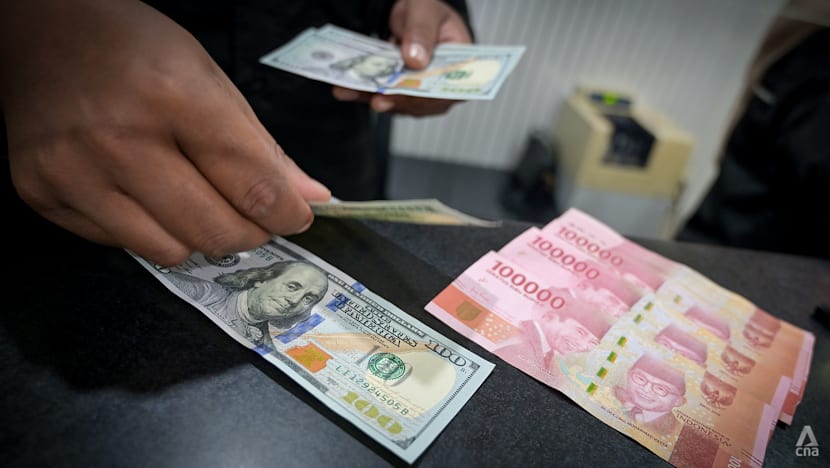
The Indonesian rupiah has reached a record low against the US dollar, trading at 16,985 per dollar on January 20, 2025. This decline has significant implications for both consumers and businesses across the nation, as rising costs and diminished purchasing power take hold. Logistics entrepreneur Ilham Mualif has felt the impact firsthand, experiencing a drop in foreign imports of vehicle parts by between 15 and 20 percent since the beginning of the year.
The weakening currency has forced overseas suppliers to delay orders and increase prices on shipments already en route to Indonesia. Mualif, who serves Indonesian automotive firms by facilitating overseas orders, stated, “We felt the situation was bad enough that we had to cut and tighten expenses and postpone all our expansion plans.” This sentiment echoes throughout the country, where many are grappling with the financial strain caused by the rupiah’s depreciation.
The recent decline follows a broader trend, with the rupiah falling nearly 2 percent in January after a 3.5 percent decrease in 2024. Analysts note that this is part of a longer-term issue, with the currency now at its lowest point since the Asian financial crisis in June 1998, when it plummeted from 2,800 to 16,800 per US dollar.
Domestic and Global Pressures Contributing to Currency Decline
Experts attribute the rupiah’s decline to a mix of global pressures, such as geopolitical tensions and US tariffs, alongside domestic concerns including rising government debt and slowing economic growth. Eko Listyanto, deputy director at the Institute for Development of Economics and Finance (INDEF), highlighted that the recent nomination of President Prabowo Subianto’s nephew to a senior position at Bank Indonesia has stirred apprehension among investors regarding fiscal governance and central bank independence.
“Concerns over the independence of Bank Indonesia and how the government manages fiscal matters have raised alarm among investors,” explained Mohammad Faisal, executive director of the Center of Reform on Economics (CORE) Indonesia. This uncertainty has led to reduced capital flows, further putting pressure on the currency.
While a weaker rupiah can potentially boost tourism by making Indonesia a more affordable destination for foreign visitors, experts caution that the overall benefits may be limited. Listyanto remarked, “Depreciation cannot be effectively leveraged as an opportunity for tourism, as it often triggers price volatility and domestic economic uncertainty.”
Household Spending and Business Operations Adjust to New Reality
As households feel the effects of rising prices, many are cutting back on both domestic and international spending. Mualif mentioned that he has reduced expenses not only for his business but also in his personal life, opting for essentials over non-essential purchases. “Demand is slow in Indonesia; people are not buying things,” he noted.
In North Sumatra, Mary Hutagol, a housewife, reported grocery prices for staples like rice and cooking oil rising by 30 to 45 percent since December. To cope, she has started growing vegetables at home, saving approximately 30 percent on monthly expenses. “All the residents can do it,” she said.
Similarly, Abigail Nathania, a graphic design freelancer, has canceled vacation plans and reduced her spending on entertainment to navigate the rising costs. “With the weakening currency, I’m pivoting to look for a job with more stability,” she shared, adding that she hopes to save for overseas education, even as tuition costs rise.
While consumers are feeling the pinch, some businesses have adapted to currency fluctuations over the years. Teck Way Chia, a sales manager at an international freight company, noted that Indonesia’s historically weak rupiah has led to delays in imports but that global exports have helped cushion the impact.
Importers are increasingly facing the challenge of balancing price increases with consumer affordability. Kafi Kurnia, a marketing consultant for agricultural produce, mentioned that while importers often absorb some costs to protect consumers, margins are becoming thinner.
With the upcoming Hari Raya season, demand for certain imported goods may remain strong despite rising prices, as cultural significance drives consumption. “It is impossible for people here not to consume dates with the festive season coming up,” Kurnia stated.
Looking ahead, economists predict that the rupiah may continue to weaken, potentially reaching 17,300 to 17,500 against the US dollar in the next six months. Faisal emphasized the need for the Indonesian government to stabilize the currency, noting that the central bank has sufficient reserves to support the rupiah, with approximately US$156.5 billion in foreign exchange reserves at the end of 2024.
As Indonesia navigates these economic challenges, maintaining stability in the currency will be crucial for both consumer confidence and business operations.

Albert Camus’ Insightful Quote on Human Identity Resurfaces

Drone Strikes and Missile Attacks Disrupt UAE Amid Rising Tensions

Japanese Yen Rises Sharply Against US Dollar Ahead of Key Decisions

Priyanka Chopra and Nick Jonas Avoid Near Miss en Route to Oscars

Gujarat Vaccinates Over 11 Lakh Infants in Major Health Drive

Alexandre Singh Wins Oscar, Celebrates Immigrant Heritage

Lok Sabha Speaker Issues Warning Over Placards in Parliament

Global Electrosurgical Devices Market Expands to $10.2 Billion by 2034

North Zone Dominates Cricket; SJAM-1 Shines in Table Tennis

SBI Announces QIP Floor Price at ₹811.05 Per Share

Cept Unveils ₹3.1 Crore Urban Mobility Plan for Sustainable Growth

New Blood Group Discovered in South Indian Woman at Rotary Centre

Konkani Cultural Organisation to Host Pearl Jubilee in Abu Dhabi

Torrential Rains Cause Flash Flooding in New York and New Jersey

Nothing Headphone 1 Review: A Bold Contender in Audio Design

Indian Stock Market Rebounds: Sensex and Nifty Rise After Four-Day Decline

Air India Crash Investigation Highlights Boeing Fuel Switch Concerns

Broad Advocates for Bowling Change Ahead of Final Test Against India
-
 World12 months ago
SBI Announces QIP Floor Price at ₹811.05 Per Share
-
 Lifestyle12 months ago
Cept Unveils ₹3.1 Crore Urban Mobility Plan for Sustainable Growth
-
 Science12 months ago
New Blood Group Discovered in South Indian Woman at Rotary Centre
-
 Top Stories12 months ago
Konkani Cultural Organisation to Host Pearl Jubilee in Abu Dhabi
-
 World12 months ago
Torrential Rains Cause Flash Flooding in New York and New Jersey
-
 Science12 months ago
Nothing Headphone 1 Review: A Bold Contender in Audio Design
-
 Business12 months ago
Indian Stock Market Rebounds: Sensex and Nifty Rise After Four-Day Decline
-
 Top Stories12 months ago
Air India Crash Investigation Highlights Boeing Fuel Switch Concerns
-
 Sports12 months ago
Broad Advocates for Bowling Change Ahead of Final Test Against India
-

 Sports12 months ago
Cristian Totti Retires at 19: Pressure of Fame Takes Toll
-

 Politics12 months ago
Abandoned Doberman Finds New Home After Journey to Prague
-

 Lifestyle12 months ago
Villagers Unite to Raise ₹45 Lakh for Water Solutions in Vadgam