
World
India Halts Funding for Chabahar Port Amid Sanction Uncertainty

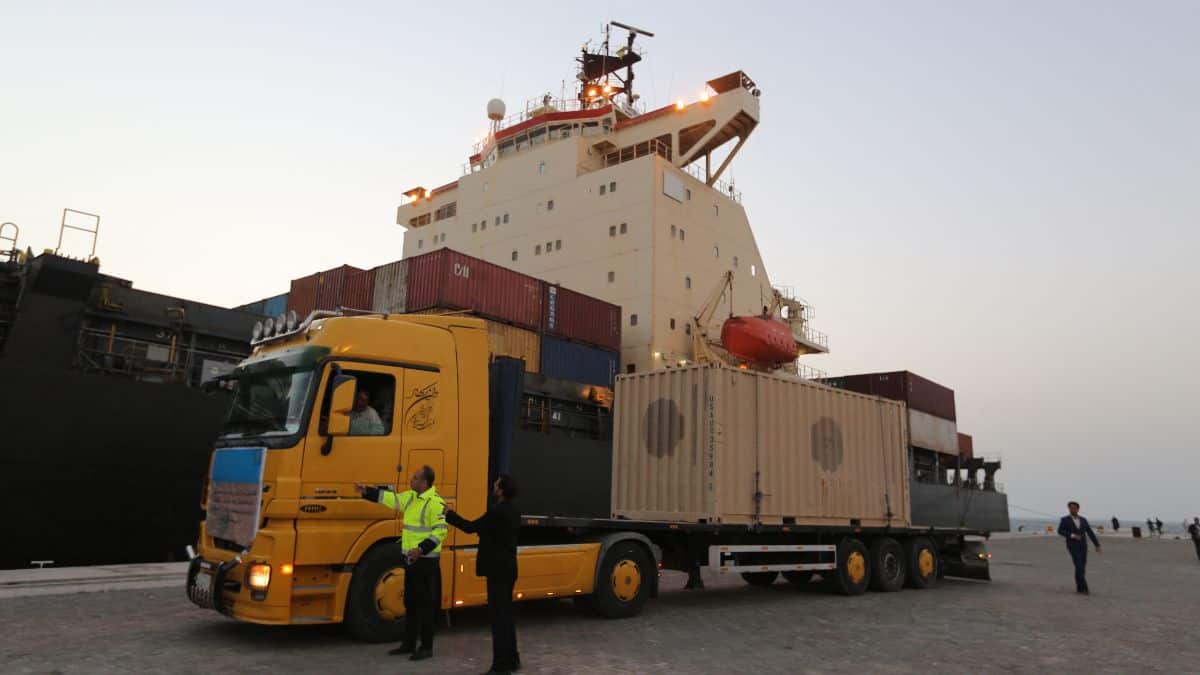
India’s decision to allocate zero funding for the Chabahar port in its latest budget has raised eyebrows, suggesting a temporary halt rather than a complete withdrawal from the project. According to Anchita Borthakur, a scholar at the Chintan Research Foundation, this move reflects a strategic pause influenced by the uncertain sanctions landscape rather than an outright exit that could result in a significant geopolitical misstep.
The budget for the fiscal year 2026–27 marks a stark contrast to the previous year, when funding for Chabahar was increased fourfold. The decision comes at a time when US President Donald Trump has intensified his “maximum pressure” campaign against Iran, reinstating sanctions on Indian projects at Chabahar in September 2025. Following this, Trump granted a six-month waiver to India, but he has not committed to renewing it, indicating a significant shift from eight years of bipartisan support for the project during both his and President Joe Biden‘s administrations.
Borthakur notes that the absence of new funding does not indicate that India is abandoning its investment in Chabahar. Instead, it suggests a prudent delay in expenditure until the geopolitical climate stabilizes. “In May 2024, India and Iran signed a ten-year agreement to develop the strategically significant Chabahar port,” she stated. India has already fulfilled its commitment of $120 million to develop the Shahid Beheshti terminal under this agreement. As those funds are currently being utilized, there may be no immediate need for additional budgetary allocations.
Chabahar serves as a crucial gateway for India to access Afghanistan, Central Asia, and beyond. Discussions regarding the port began in the early 2000s, culminating in a formal agreement in 2015. Over the years, India has invested approximately Rs 1,000 crore in the project and has extended an additional Rs 2,000 crore as a line of credit. Borthakur emphasizes that abandoning Chabahar would be a strategic error, particularly with China’s growing influence in the region.
“India’s connectivity push through Chabahar appears to be slowing and attracting less visible funding, but the trend points to a pragmatic pause driven by risk management rather than any fundamental decision to exit,” Borthakur explained.
The complexities of the West Asian geopolitical landscape and Trump’s unpredictable foreign policy have long raised questions about the long-term viability of Chabahar as a reliable trade route. Analysts are increasingly concerned that, under the current sanctions regime, the port may struggle to maintain its role as a dependable link for Afghanistan and Central Asia.
While New Delhi has explored alternatives such as air-freight corridors to Afghanistan to mitigate the limitations of Chabahar, these options are not feasible substitutes. Air transport remains significantly more expensive than maritime routes, making it a less viable alternative for most goods.
India’s financial commitment to Chabahar has been inconsistent over the years, with budgetary allocations fluctuating. For instance, in 2016–17, the government allocated Rs 150 crore to the port, which was later revised down to Rs 0.1 crore. Similarly, allocations of Rs 150 crore in 2017–18 and 2018–19 resulted in no recorded expenditure. Even in 2019–20, despite an initial allocation of Rs 45 crore, no funds were utilized.
The trend shifted in 2021–22 when India resumed spending at Chabahar, coinciding with Biden’s presidency. Both 2021–22 and 2022–23 saw full expenditure of the allocated Rs 100 crore. In 2024, following the signing of the ten-year terminal agreement and committing $120 million, India allocated Rs 100 crore but ultimately spent Rs 400 crore. The allocation for 2025–26 was initially set at Rs 100 crore before being revised upwards to Rs 400 crore.
As India navigates its strategic interests in the region, the future of the Chabahar port remains uncertain. It is clear that the government’s latest budgetary decision is not an outright rejection of the project but rather a cautious approach to managing risks in a volatile geopolitical environment.

Albert Camus’ Insightful Quote on Human Identity Resurfaces

Drone Strikes and Missile Attacks Disrupt UAE Amid Rising Tensions

Japanese Yen Rises Sharply Against US Dollar Ahead of Key Decisions

Priyanka Chopra and Nick Jonas Avoid Near Miss en Route to Oscars

Gujarat Vaccinates Over 11 Lakh Infants in Major Health Drive

Alexandre Singh Wins Oscar, Celebrates Immigrant Heritage

Lok Sabha Speaker Issues Warning Over Placards in Parliament

Global Electrosurgical Devices Market Expands to $10.2 Billion by 2034

North Zone Dominates Cricket; SJAM-1 Shines in Table Tennis

SBI Announces QIP Floor Price at ₹811.05 Per Share

Cept Unveils ₹3.1 Crore Urban Mobility Plan for Sustainable Growth

Comparing Subscription Prices: Spotify, Apple Music, and YouTube Music in India

New Blood Group Discovered in South Indian Woman at Rotary Centre

Konkani Cultural Organisation to Host Pearl Jubilee in Abu Dhabi

Torrential Rains Cause Flash Flooding in New York and New Jersey

Nothing Headphone 1 Review: A Bold Contender in Audio Design

Air India Crash Investigation Highlights Boeing Fuel Switch Concerns

Broad Advocates for Bowling Change Ahead of Final Test Against India
-
 World1 year ago
SBI Announces QIP Floor Price at ₹811.05 Per Share
-
 Lifestyle1 year ago
Cept Unveils ₹3.1 Crore Urban Mobility Plan for Sustainable Growth
-
 Science1 year ago
Comparing Subscription Prices: Spotify, Apple Music, and YouTube Music in India
-
 Science1 year ago
New Blood Group Discovered in South Indian Woman at Rotary Centre
-
 Top Stories1 year ago
Konkani Cultural Organisation to Host Pearl Jubilee in Abu Dhabi
-
 World1 year ago
Torrential Rains Cause Flash Flooding in New York and New Jersey
-
 Science1 year ago
Nothing Headphone 1 Review: A Bold Contender in Audio Design
-
 Top Stories1 year ago
Air India Crash Investigation Highlights Boeing Fuel Switch Concerns
-
 Sports1 year ago
Broad Advocates for Bowling Change Ahead of Final Test Against India
-

 Business1 year ago
Indian Stock Market Rebounds: Sensex and Nifty Rise After Four-Day Decline
-

 Sports1 year ago
Cristian Totti Retires at 19: Pressure of Fame Takes Toll
-

 Politics1 year ago
Abandoned Doberman Finds New Home After Journey to Prague