
World
ASEAN Summit Highlights Trade Concerns as Leaders Call for Unity

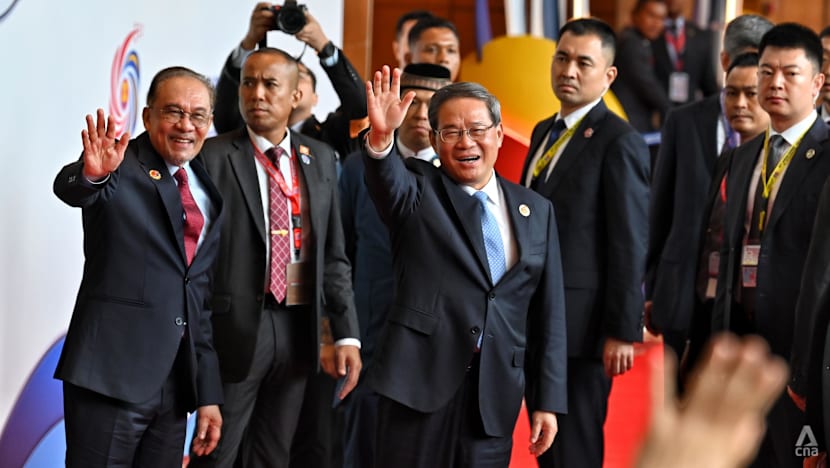
Concerns over unilateralism and protectionism dominated discussions at the Association of Southeast Asian Nations (ASEAN) Summit in Kuala Lumpur on October 27, 2023. Leaders from various countries emphasized the need for enhanced cooperation to maintain a rules-based multilateral trading system. Chinese Premier Li Qiang was particularly vocal, addressing the economic challenges faced by East Asia amid rising trade tensions and tariffs, particularly from the United States.
Li highlighted the “complex changes” in the international economic landscape, suggesting that the imposition of high tariffs has significantly disrupted trade. He remarked, “We must fully safeguard the hard-earned peace and stability in East Asia,” emphasizing the importance of opposing protectionism and advancing regional economic integration. This call comes as the U.S. has implemented import duties affecting several countries, notably China.
At the ASEAN Plus Three Summit, which includes China, South Korea, and Japan, Li noted that rampant unilateralism and protectionism pose significant risks to the region. He urged participating countries to collaborate closely to address these challenges. The Premier reaffirmed China’s commitment to supporting ASEAN’s central role in regional trade, highlighting that China has been ASEAN’s largest trading partner for 16 consecutive years. In 2022, trade between ASEAN and China surged to approximately $722 billion, accounting for nearly one-fifth of the region’s total global trade.
Regional Comprehensive Economic Partnership Focus
The Regional Comprehensive Economic Partnership (RCEP) trade pact also featured prominently in discussions, marking the first official leaders’ meeting since November 2020. RCEP, which includes all ASEAN members except Timor-Leste, along with China, Japan, South Korea, Australia, and New Zealand, aims to reduce tariffs and boost investment across member nations.
In his remarks, Li proposed three key initiatives for RCEP, including enhancing market connectivity and accelerating the expansion process. He expressed support for new applicants like Hong Kong to join the pact. Other areas of focus included improved cooperation in market access, government procurement, digital economies, and sustainable development.
Filipino President Ferdinand R. Marcos Jr. stressed the importance of RCEP as a foundational element for rules-based, transparent trade, calling for its early expansion to strengthen regional integration and resilience in supply chains. He asserted that such efforts would ensure that ASEAN plays a crucial role in shaping the region’s economic future.
Addressing Regional Security Concerns
While economic collaboration was a central theme, discussions also touched on pressing security issues within the East Asia region. Malaysian Prime Minister Anwar Ibrahim, during the East Asia Summit, addressed various geopolitical challenges, including the ongoing conflict in Gaza and the situation in Myanmar following the military coup that ousted elected leader Aung San Suu Kyi in February 2021.
Anwar revealed that Malaysia has engaged with Myanmar’s military junta while also inviting 27 opposition groups to participate in dialogue. He underscored the importance of a ceasefire and reiterated ASEAN’s commitment to facilitating inclusive elections in Myanmar.
Additionally, issues surrounding the South China Sea, a region often fraught with territorial disputes, were discussed. Anwar emphasized that all negotiations regarding the South China Sea must adhere to the principles of international law, particularly the 1982 United Nations Convention on the Law of the Sea (UNCLOS).
As discussions progressed, India’s External Affairs Minister highlighted the persistent threat of terrorism, calling for a unified global stance against it. He stated, “The world must display zero tolerance; there is no room for ambivalence,” reinforcing the need for robust international cooperation in addressing security issues.
The ASEAN Summit thus underscored the intricate balance between trade and security, with leaders advocating for collaborative measures to navigate the challenges posed by unilateralism and geopolitical tensions. As the summit continues, the focus remains on fostering unity and resilience in the face of these pressing global issues.

Albert Camus’ Insightful Quote on Human Identity Resurfaces

Drone Strikes and Missile Attacks Disrupt UAE Amid Rising Tensions

Japanese Yen Rises Sharply Against US Dollar Ahead of Key Decisions

Priyanka Chopra and Nick Jonas Avoid Near Miss en Route to Oscars

Gujarat Vaccinates Over 11 Lakh Infants in Major Health Drive

Alexandre Singh Wins Oscar, Celebrates Immigrant Heritage

Lok Sabha Speaker Issues Warning Over Placards in Parliament

Global Electrosurgical Devices Market Expands to $10.2 Billion by 2034

North Zone Dominates Cricket; SJAM-1 Shines in Table Tennis

SBI Announces QIP Floor Price at ₹811.05 Per Share

Cept Unveils ₹3.1 Crore Urban Mobility Plan for Sustainable Growth

New Blood Group Discovered in South Indian Woman at Rotary Centre

Konkani Cultural Organisation to Host Pearl Jubilee in Abu Dhabi

Torrential Rains Cause Flash Flooding in New York and New Jersey

Nothing Headphone 1 Review: A Bold Contender in Audio Design

Air India Crash Investigation Highlights Boeing Fuel Switch Concerns

Indian Stock Market Rebounds: Sensex and Nifty Rise After Four-Day Decline

Broad Advocates for Bowling Change Ahead of Final Test Against India
-
 World1 year ago
SBI Announces QIP Floor Price at ₹811.05 Per Share
-
 Lifestyle1 year ago
Cept Unveils ₹3.1 Crore Urban Mobility Plan for Sustainable Growth
-
 Science12 months ago
New Blood Group Discovered in South Indian Woman at Rotary Centre
-
 Top Stories1 year ago
Konkani Cultural Organisation to Host Pearl Jubilee in Abu Dhabi
-
 World1 year ago
Torrential Rains Cause Flash Flooding in New York and New Jersey
-
 Science1 year ago
Nothing Headphone 1 Review: A Bold Contender in Audio Design
-
 Top Stories1 year ago
Air India Crash Investigation Highlights Boeing Fuel Switch Concerns
-
 Business1 year ago
Indian Stock Market Rebounds: Sensex and Nifty Rise After Four-Day Decline
-
 Sports12 months ago
Broad Advocates for Bowling Change Ahead of Final Test Against India
-

 Sports12 months ago
Cristian Totti Retires at 19: Pressure of Fame Takes Toll
-

 Politics12 months ago
Abandoned Doberman Finds New Home After Journey to Prague
-

 Lifestyle1 year ago
Villagers Unite to Raise ₹45 Lakh for Water Solutions in Vadgam