
Top Stories
New Chemical Reaction Offers Breakthrough in Drug Discovery

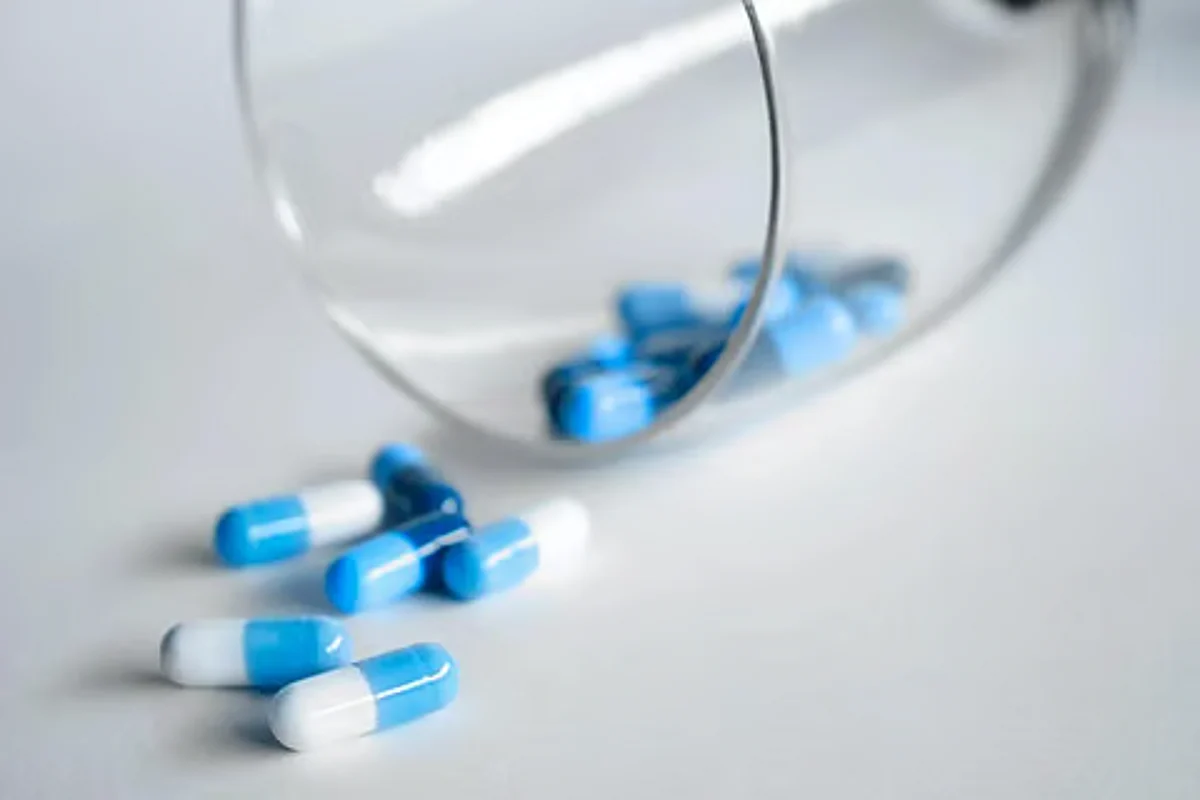
Researchers have unveiled a significant advancement in chemical reactions that could transform drug discovery and various scientific fields. A team, including scientists from Flinders University in Australia, has identified a new reaction capable of spontaneously creating and breaking sulphur-sulphur (S-S) bonds at room temperature. This reaction shows promise for applications in drug development, protein science, biotechnology, and material science.
Historically, manipulating S-S bonds has been challenging. Traditional methods often rely on external chemical agents or require heat and light. The newly discovered reaction, known as the trisulfide metathesis reaction, allows for the selective modification of these bonds without such external influences. According to the researchers, the reaction is efficient and can be completed in mere seconds in some instances.
Implications for Drug Development
The research, published in the journal Nature Chemistry, highlights the potential of this reaction in modifying anti-cancer drugs and other therapeutic compounds. Justin Chalker, a professor at Flinders University and the study’s senior author, emphasized the rarity of discovering a new chemical reaction with such far-reaching applications. He stated, “Understanding the new reaction allowed us to use it in several high-value applications — including selective modification of an anti-tumour drug and production of a novel plastic that can be moulded, used and then ‘unmade’ when recycling is required.”
The team’s exploratory work began when Chalker and his collaborator Tom Hasell from Liverpool University observed unusual behavior of S-S bonds in specific solvents. This led to the development of a comprehensive model explaining the conditions under which these bonds can be manipulated effectively.
A New Era in Chemistry and Recycling
The implications of this discovery extend beyond pharmaceuticals. The researchers aim to utilize the reaction for creating a library of compounds relevant to medicinal chemistry and producing fully recyclable polymers. Harshal Patel, a researcher in Chalker’s lab, noted the successful application of the trisulfide metathesis reaction in modifying anti-cancer drugs and building a chemical library. “I’m excited to see how this chemistry is adopted, expanded and applied in ways not yet imagined,” he remarked.
The potential for closed-loop chemical recycling is particularly noteworthy. The team has created analogs of polyethylene capable of being transformed back into their original building blocks after use, thus supporting a circular plastics economy. The authors explained, “When exposed to certain polar aprotic solvents, trisulfides were found to undergo spontaneous metathesis, with the reaction equilibrium established in seconds in some cases. No exogenous reagents, heat, light or other stimuli were required to provoke this reaction.”
This groundbreaking research opens new avenues in dynamic combinatorial library synthesis, the covalent modification of complex natural products, and S-S metathesis polymerization and depolymerization. The findings not only showcase the potential of this new chemical reaction but also reflect the innovative spirit of modern scientific inquiry. As the field of chemistry continues to evolve, this discovery may well be a catalyst for future advancements in various sectors.

Albert Camus’ Insightful Quote on Human Identity Resurfaces

Drone Strikes and Missile Attacks Disrupt UAE Amid Rising Tensions

Japanese Yen Rises Sharply Against US Dollar Ahead of Key Decisions

Priyanka Chopra and Nick Jonas Avoid Near Miss en Route to Oscars

Gujarat Vaccinates Over 11 Lakh Infants in Major Health Drive

Alexandre Singh Wins Oscar, Celebrates Immigrant Heritage

Lok Sabha Speaker Issues Warning Over Placards in Parliament

Global Electrosurgical Devices Market Expands to $10.2 Billion by 2034

North Zone Dominates Cricket; SJAM-1 Shines in Table Tennis

SBI Announces QIP Floor Price at ₹811.05 Per Share

Cept Unveils ₹3.1 Crore Urban Mobility Plan for Sustainable Growth

Comparing Subscription Prices: Spotify, Apple Music, and YouTube Music in India

New Blood Group Discovered in South Indian Woman at Rotary Centre

Konkani Cultural Organisation to Host Pearl Jubilee in Abu Dhabi

Torrential Rains Cause Flash Flooding in New York and New Jersey

Nothing Headphone 1 Review: A Bold Contender in Audio Design

Air India Crash Investigation Highlights Boeing Fuel Switch Concerns

Broad Advocates for Bowling Change Ahead of Final Test Against India
-
 World1 year ago
SBI Announces QIP Floor Price at ₹811.05 Per Share
-
 Lifestyle1 year ago
Cept Unveils ₹3.1 Crore Urban Mobility Plan for Sustainable Growth
-
 Science1 year ago
Comparing Subscription Prices: Spotify, Apple Music, and YouTube Music in India
-
 Science1 year ago
New Blood Group Discovered in South Indian Woman at Rotary Centre
-
 Top Stories1 year ago
Konkani Cultural Organisation to Host Pearl Jubilee in Abu Dhabi
-
 World1 year ago
Torrential Rains Cause Flash Flooding in New York and New Jersey
-
 Science1 year ago
Nothing Headphone 1 Review: A Bold Contender in Audio Design
-
 Top Stories1 year ago
Air India Crash Investigation Highlights Boeing Fuel Switch Concerns
-
 Sports1 year ago
Broad Advocates for Bowling Change Ahead of Final Test Against India
-

 Business1 year ago
Indian Stock Market Rebounds: Sensex and Nifty Rise After Four-Day Decline
-

 Sports1 year ago
Cristian Totti Retires at 19: Pressure of Fame Takes Toll
-

 Politics1 year ago
Abandoned Doberman Finds New Home After Journey to Prague