
Top Stories
Kashmir Faces Restrictions After Protests Over Khamenei’s Death

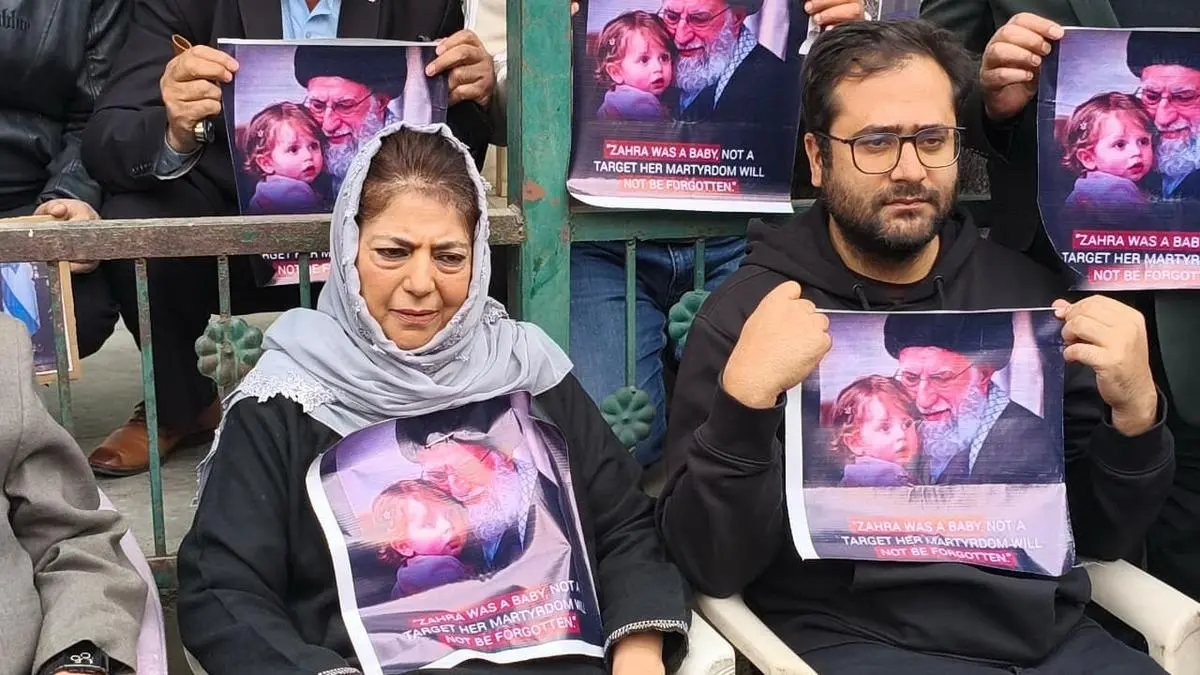
Protests erupted across the Kashmir Valley on March 1 following the killing of Iranian Supreme Leader Ayatollah Ali Khamenei in a joint US-Israeli strike in Tehran. Demonstrators expressed their anger with actions such as burning effigies of Israeli Prime Minister Benjamin Netanyahu and former US President Donald Trump. In response, authorities in Jammu and Kashmir imposed sweeping restrictions to curtail public movement, reduced Internet services, and ordered the closure of schools and colleges until March 7, 2026.
Security measures intensified as the Jammu and Kashmir Police implemented barriers made of concertina wire and barbed wire in key locations, including Srinagar’s Lal Chowk and the Clock Tower. This effort aimed to prevent gatherings and protests in the city, which saw heightened tension over the violence in Iran. Local authorities also restricted movement on major flyovers connecting various districts within Srinagar.
On March 3, the police registered cases against Aga Syed Ruhullah Mehdi, a Member of Parliament and senior leader of the National Conference, as well as former Srinagar Mayor Junaid Azim Mattu. The police claimed to have acted on “credible inputs” regarding the circulation of content intended to “create fear, disturb public order, and incite unlawful activities.” In a pointed response, Mehdi criticized the police’s handling of the protests, sharing a video purportedly showing police violence against women demonstrators. He sarcastically remarked on social media, “Bravo @JmuKmrPolice for this. Netanyahu must be happy with you.”
The authorities initially announced a two-day closure of educational institutions beginning March 2, but as protests persisted, they extended this closure for an additional week. Sakina Itoo, the Jammu and Kashmir Minister of Schools, confirmed on social media that all schools and colleges would remain closed until March 7.
In conjunction with these measures, Manoj Sinha, the Lieutenant Governor of Jammu and Kashmir, called for heightened vigilance among police and civil administration to maintain peace. He urged community leaders to foster harmony as protests against Khamenei’s death continued. Following a high-level meeting, Sinha’s administration took action against unnamed media outlets and journalists for allegedly disseminating “fabricated and misleading information” concerning the protests.
Censorship of media outlets has intensified, with several Kashmir-based news organizations facing restrictions on social media platforms. Accounts belonging to prominent publications such as Greater Kashmir and Kashmir Life have been withheld, limiting their ability to report on the ongoing protests. Journalists have expressed frustration over these actions, with one stating, “I document what I see through my lens… Shooting the messenger is a strange strategy.”
The crackdown on public expression has drawn strong reactions from various political figures. Umar Farooq, chairman of the All Parties Hurriyat Conference, condemned the detainment of protesters, particularly women and minors, and called for authorities to respect the right to peaceful protest. He urged the release of detained individuals and a reassessment of the ongoing censorship.
Criticism also came from members of the Jammu and Kashmir Assembly. Waheed Parra, a senior leader of the People’s Democratic Party, denounced the suppression of press freedom and emphasized the need for the people of Kashmir to express solidarity with Iran. He noted that the situation transcends political discourse, as it also reflects deep-seated cultural and religious sentiments.
Former Chief Minister Mehbooba Mufti echoed these sentiments, questioning the justification for censoring local media while the populace mourns. She urged a reversal of these restrictions, emphasizing the importance of freedom of expression in a democratic society.
The ongoing situation in Kashmir highlights the complexities surrounding public dissent, media freedom, and government responses in a region that has long been marked by tension and unrest. As protests continue, the eyes of the international community remain on the delicate balance between maintaining order and upholding fundamental rights.

Albert Camus’ Insightful Quote on Human Identity Resurfaces

Drone Strikes and Missile Attacks Disrupt UAE Amid Rising Tensions

Japanese Yen Rises Sharply Against US Dollar Ahead of Key Decisions

Priyanka Chopra and Nick Jonas Avoid Near Miss en Route to Oscars

Gujarat Vaccinates Over 11 Lakh Infants in Major Health Drive

Alexandre Singh Wins Oscar, Celebrates Immigrant Heritage

Lok Sabha Speaker Issues Warning Over Placards in Parliament

Global Electrosurgical Devices Market Expands to $10.2 Billion by 2034

North Zone Dominates Cricket; SJAM-1 Shines in Table Tennis

SBI Announces QIP Floor Price at ₹811.05 Per Share

Cept Unveils ₹3.1 Crore Urban Mobility Plan for Sustainable Growth

Comparing Subscription Prices: Spotify, Apple Music, and YouTube Music in India

New Blood Group Discovered in South Indian Woman at Rotary Centre

Konkani Cultural Organisation to Host Pearl Jubilee in Abu Dhabi

Torrential Rains Cause Flash Flooding in New York and New Jersey

Nothing Headphone 1 Review: A Bold Contender in Audio Design

Air India Crash Investigation Highlights Boeing Fuel Switch Concerns

Broad Advocates for Bowling Change Ahead of Final Test Against India
-
 World1 year ago
SBI Announces QIP Floor Price at ₹811.05 Per Share
-
 Lifestyle1 year ago
Cept Unveils ₹3.1 Crore Urban Mobility Plan for Sustainable Growth
-
 Science1 year ago
Comparing Subscription Prices: Spotify, Apple Music, and YouTube Music in India
-
 Science1 year ago
New Blood Group Discovered in South Indian Woman at Rotary Centre
-
 Top Stories1 year ago
Konkani Cultural Organisation to Host Pearl Jubilee in Abu Dhabi
-
 World1 year ago
Torrential Rains Cause Flash Flooding in New York and New Jersey
-
 Science1 year ago
Nothing Headphone 1 Review: A Bold Contender in Audio Design
-
 Top Stories1 year ago
Air India Crash Investigation Highlights Boeing Fuel Switch Concerns
-
 Sports1 year ago
Broad Advocates for Bowling Change Ahead of Final Test Against India
-

 Business1 year ago
Indian Stock Market Rebounds: Sensex and Nifty Rise After Four-Day Decline
-

 Sports1 year ago
Cristian Totti Retires at 19: Pressure of Fame Takes Toll
-

 Politics1 year ago
Abandoned Doberman Finds New Home After Journey to Prague