
Top Stories
ISRO Achieves Milestone with Successful CE20 Engine Test

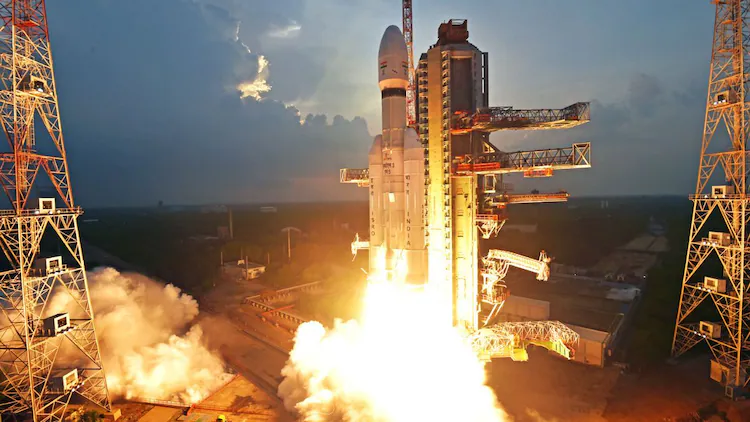
India’s space ambitions have reached a new milestone with the successful test of the CE20 cryogenic engine by the Indian Space Research Organisation (ISRO). The test was conducted at the ISRO Propulsion Complex in Mahendragiri, Tamil Nadu, and achieved a thrust level of 22 tonnes. This powerful engine is a critical component for the Launch Vehicle Mark-III (LVM3), known as India’s heaviest rocket. The CE20 engine is essential for launching heavier payloads into space, marking a significant step forward in India’s aerospace endeavors.
Technical Achievements of the CE20 Engine
The recent test focused on both the engine’s power and its innovative systems. The CE20 engine utilizes liquid hydrogen and liquid oxygen, both of which are cooled to extremely low temperatures, allowing them to remain in liquid form. This technology is among the most complex in rocketry. During the test, ISRO evaluated a nozzle protection system designed to shield the engine from extreme heat, as well as a multi-element igniter that ensures reliable ignition. By conducting these tests at sea level under high pressure, ISRO aims to ensure optimal performance before actual launches.
The test lasted for 165 seconds, demonstrating the engine’s resilience to the harsh conditions it will face during a launch. The successful operation of the ignition system and the effective functioning of the nozzle protection mechanism are crucial for the reliability of future missions.
Future Implications for Space Missions
The CE20 engine is the high-performance core of the LVM3, which has already successfully launched the Chandrayaan-3 mission to the Moon. The enhancements made to this engine technology will enable the LVM3 to accommodate larger satellites and pave the way for potential human space travel. This progress is particularly significant for the upcoming Gaganyaan program, which aims to send Indian astronauts into orbit. The first uncrewed flight of Gaganyaan is scheduled for 2026, followed by a crewed mission anticipated in 2027.
The successful test of the CE20 engine is not just a technical achievement; it solidifies ISRO’s commitment to advancing its capabilities in space exploration. The reliability demonstrated during this test will contribute to the safety of astronauts during their atmospheric ascent, ensuring that future missions are both powerful and secure.
In conclusion, ISRO’s recent accomplishments reflect a robust trajectory for India’s space program. With the CE20 engine test, the organization is poised to achieve even more ambitious goals in the years to come.

Albert Camus’ Insightful Quote on Human Identity Resurfaces

Drone Strikes and Missile Attacks Disrupt UAE Amid Rising Tensions

Japanese Yen Rises Sharply Against US Dollar Ahead of Key Decisions

Priyanka Chopra and Nick Jonas Avoid Near Miss en Route to Oscars

Gujarat Vaccinates Over 11 Lakh Infants in Major Health Drive

Alexandre Singh Wins Oscar, Celebrates Immigrant Heritage

Lok Sabha Speaker Issues Warning Over Placards in Parliament

Global Electrosurgical Devices Market Expands to $10.2 Billion by 2034

North Zone Dominates Cricket; SJAM-1 Shines in Table Tennis

SBI Announces QIP Floor Price at ₹811.05 Per Share

Cept Unveils ₹3.1 Crore Urban Mobility Plan for Sustainable Growth

New Blood Group Discovered in South Indian Woman at Rotary Centre

Konkani Cultural Organisation to Host Pearl Jubilee in Abu Dhabi

Torrential Rains Cause Flash Flooding in New York and New Jersey

Nothing Headphone 1 Review: A Bold Contender in Audio Design

Indian Stock Market Rebounds: Sensex and Nifty Rise After Four-Day Decline

Air India Crash Investigation Highlights Boeing Fuel Switch Concerns

Broad Advocates for Bowling Change Ahead of Final Test Against India
-
 World9 months ago
SBI Announces QIP Floor Price at ₹811.05 Per Share
-
 Lifestyle9 months ago
Cept Unveils ₹3.1 Crore Urban Mobility Plan for Sustainable Growth
-
 Science8 months ago
New Blood Group Discovered in South Indian Woman at Rotary Centre
-
 Top Stories9 months ago
Konkani Cultural Organisation to Host Pearl Jubilee in Abu Dhabi
-
 World9 months ago
Torrential Rains Cause Flash Flooding in New York and New Jersey
-
 Science9 months ago
Nothing Headphone 1 Review: A Bold Contender in Audio Design
-
 Business9 months ago
Indian Stock Market Rebounds: Sensex and Nifty Rise After Four-Day Decline
-
 Top Stories9 months ago
Air India Crash Investigation Highlights Boeing Fuel Switch Concerns
-
 Sports8 months ago
Broad Advocates for Bowling Change Ahead of Final Test Against India
-

 Sports8 months ago
Cristian Totti Retires at 19: Pressure of Fame Takes Toll
-

 Politics9 months ago
Abandoned Doberman Finds New Home After Journey to Prague
-

 Top Stories9 months ago
Patna Bank Manager Abhishek Varun Found Dead in Well