
Top Stories
China Expands Nuclear Program: New Facilities and Global Concerns

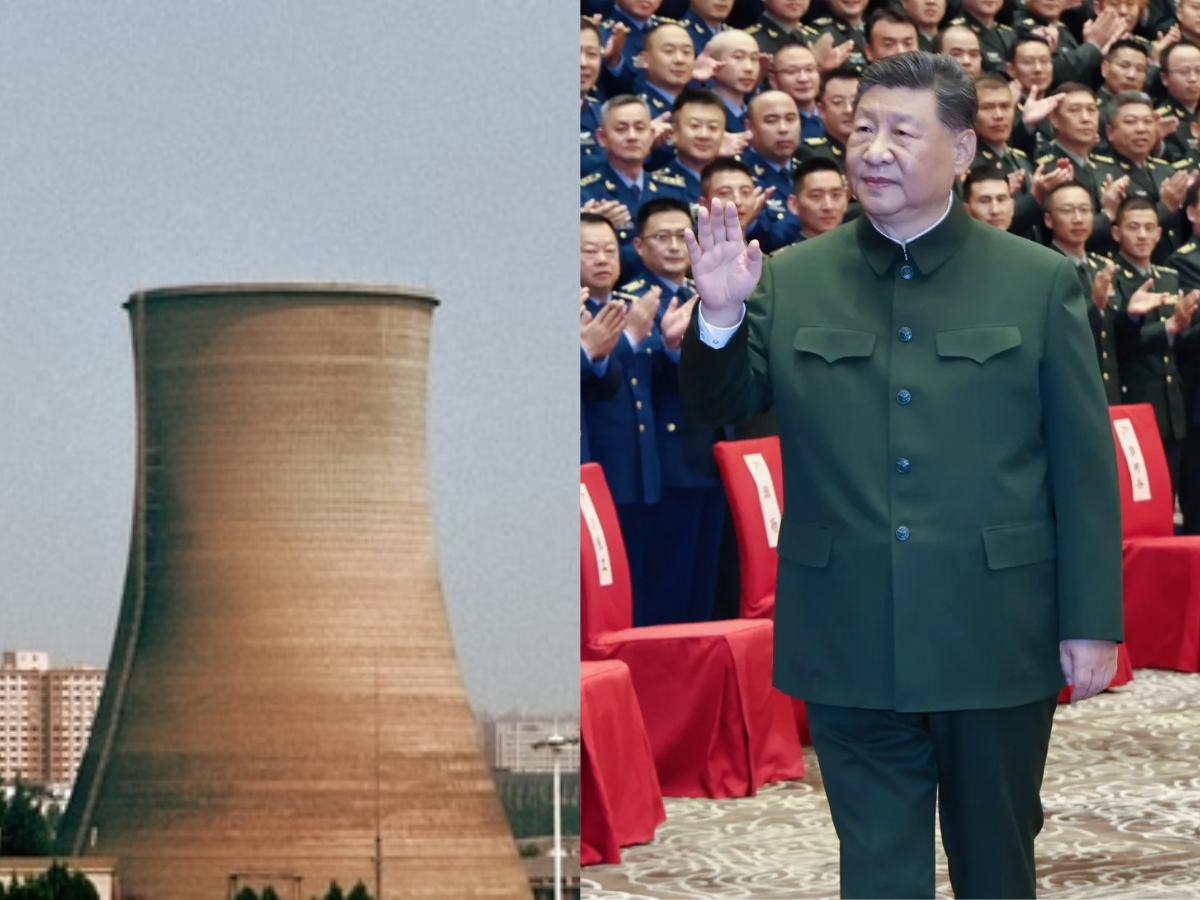
A recent analysis of satellite imagery has revealed a significant expansion of nuclear weapons-related facilities in Sichuan Province, China. The findings, which cover images taken between 2022 and 2026, suggest that China’s nuclear weapons development program has accelerated since 2019, raising global concerns among experts and policymakers.
New Developments in Sichuan’s Zitong Site
At a site referred to as Zitong, analysts have identified new construction activities, including bunkers and defensive ramparts situated in a valley. The complex features extensive piping infrastructure, indicative of facilities designed to handle hazardous materials. According to Renny Babiarz, a geospatial intelligence specialist, these bunkers are likely intended for high-explosives testing.
Hui Zhang, a physicist at the Harvard Kennedy School, emphasized the importance of these tests in refining the chemical detonators used to compress nuclear material within warheads. He explained, “You have a layer of high explosives and the shock wave at the same time implodes into the center. This needs blast tests to perfect them.”
Activity at Pingtong Facility
Further examination of satellite images has revealed ongoing activity at the Pingtong Facility, another nuclear site also located in Sichuan. This installation is characterized by a main structure topped with a 360-foot high ventilation stack. Experts believe Pingtong is involved in producing plutonium-packed cores for nuclear warheads.
Recent imagery indicates that the facility has undergone significant refurbishment, including upgrades to ventilation systems and heat-dispersion features. Babiarz noted that the architectural design of the Pingtong complex resembles other facilities worldwide known for manufacturing nuclear warhead pits, which are essential for triggering nuclear explosions.
As of late 2024, the Pentagon estimates that China possessed more than 600 nuclear warheads, with projections suggesting this number could rise to 1,000 by 2030. While these figures still fall short of the arsenals maintained by the United States and Russia, the rapid pace of China’s nuclear expansion has prompted alarm among analysts.
Matthew Sharp, a former U.S. State Department official now associated with the Massachusetts Institute of Technology, has highlighted the risks posed by a lack of communication between major powers. He stated, “Without a real dialogue on these topics, which we lack, it’s really hard to say where it’s going. Now we’re forced to react and plan around the worst-case interpretation of a concerning trend line.”
The revelations surrounding China’s nuclear expansion underscore the need for heightened vigilance and dialogue among global powers to mitigate the risks associated with this growing arsenal.

Albert Camus’ Insightful Quote on Human Identity Resurfaces

Drone Strikes and Missile Attacks Disrupt UAE Amid Rising Tensions

Japanese Yen Rises Sharply Against US Dollar Ahead of Key Decisions

Priyanka Chopra and Nick Jonas Avoid Near Miss en Route to Oscars

Gujarat Vaccinates Over 11 Lakh Infants in Major Health Drive

Alexandre Singh Wins Oscar, Celebrates Immigrant Heritage

Lok Sabha Speaker Issues Warning Over Placards in Parliament

Global Electrosurgical Devices Market Expands to $10.2 Billion by 2034

North Zone Dominates Cricket; SJAM-1 Shines in Table Tennis

SBI Announces QIP Floor Price at ₹811.05 Per Share

Cept Unveils ₹3.1 Crore Urban Mobility Plan for Sustainable Growth

New Blood Group Discovered in South Indian Woman at Rotary Centre

Konkani Cultural Organisation to Host Pearl Jubilee in Abu Dhabi

Torrential Rains Cause Flash Flooding in New York and New Jersey

Nothing Headphone 1 Review: A Bold Contender in Audio Design

Air India Crash Investigation Highlights Boeing Fuel Switch Concerns

Indian Stock Market Rebounds: Sensex and Nifty Rise After Four-Day Decline

Broad Advocates for Bowling Change Ahead of Final Test Against India
-
 World1 year ago
SBI Announces QIP Floor Price at ₹811.05 Per Share
-
 Lifestyle1 year ago
Cept Unveils ₹3.1 Crore Urban Mobility Plan for Sustainable Growth
-
 Science12 months ago
New Blood Group Discovered in South Indian Woman at Rotary Centre
-
 Top Stories1 year ago
Konkani Cultural Organisation to Host Pearl Jubilee in Abu Dhabi
-
 World1 year ago
Torrential Rains Cause Flash Flooding in New York and New Jersey
-
 Science1 year ago
Nothing Headphone 1 Review: A Bold Contender in Audio Design
-
 Top Stories1 year ago
Air India Crash Investigation Highlights Boeing Fuel Switch Concerns
-
 Business1 year ago
Indian Stock Market Rebounds: Sensex and Nifty Rise After Four-Day Decline
-
 Sports12 months ago
Broad Advocates for Bowling Change Ahead of Final Test Against India
-

 Sports12 months ago
Cristian Totti Retires at 19: Pressure of Fame Takes Toll
-

 Politics1 year ago
Abandoned Doberman Finds New Home After Journey to Prague
-
 Lifestyle1 year ago
Villagers Unite to Raise ₹45 Lakh for Water Solutions in Vadgam