
Science
Urban Expansion Threatens Jharkhand’s Ancient Megalithic Sites

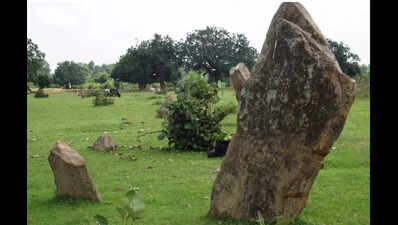
Urban expansion is significantly impacting the preservation of Jharkhand’s megalithic heritage, as several ancient sites have been destroyed. In an interview with Shikha Yadav from the *Times of India*, Niraj Kumar Mishra, assistant superintendent archaeologist at the Archaeological Survey of India (ASI) Ranchi Circle, discussed the ongoing efforts to document and protect these culturally important structures.
Understanding Megaliths and Their Significance
Megaliths serve as crucial indicators of prehistoric social life, burial customs, and belief systems. They reflect the socio-religious beliefs, economic conditions, and subsistence patterns of ancient societies. In the Chhotanagpur Plateau, megaliths are abundant and highlight the unique cultural features of various ethnic groups that have inhabited the region for centuries.
Interestingly, some of these megalithic burial traditions persist as living cultural practices among several communities today. While many sites have been cataloged, rigorous scientific dating has yet to be conducted. Comprehensive documentation of these practices, alongside references to historical writings, folklore, and oral traditions, is essential for understanding the evolution of beliefs and customs over time.
Progress in Archaeological Research
The ASI has actively engaged in exploring and documenting archaeological sites across Jharkhand through village-to-village surveys. These efforts have led to the discovery of numerous megalithic sites throughout the state. It is well recognized that the ancient Asura ethnic groups played a pivotal role in advancing iron technology in the region. Many burial sites identified in the Chatra and Hazaribag areas are associated with the Asura community.
A significant breakthrough occurred during the 2022-23 field season when an excavation was conducted at a megalithic site in the Obra block of Chatra district. The excavation unearthed iron ornaments and evidence of iron smelting near burial structures, suggesting that the Asuras may have established temporary settlements or practiced seasonal migration during various cultural phases. Although scientific dating remains incomplete, the site appears to date back to the early historical period, around the 1st century CE.
Recent discoveries have shed light on Jharkhand’s ancient history. Previous archaeological efforts, such as trial excavations by anthropologist Dr. S C Roy in 1920 at megalithic burial sites near Khuntitoli, uncovered cremated bones. Further excavations in 1964-65 revealed charred skeletal remains but lacked the scientific dating necessary to establish a definitive chronology for the megaliths.
In a notable advancement, the 2022-23 excavation at the Obra site, identified by a local resident, was conducted using systematic scientific methods. This excavation yielded numerous artifacts, including urns, bone remains, rings, pottery, and semi-precious stone beads. These findings indicate secondary burial practices where cremated remains were placed in sealed urns and marked by standing stones or menhirs. Additionally, evidence of ancient iron smelting found nearby enhances the site’s significance, making Obra a vital center for understanding Jharkhand’s megalithic culture.
Challenges in Preservation and Future Potential
Despite the importance of these megalithic sites, several challenges hinder their protection. Urban expansion poses a significant threat, as many sites, particularly those near growing towns and cities, have been destroyed. Furthermore, the removal of stones from ancient burial sites reflects a lack of awareness among local communities regarding their cultural heritage.
Abandoned megalithic sites, often situated in isolated forest or rural areas, remain particularly vulnerable due to their unprotected status.
There is potential for developing Jharkhand’s megalithic sites into heritage or tourism circuits. However, this requires a robust policy framework. Educating the public about the connection between these sites and their ancestral history is crucial. Preserving heritage fosters opportunities for growth, development, and the restoration of cultural identity, underscoring the necessity of protecting these invaluable archaeological treasures.

Albert Camus’ Insightful Quote on Human Identity Resurfaces

Drone Strikes and Missile Attacks Disrupt UAE Amid Rising Tensions

Japanese Yen Rises Sharply Against US Dollar Ahead of Key Decisions

Priyanka Chopra and Nick Jonas Avoid Near Miss en Route to Oscars

Gujarat Vaccinates Over 11 Lakh Infants in Major Health Drive

Alexandre Singh Wins Oscar, Celebrates Immigrant Heritage

Lok Sabha Speaker Issues Warning Over Placards in Parliament

Global Electrosurgical Devices Market Expands to $10.2 Billion by 2034

North Zone Dominates Cricket; SJAM-1 Shines in Table Tennis

SBI Announces QIP Floor Price at ₹811.05 Per Share

Cept Unveils ₹3.1 Crore Urban Mobility Plan for Sustainable Growth

Comparing Subscription Prices: Spotify, Apple Music, and YouTube Music in India

New Blood Group Discovered in South Indian Woman at Rotary Centre

Konkani Cultural Organisation to Host Pearl Jubilee in Abu Dhabi

Torrential Rains Cause Flash Flooding in New York and New Jersey

Nothing Headphone 1 Review: A Bold Contender in Audio Design

Air India Crash Investigation Highlights Boeing Fuel Switch Concerns

Indian Stock Market Rebounds: Sensex and Nifty Rise After Four-Day Decline
-
 World1 year ago
SBI Announces QIP Floor Price at ₹811.05 Per Share
-
 Lifestyle1 year ago
Cept Unveils ₹3.1 Crore Urban Mobility Plan for Sustainable Growth
-
 Science12 months ago
Comparing Subscription Prices: Spotify, Apple Music, and YouTube Music in India
-
 Science12 months ago
New Blood Group Discovered in South Indian Woman at Rotary Centre
-
 Top Stories1 year ago
Konkani Cultural Organisation to Host Pearl Jubilee in Abu Dhabi
-
 World1 year ago
Torrential Rains Cause Flash Flooding in New York and New Jersey
-
 Science1 year ago
Nothing Headphone 1 Review: A Bold Contender in Audio Design
-
 Top Stories1 year ago
Air India Crash Investigation Highlights Boeing Fuel Switch Concerns
-
 Business1 year ago
Indian Stock Market Rebounds: Sensex and Nifty Rise After Four-Day Decline
-

 Sports12 months ago
Broad Advocates for Bowling Change Ahead of Final Test Against India
-

 Sports12 months ago
Cristian Totti Retires at 19: Pressure of Fame Takes Toll
-

 Politics1 year ago
Abandoned Doberman Finds New Home After Journey to Prague