
Science
Scientists Uncover Secrets of Human Bipedal Evolution

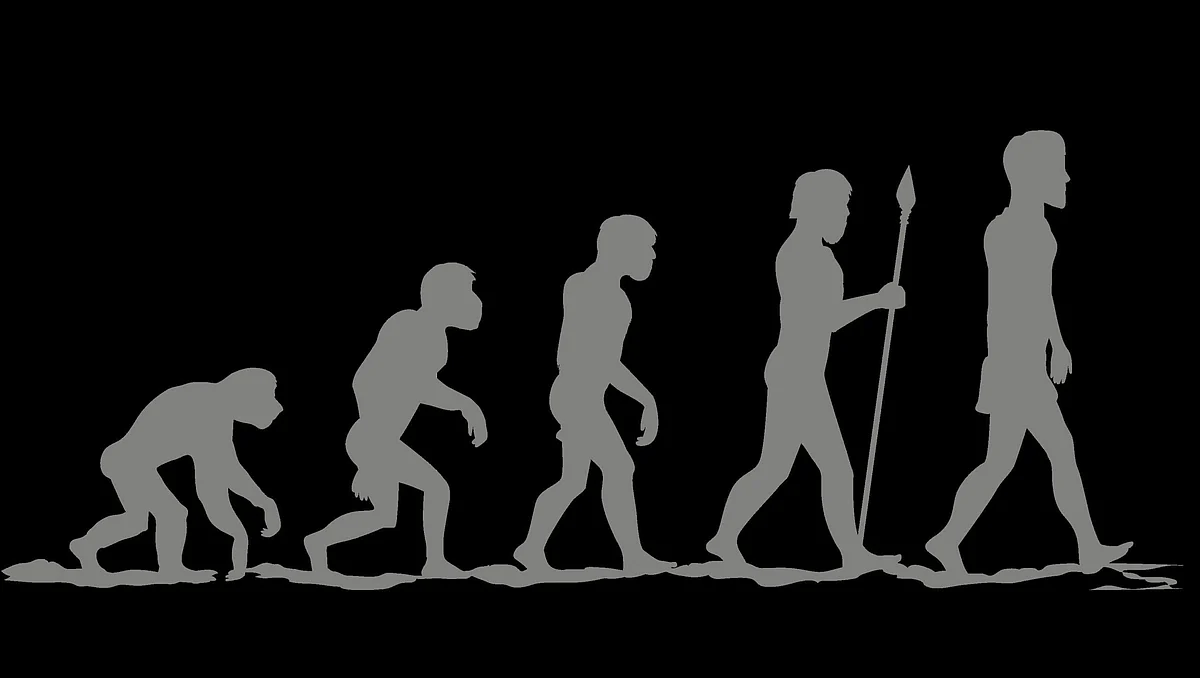
Research has illuminated the complex molecular mechanisms that enabled early human ancestors to walk upright, a defining characteristic of modern humanity. A study published in the journal Nature reveals that significant evolutionary changes occurred when existing genes adapted to new functions during development. This research sheds light on how humans became the only bipedal species among vertebrates.
In his 1871 work, The Descent of Man, Charles Darwin posited that one of humanity’s most remarkable traits is the ability to walk on two legs. Despite fossil evidence indicating that bipedalism emerged approximately 5 million years ago, the specific developmental processes underlying this evolution remained elusive until now.
Key Findings on Pelvic Development
The study, led by palaeoanthropologist Tracy Kivell from the Max Planck Institute, highlights two critical stages in the development of the human pelvis. The research indicates that the pelvis evolved into a wide, bowl-like structure essential for upright walking. “Everything from the base of our skull to the tips of our toes has been changed in modern humans to facilitate bipedalism,” Kivell stated, emphasizing the significance of this research not only for understanding humans but also for insights into our ancient relatives, including the Denisovans.
The first key developmental change occurs around seven weeks of gestation when the ilium, a pelvic bone, starts as a vertical cartilage rod, similar to other primates. However, in humans, this structure rotates 90 degrees, leading to a shorter and broader pelvis. The second crucial step happens later, around 24 weeks, when the cartilage is replaced by bone. Unlike other primates, human ossification is delayed, allowing the ilium to maintain its distinct shape during growth.
Comparative Analysis Across Species
To reach these conclusions, researchers examined pelvic development across various species, including mouse embryos, gibbons, and chimpanzees. This comparative analysis involved samples preserved in museum collections, some of which date back over a century. Study co-author Terence Capellini, a developmental geneticist from Harvard University, noted, “The human pelvis is dramatically different from what you see in chimpanzees and gorillas.” This contrasts highlights the unique adaptations that enabled bipedalism.
The findings from this study demonstrate how shifts in gene activity have sculpted the pelvis for efficient bipedalism. Understanding these evolutionary adaptations not only resolves longstanding questions about human evolution but also furthers insights into the biological heritage shared with other primates.
As researchers continue to investigate the genetic underpinnings of these changes, the study opens new avenues of inquiry into the evolutionary journey of humanity. The ability to walk on two legs has fundamentally shaped our species, influencing everything from locomotion to the development of culture and society.

Albert Camus’ Insightful Quote on Human Identity Resurfaces

Drone Strikes and Missile Attacks Disrupt UAE Amid Rising Tensions

Japanese Yen Rises Sharply Against US Dollar Ahead of Key Decisions

Priyanka Chopra and Nick Jonas Avoid Near Miss en Route to Oscars

Gujarat Vaccinates Over 11 Lakh Infants in Major Health Drive

Alexandre Singh Wins Oscar, Celebrates Immigrant Heritage

Lok Sabha Speaker Issues Warning Over Placards in Parliament

Global Electrosurgical Devices Market Expands to $10.2 Billion by 2034

North Zone Dominates Cricket; SJAM-1 Shines in Table Tennis

SBI Announces QIP Floor Price at ₹811.05 Per Share

Cept Unveils ₹3.1 Crore Urban Mobility Plan for Sustainable Growth

Comparing Subscription Prices: Spotify, Apple Music, and YouTube Music in India

New Blood Group Discovered in South Indian Woman at Rotary Centre

Konkani Cultural Organisation to Host Pearl Jubilee in Abu Dhabi

Torrential Rains Cause Flash Flooding in New York and New Jersey

Nothing Headphone 1 Review: A Bold Contender in Audio Design

Air India Crash Investigation Highlights Boeing Fuel Switch Concerns

Broad Advocates for Bowling Change Ahead of Final Test Against India
-
 World1 year ago
SBI Announces QIP Floor Price at ₹811.05 Per Share
-
 Lifestyle1 year ago
Cept Unveils ₹3.1 Crore Urban Mobility Plan for Sustainable Growth
-
 Science1 year ago
Comparing Subscription Prices: Spotify, Apple Music, and YouTube Music in India
-
 Science1 year ago
New Blood Group Discovered in South Indian Woman at Rotary Centre
-
 Top Stories1 year ago
Konkani Cultural Organisation to Host Pearl Jubilee in Abu Dhabi
-
 World1 year ago
Torrential Rains Cause Flash Flooding in New York and New Jersey
-
 Science1 year ago
Nothing Headphone 1 Review: A Bold Contender in Audio Design
-
 Top Stories1 year ago
Air India Crash Investigation Highlights Boeing Fuel Switch Concerns
-
 Sports1 year ago
Broad Advocates for Bowling Change Ahead of Final Test Against India
-

 Business1 year ago
Indian Stock Market Rebounds: Sensex and Nifty Rise After Four-Day Decline
-

 Sports1 year ago
Cristian Totti Retires at 19: Pressure of Fame Takes Toll
-

 Politics1 year ago
Abandoned Doberman Finds New Home After Journey to Prague