
Science
Renovation of 1,000-Year-Old Shiva Temple in Madhya Pradesh Unveiled

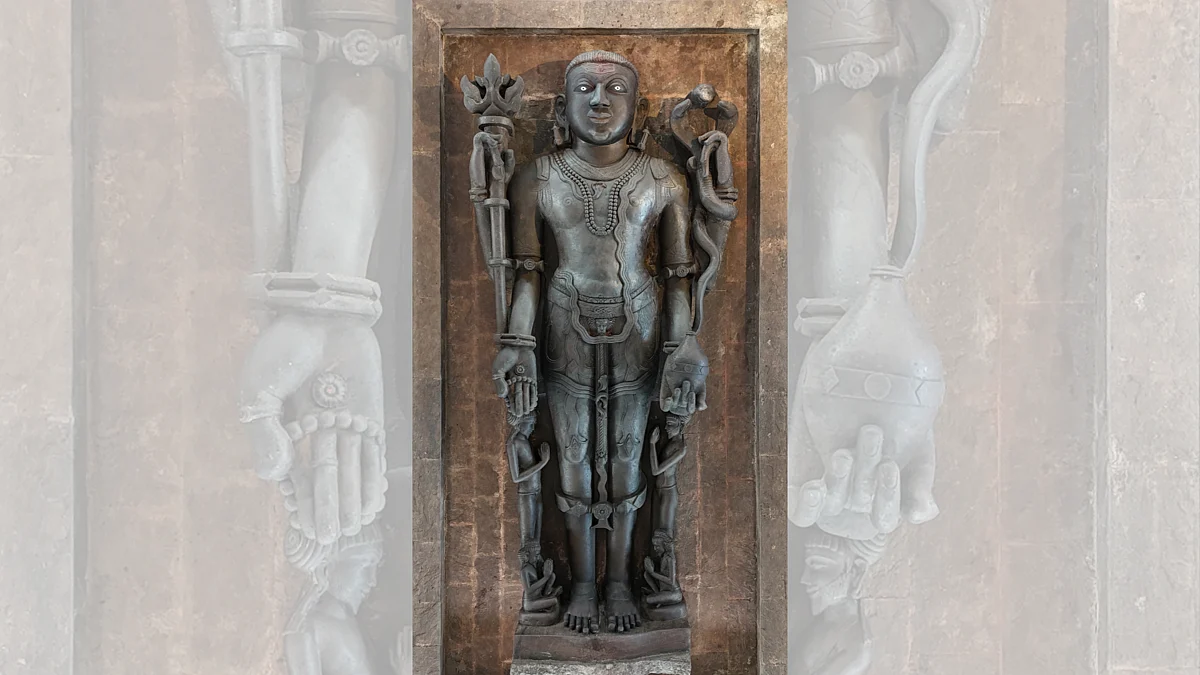
A significant cultural project has been launched to renovate the ancient Lord Shiva temple located in Rewa district, Madhya Pradesh. Documented for the first time, this 1,000-year-old temple features a remarkable horizontal stone idol of Bhairav, a form of Lord Shiva, measuring an impressive 28 feet in length and 12 feet in width. The documentation was carried out by the Bhopal chapter of the Indian National Trust for Art and Cultural Heritage (INTACH) using drone technology.
The initiative for the renovation stems from the efforts of Rajendra Shukla, the Deputy Chief Minister of Madhya Pradesh, who represents the Rewa Assembly constituency. This temple, situated in Khamdih village, lies approximately 6 km from Gurh and 23 km from Rewa town. Nestled on the left bank of the Bichhia River, it is surrounded by the stunning landscape of the Vindhyan Kaimur range.
Historical Significance and Architectural Marvel
The sculpture of Kaal Bhairav, a fierce manifestation of Lord Shiva revered in Shaivism, was carved from red sandstone during the Kalachuri dynasty in the 10th to 11th century CE. Recently, the idol underwent a finishing process that involved a traditional black polish, adopting techniques from Orissa. Originally designed as a standing figure, the idol now rests horizontally, a fact that remains unexplained. “Why the idol was not installed in a standing position is something we don’t know about,” stated MM Upadhyay, head of the Bhopal chapter of INTACH.
The temple’s location beside a lake is notable as the waters are believed to possess healing properties. Worship at this site is traditionally associated with protection from malevolent forces and the alleviation of fear. The deity is depicted in the Chaturbhuja form, with the upper right hand holding a trident and the lower right hand carrying a Rudraksha Mala. The upper left hand features a Trishir Nag, while the lower left hand holds a Beej Phal. Adorned with a crown, earrings, a sacred thread, and multiple necklaces, the figure is flanked by four attendants, two seated and two positioned in Anjali Mudra, symbolizing Bhairav’s role as the cosmic protector.
Community and Cultural Impact
The renovation project is expected to not only preserve an important piece of cultural heritage but also enhance the spiritual experience for visitors and devotees. As the temple gains attention for its historical and architectural significance, it may attract more tourists to the region, contributing to local economies.
The revival of this ancient temple highlights the importance of cultural preservation and the role of local government in supporting such initiatives. By combining modern technology with traditional heritage practices, the project aims to safeguard the temple’s legacy while ensuring that it continues to serve as a spiritual haven for generations to come.

Albert Camus’ Insightful Quote on Human Identity Resurfaces

Drone Strikes and Missile Attacks Disrupt UAE Amid Rising Tensions

Japanese Yen Rises Sharply Against US Dollar Ahead of Key Decisions

Priyanka Chopra and Nick Jonas Avoid Near Miss en Route to Oscars

Gujarat Vaccinates Over 11 Lakh Infants in Major Health Drive

Alexandre Singh Wins Oscar, Celebrates Immigrant Heritage

Lok Sabha Speaker Issues Warning Over Placards in Parliament

Global Electrosurgical Devices Market Expands to $10.2 Billion by 2034

North Zone Dominates Cricket; SJAM-1 Shines in Table Tennis

SBI Announces QIP Floor Price at ₹811.05 Per Share

Cept Unveils ₹3.1 Crore Urban Mobility Plan for Sustainable Growth

Comparing Subscription Prices: Spotify, Apple Music, and YouTube Music in India

New Blood Group Discovered in South Indian Woman at Rotary Centre

Konkani Cultural Organisation to Host Pearl Jubilee in Abu Dhabi

Torrential Rains Cause Flash Flooding in New York and New Jersey

Nothing Headphone 1 Review: A Bold Contender in Audio Design

Air India Crash Investigation Highlights Boeing Fuel Switch Concerns

Broad Advocates for Bowling Change Ahead of Final Test Against India
-
 World1 year ago
SBI Announces QIP Floor Price at ₹811.05 Per Share
-
 Lifestyle1 year ago
Cept Unveils ₹3.1 Crore Urban Mobility Plan for Sustainable Growth
-
 Science1 year ago
Comparing Subscription Prices: Spotify, Apple Music, and YouTube Music in India
-
 Science1 year ago
New Blood Group Discovered in South Indian Woman at Rotary Centre
-
 Top Stories1 year ago
Konkani Cultural Organisation to Host Pearl Jubilee in Abu Dhabi
-
 World1 year ago
Torrential Rains Cause Flash Flooding in New York and New Jersey
-
 Science1 year ago
Nothing Headphone 1 Review: A Bold Contender in Audio Design
-
 Top Stories1 year ago
Air India Crash Investigation Highlights Boeing Fuel Switch Concerns
-
 Sports1 year ago
Broad Advocates for Bowling Change Ahead of Final Test Against India
-

 Business1 year ago
Indian Stock Market Rebounds: Sensex and Nifty Rise After Four-Day Decline
-

 Sports1 year ago
Cristian Totti Retires at 19: Pressure of Fame Takes Toll
-

 Politics1 year ago
Abandoned Doberman Finds New Home After Journey to Prague