
Science
NASA Rolls Back Artemis II Rocket Amid Helium Leak Issues

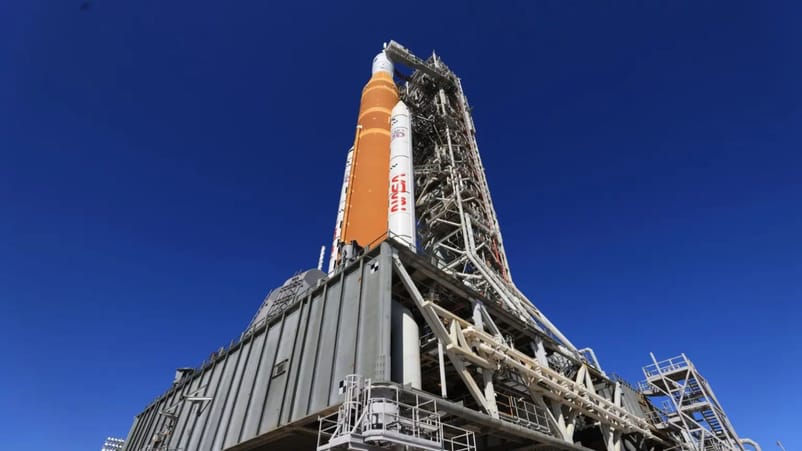
NASA has decided to roll back the Artemis II rocket and the Orion spacecraft to the Vehicle Assembly Building at the Kennedy Space Center due to helium leaks that cannot be addressed at the launch pad. The rollback is scheduled for February 25, 2026, and will involve a journey of approximately six kilometers, taking about 12 hours to complete using the Crawler-Transporter 2.
The initial plan was to execute the rollback earlier, but adverse weather conditions, including cold temperatures and high winds, delayed the operation. These conditions interfered with preparations, including the removal of access platforms required for the engineers to conduct their work.
This decision means that the anticipated launch window for the Artemis II crewed lunar flyby mission in March 2026 will not be met. The helium leak was discovered following the second wet dress rehearsal on February 19, 2026. While the propellant loading and countdown simulation proceeded as expected, engineers faced difficulties achieving the necessary helium flow to the Interim Cryogenic Propulsion Stage (ICPS). Helium is crucial for maintaining the engine’s environmental conditions and pressurizing the liquid hydrogen and liquid oxygen tanks.
NASA engineers are currently investigating potential causes of the leak. They are examining the ground-to-rocket helium interface, an upper-stage valve, and an inline filter. Additionally, data from previous troubleshooting for helium pressurization during the Artemis I mission is being reviewed to assist in identifying the issues.
Once the rocket is returned to the Vehicle Assembly Building, teams will install platforms to access the affected areas. Engineers will then diagnose the problem and implement necessary repairs. This rollback preserves the possibility of launching in April 2026, depending on the timelines for repairs and analysis.
Artemis II marks a significant milestone as it is NASA’s first deep-space crewed mission since the Apollo missions over 50 years ago. The mission will feature a crew of four: Commander Reid Wiseman, Pilot Victor Glover, and Mission Specialists Christina Koch and Jeremy Hansen. They are set to embark on a ten-day lunar flyby, making this mission the first integrated test of the Space Launch System (SLS) and Orion spacecraft in cislunar space.
As preparations continue, NASA aims to address these technical challenges to ensure the success of Artemis II and its ambitious goals for lunar exploration.

Albert Camus’ Insightful Quote on Human Identity Resurfaces

Drone Strikes and Missile Attacks Disrupt UAE Amid Rising Tensions

Japanese Yen Rises Sharply Against US Dollar Ahead of Key Decisions

Priyanka Chopra and Nick Jonas Avoid Near Miss en Route to Oscars

Gujarat Vaccinates Over 11 Lakh Infants in Major Health Drive

Alexandre Singh Wins Oscar, Celebrates Immigrant Heritage

Lok Sabha Speaker Issues Warning Over Placards in Parliament

Global Electrosurgical Devices Market Expands to $10.2 Billion by 2034

North Zone Dominates Cricket; SJAM-1 Shines in Table Tennis

SBI Announces QIP Floor Price at ₹811.05 Per Share

Cept Unveils ₹3.1 Crore Urban Mobility Plan for Sustainable Growth

Comparing Subscription Prices: Spotify, Apple Music, and YouTube Music in India

New Blood Group Discovered in South Indian Woman at Rotary Centre

Konkani Cultural Organisation to Host Pearl Jubilee in Abu Dhabi

Torrential Rains Cause Flash Flooding in New York and New Jersey

Nothing Headphone 1 Review: A Bold Contender in Audio Design

Air India Crash Investigation Highlights Boeing Fuel Switch Concerns

Broad Advocates for Bowling Change Ahead of Final Test Against India
-
 World1 year ago
SBI Announces QIP Floor Price at ₹811.05 Per Share
-
 Lifestyle1 year ago
Cept Unveils ₹3.1 Crore Urban Mobility Plan for Sustainable Growth
-
 Science1 year ago
Comparing Subscription Prices: Spotify, Apple Music, and YouTube Music in India
-
 Science1 year ago
New Blood Group Discovered in South Indian Woman at Rotary Centre
-
 Top Stories1 year ago
Konkani Cultural Organisation to Host Pearl Jubilee in Abu Dhabi
-
 World1 year ago
Torrential Rains Cause Flash Flooding in New York and New Jersey
-
 Science1 year ago
Nothing Headphone 1 Review: A Bold Contender in Audio Design
-
 Top Stories1 year ago
Air India Crash Investigation Highlights Boeing Fuel Switch Concerns
-
 Sports1 year ago
Broad Advocates for Bowling Change Ahead of Final Test Against India
-

 Business1 year ago
Indian Stock Market Rebounds: Sensex and Nifty Rise After Four-Day Decline
-

 Sports1 year ago
Cristian Totti Retires at 19: Pressure of Fame Takes Toll
-

 Politics1 year ago
Abandoned Doberman Finds New Home After Journey to Prague