
Science
German Researchers Develop Eco-Friendly Fungi-Based Insulation

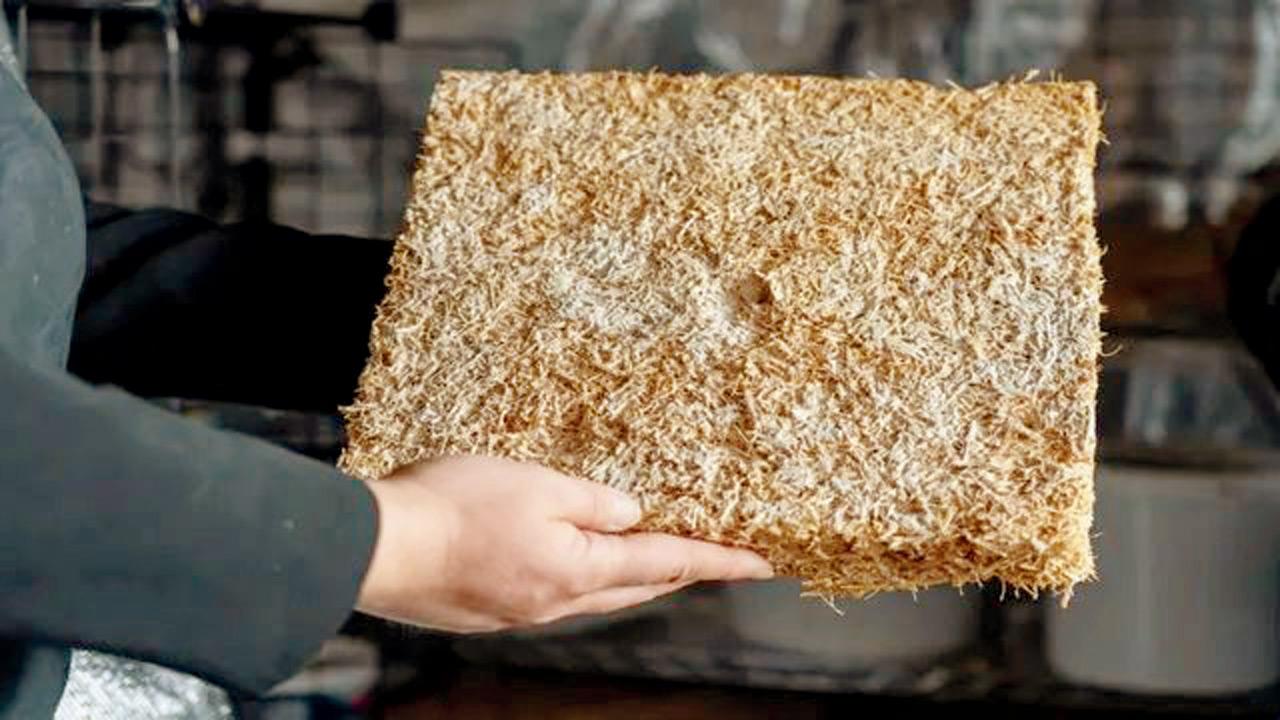
Researchers at the Hof University of Applied Sciences in Germany have unveiled a groundbreaking insulation material made from mushroom mycelium. This innovative product, part of the project known as Mycobuild, aims to provide a sustainable alternative to conventional synthetic insulation materials while also capturing carbon dioxide (CO2) in the process.
The project, conducted by the Institute for Circular Economy of Bio: Polymers (ibp), seeks to scale production from laboratory to industrial levels by 2026. Unlike traditional insulation, which often relies on energy-intensive synthetic or mineral components, the new mycelium panels are cultivated from fungal networks. This approach not only reduces energy consumption during production but also promotes a compostable solution that aligns with environmental sustainability goals.
According to project leader Professor Robert Honke, “Mushroom meshes are compostable, store CO2, and require less energy to produce than conventional fossil-based insulating materials.” This attribute positions mycelium boards as a flexible option that can be tailored for various applications while maintaining industrial scalability.
The environmental implications of this research are significant. Conventional insulation materials often have a poor ecological footprint due to their production processes. In contrast, the mycelium-based boards could help decrease overall carbon emissions associated with the construction industry. By integrating fungi into building practices, this project highlights a shift towards more sustainable construction methods that utilize natural resources effectively.
In addition to energy efficiency and carbon capture, the mycelium panels offer versatility in design. They can be shaped to meet specific architectural needs, making them an appealing option for builders seeking both functionality and sustainability. The research team emphasizes the potential for these materials to revolutionize the insulation market, where demand for eco-friendly solutions continues to grow.
As the Mycobuild project progresses, the team at ibp remains focused on refining the production techniques necessary for large-scale manufacturing. The overarching goal is to promote a circular economy within the building sector, fostering practices that not only reduce waste but also enhance the lifespan of materials used in construction.
This development represents a significant step forward in the quest for sustainable building materials. By leveraging the natural properties of mushrooms, researchers are paving the way for innovations that align with global efforts to combat climate change and promote environmental stewardship. The project underscores the importance of interdisciplinary collaboration in addressing pressing environmental issues and highlights the role of academia in driving technological advancements for a greener future.

Albert Camus’ Insightful Quote on Human Identity Resurfaces

Drone Strikes and Missile Attacks Disrupt UAE Amid Rising Tensions

Japanese Yen Rises Sharply Against US Dollar Ahead of Key Decisions

Priyanka Chopra and Nick Jonas Avoid Near Miss en Route to Oscars

Gujarat Vaccinates Over 11 Lakh Infants in Major Health Drive

Alexandre Singh Wins Oscar, Celebrates Immigrant Heritage

Lok Sabha Speaker Issues Warning Over Placards in Parliament

Global Electrosurgical Devices Market Expands to $10.2 Billion by 2034

North Zone Dominates Cricket; SJAM-1 Shines in Table Tennis

SBI Announces QIP Floor Price at ₹811.05 Per Share

Cept Unveils ₹3.1 Crore Urban Mobility Plan for Sustainable Growth

Comparing Subscription Prices: Spotify, Apple Music, and YouTube Music in India

New Blood Group Discovered in South Indian Woman at Rotary Centre

Konkani Cultural Organisation to Host Pearl Jubilee in Abu Dhabi

Torrential Rains Cause Flash Flooding in New York and New Jersey

Nothing Headphone 1 Review: A Bold Contender in Audio Design

Air India Crash Investigation Highlights Boeing Fuel Switch Concerns

Broad Advocates for Bowling Change Ahead of Final Test Against India
-
 World1 year ago
SBI Announces QIP Floor Price at ₹811.05 Per Share
-
 Lifestyle1 year ago
Cept Unveils ₹3.1 Crore Urban Mobility Plan for Sustainable Growth
-
 Science1 year ago
Comparing Subscription Prices: Spotify, Apple Music, and YouTube Music in India
-
 Science1 year ago
New Blood Group Discovered in South Indian Woman at Rotary Centre
-
 Top Stories1 year ago
Konkani Cultural Organisation to Host Pearl Jubilee in Abu Dhabi
-
 World1 year ago
Torrential Rains Cause Flash Flooding in New York and New Jersey
-
 Science1 year ago
Nothing Headphone 1 Review: A Bold Contender in Audio Design
-
 Top Stories1 year ago
Air India Crash Investigation Highlights Boeing Fuel Switch Concerns
-
 Sports1 year ago
Broad Advocates for Bowling Change Ahead of Final Test Against India
-

 Business1 year ago
Indian Stock Market Rebounds: Sensex and Nifty Rise After Four-Day Decline
-

 Sports1 year ago
Cristian Totti Retires at 19: Pressure of Fame Takes Toll
-

 Politics1 year ago
Abandoned Doberman Finds New Home After Journey to Prague