
Science
Badminton’s Spin Serve Banned as Physics Reveals Its Secrets

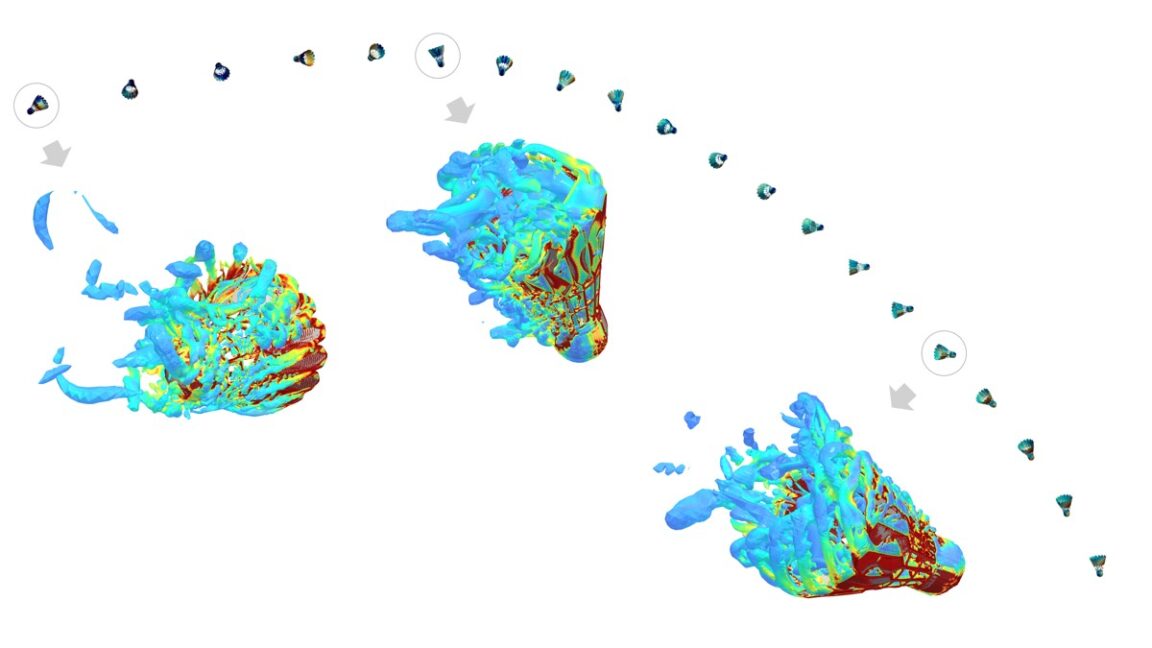
Serious badminton players have recently been grappling with a new technique known as the spin serve, which has been described as “impossible to return.” This method, where players impart a pre-spin to the shuttlecock just before contact, has proven to be so effective that the Badminton World Federation (BWF) decided to ban it in 2023. The ban is set to remain in effect until after the 2024 Paralympic Games in Paris. The BWF aimed to address concerns regarding the potential unfair advantages this serve could grant players, fearing that international tournaments could become platforms for testing this controversial technique.
The spin serve has drawn comparisons to the previously banned “Sidek serve,” prompting the BWF to take decisive action in maintaining fair play. As the badminton community navigates this ban, researchers have begun to delve into the physics behind the spin serve, shedding light on its mechanics and implications for the game.
Understanding the Physics Behind the Spin Serve
Recent research published in the journal Physics of Fluids by a team of Chinese physicists has explored the complex dynamics of the spin serve. Badminton shuttlecocks possess a unique design characterized by a cork base encased in sixteen overlapping feathers, creating an open conical shape. This design contributes to significant drag, causing the shuttlecock to decelerate rapidly and altering its trajectory when struck. Serious players typically prefer feathered shuttlecocks over synthetic ones due to their superior performance and aerodynamic stability.
Shuttlecocks can reach astonishing speeds exceeding 300 mph, yet the drag forces at play necessitate considerable force from players to propel the birdie across the court. The overlapping feathers also impart a slight natural spin, influencing various strokes. For example, a right-to-left slice can enhance the effectiveness of net shots.
Despite extensive studies on shuttlecock trajectories, the recent research by Zhicheng Zhang and his colleagues has identified a gap in understanding the impact of the spin serve on those trajectories. “We were interested in the underlying aerodynamics,” said Zhang, a co-author from Hong Kong University of Science and Technology. “Revealing the effects of pre-spin on the trajectory can help players master the art of delivering a spin serve and potentially aid opponents in returning it.”
Simulation and Findings on Shuttlecock Dynamics
To investigate the spin serve’s effects, the researchers created a digital model based on the commercially available Li-Ning D8 feather shuttlecock, treating it as a smooth and rigid object and excluding variables such as surface roughness. They conducted three-dimensional fluid dynamics simulations under three conditions: without pre-spin, with pre-spin in the direction of the birdie’s natural spin, and with pre-spin opposite to it.
Their findings revealed three distinct phases of the shuttlecock’s trajectory: the “turnover” phase, the oscillation phase, and the stabilization phase. When players use a pre-spin that opposes the birdie’s natural spin, the oscillation phase is prolonged, resulting in a distinctive “dip and sway” pattern. This behavior is attributed to a high-pressure region forming on the side facing the flight direction, which causes a notable decrease in the birdie’s horizontal velocity.
The researchers also noted that the oscillation produces significant pressure variations on the shuttlecock’s feathers. They plan to explore how different shuttlecock shapes might affect trajectory and orientation in future studies. Additionally, they aim to conduct motion capture studies of various badminton serves, including the spin serve, to help players refine their skills.
As the badminton community adapts to the spin serve ban, this research provides valuable insights into the physics of the sport. It emphasizes the importance of understanding the mechanics behind serves and offers a foundation for players looking to improve their techniques. The intersection of science and sport continues to unveil new dimensions, ensuring that badminton remains an evolving and dynamic game.

Albert Camus’ Insightful Quote on Human Identity Resurfaces

Drone Strikes and Missile Attacks Disrupt UAE Amid Rising Tensions

Japanese Yen Rises Sharply Against US Dollar Ahead of Key Decisions

Priyanka Chopra and Nick Jonas Avoid Near Miss en Route to Oscars

Gujarat Vaccinates Over 11 Lakh Infants in Major Health Drive

Alexandre Singh Wins Oscar, Celebrates Immigrant Heritage

Lok Sabha Speaker Issues Warning Over Placards in Parliament

Global Electrosurgical Devices Market Expands to $10.2 Billion by 2034

North Zone Dominates Cricket; SJAM-1 Shines in Table Tennis

SBI Announces QIP Floor Price at ₹811.05 Per Share

Cept Unveils ₹3.1 Crore Urban Mobility Plan for Sustainable Growth

Comparing Subscription Prices: Spotify, Apple Music, and YouTube Music in India

New Blood Group Discovered in South Indian Woman at Rotary Centre

Konkani Cultural Organisation to Host Pearl Jubilee in Abu Dhabi

Torrential Rains Cause Flash Flooding in New York and New Jersey

Nothing Headphone 1 Review: A Bold Contender in Audio Design

Air India Crash Investigation Highlights Boeing Fuel Switch Concerns

Broad Advocates for Bowling Change Ahead of Final Test Against India
-
 World1 year ago
SBI Announces QIP Floor Price at ₹811.05 Per Share
-
 Lifestyle1 year ago
Cept Unveils ₹3.1 Crore Urban Mobility Plan for Sustainable Growth
-
 Science1 year ago
Comparing Subscription Prices: Spotify, Apple Music, and YouTube Music in India
-
 Science1 year ago
New Blood Group Discovered in South Indian Woman at Rotary Centre
-
 Top Stories1 year ago
Konkani Cultural Organisation to Host Pearl Jubilee in Abu Dhabi
-
 World1 year ago
Torrential Rains Cause Flash Flooding in New York and New Jersey
-
 Science1 year ago
Nothing Headphone 1 Review: A Bold Contender in Audio Design
-
 Top Stories1 year ago
Air India Crash Investigation Highlights Boeing Fuel Switch Concerns
-
 Sports1 year ago
Broad Advocates for Bowling Change Ahead of Final Test Against India
-

 Business1 year ago
Indian Stock Market Rebounds: Sensex and Nifty Rise After Four-Day Decline
-

 Sports1 year ago
Cristian Totti Retires at 19: Pressure of Fame Takes Toll
-

 Politics1 year ago
Abandoned Doberman Finds New Home After Journey to Prague